What Local Conditions Do
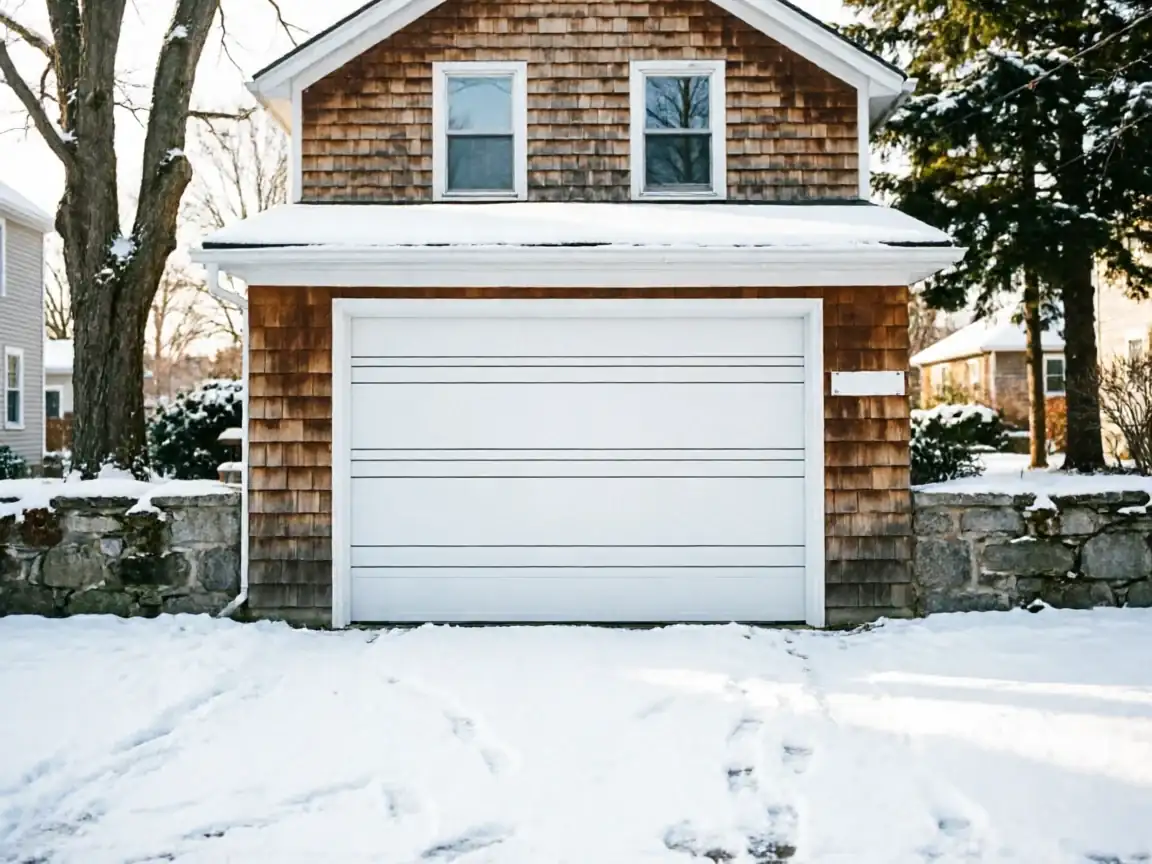
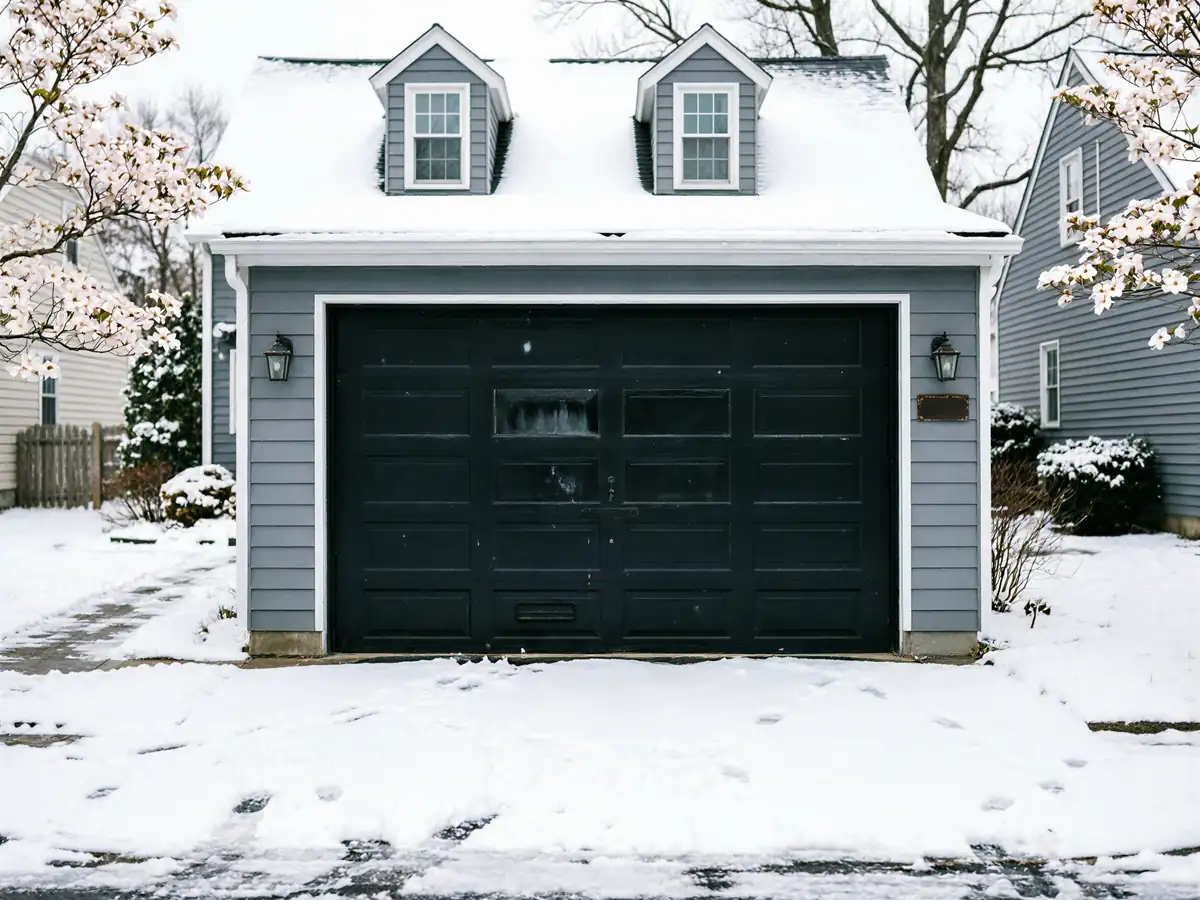
Glastonbury sits in a cold, severe climate zone, and that means winter storms here don't just drop snow - they take down power lines. Ice loading on trees and lines is a real grid stressor in this part of Connecticut, and when the power cuts, a garage door opener with no battery backup is just a motor bolted to the ceiling. It can't lift the door, and if you don't know where the manual release cord is, you're stuck.
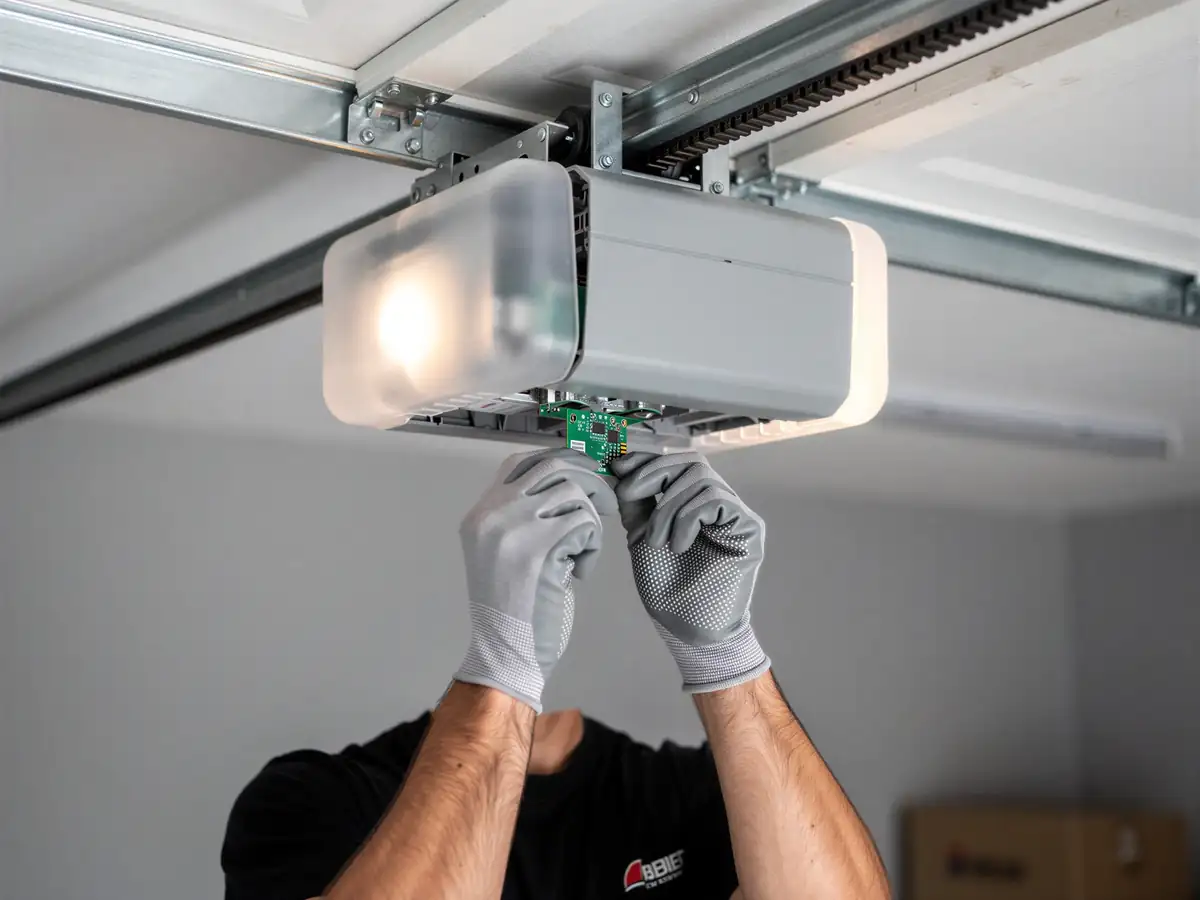
Most of the houses we work on in this area were built between 1938 and 1990, with the bulk of that stock going up in the 1960s and 70s. An opener installed with the house, or even a replacement unit from a decade or two back, almost never has a battery backup built in - that feature is mostly a newer addition to the market. So the age of the house correlates pretty directly with whether you're exposed when the lines go down.
This isn't a once-a-year problem in a climate band marked severe. It's a recurring one, and it hits hardest on houses that never had the opener upgraded since the original install.
The Situation
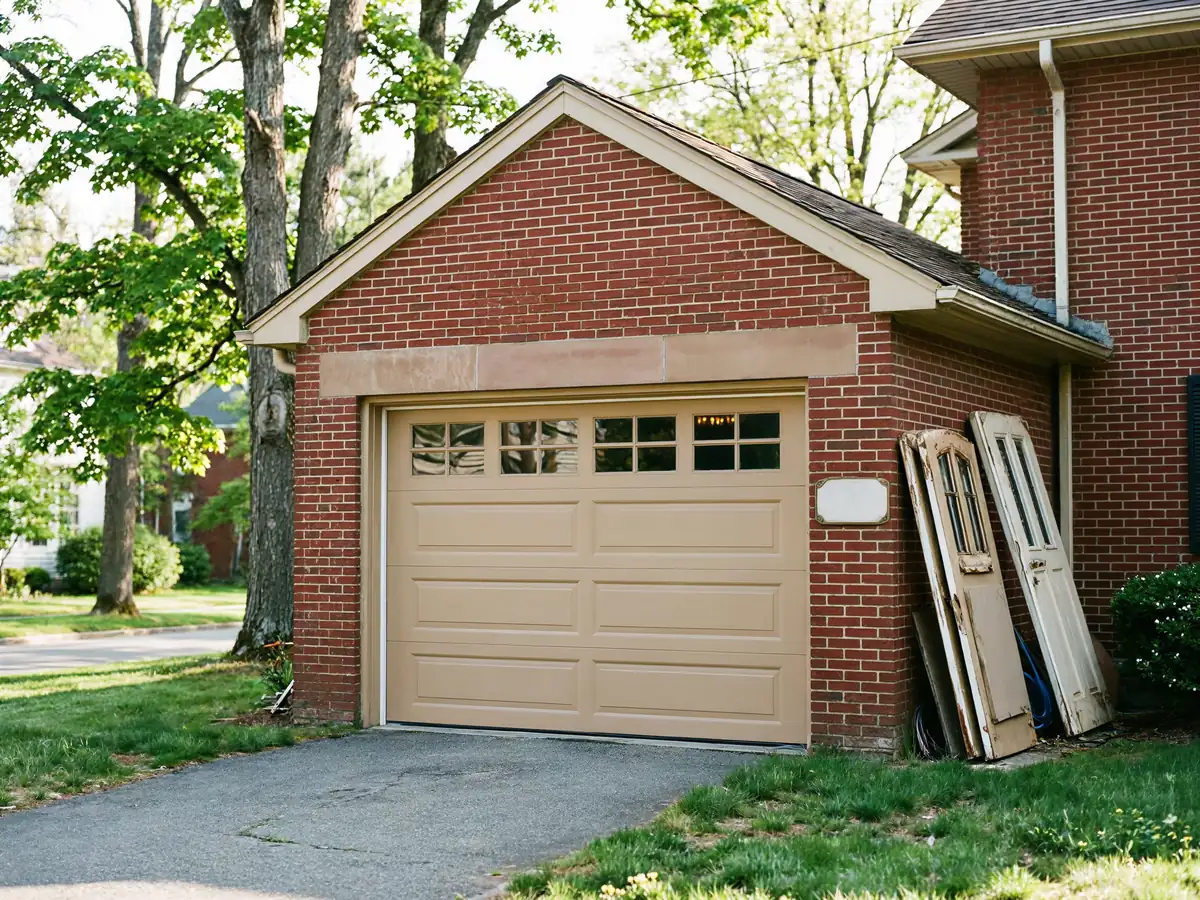
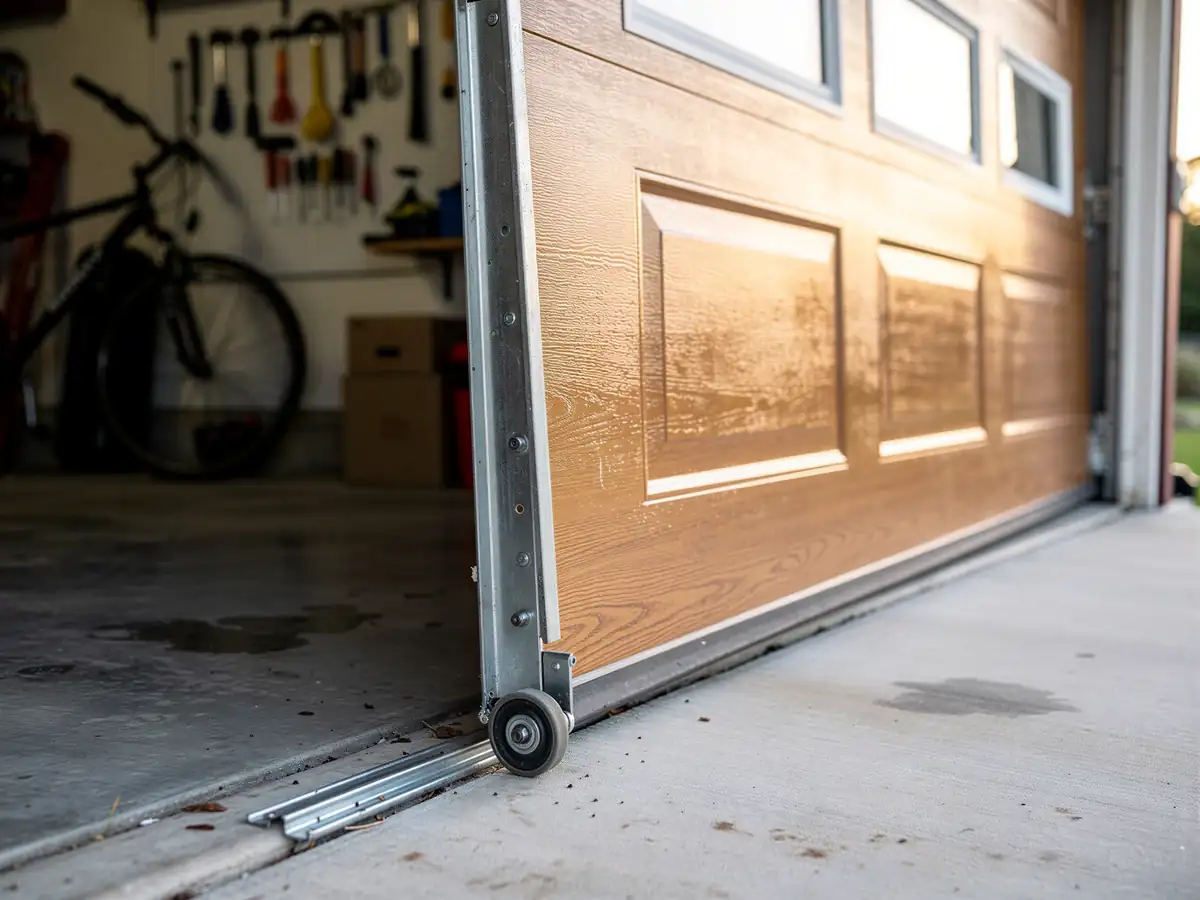
Walk into most Glastonbury garages built in that 1938-1990 window and you'll find an opener that predates battery backup as a standard feature. The door itself might be fine - springs balanced, track straight - but the motor has exactly one power source, and during a storm that source is the first thing to go.
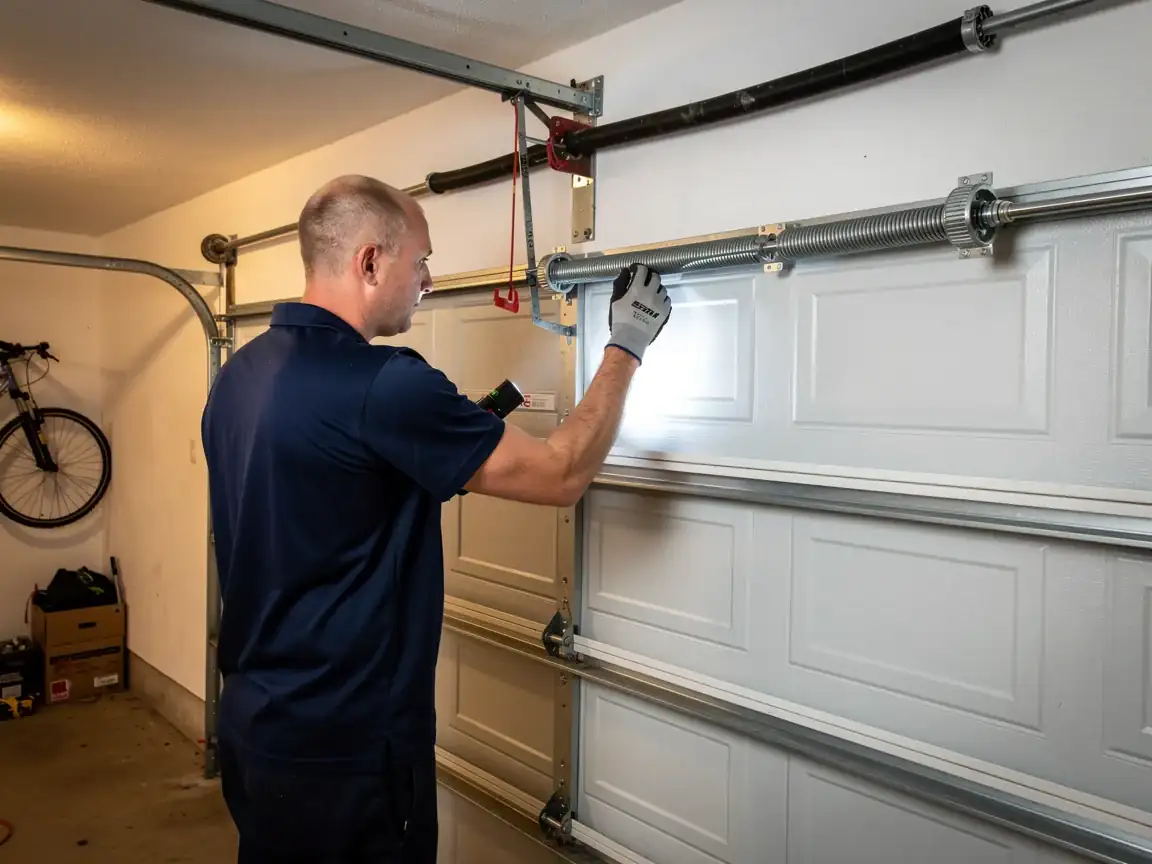
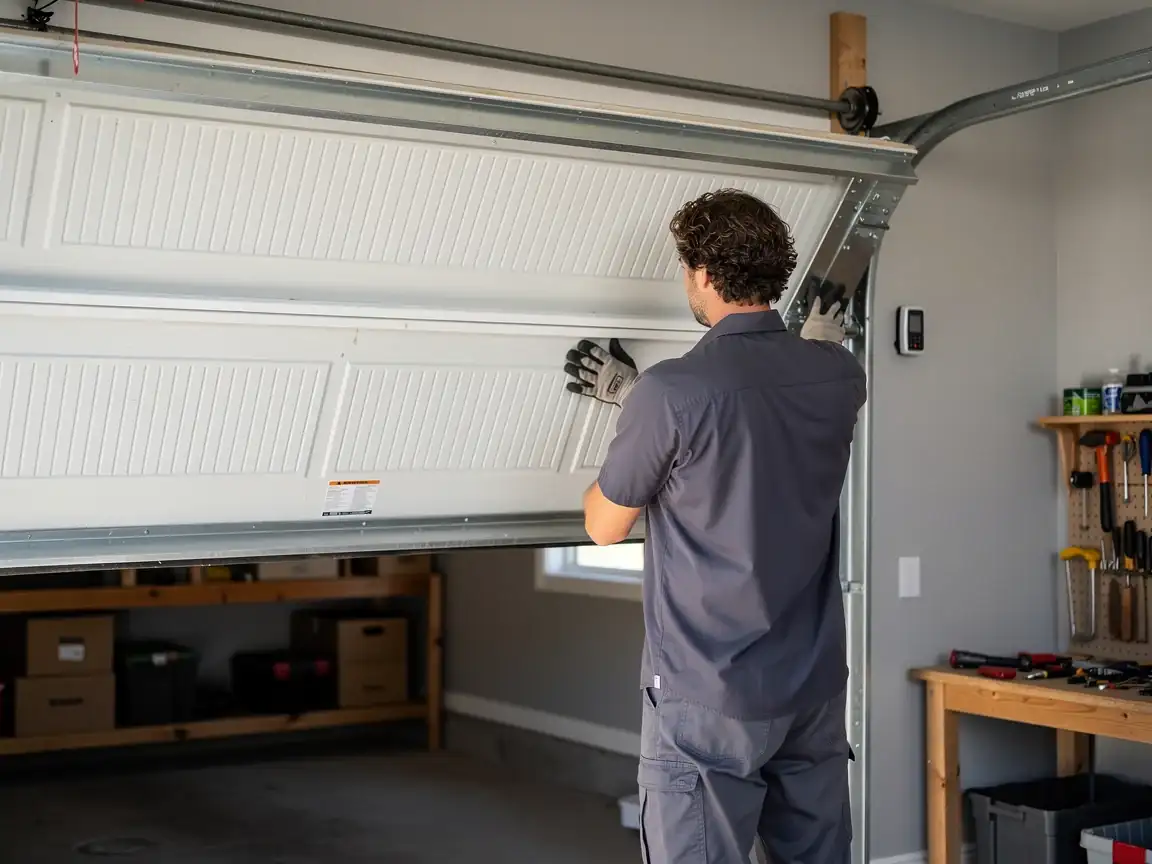
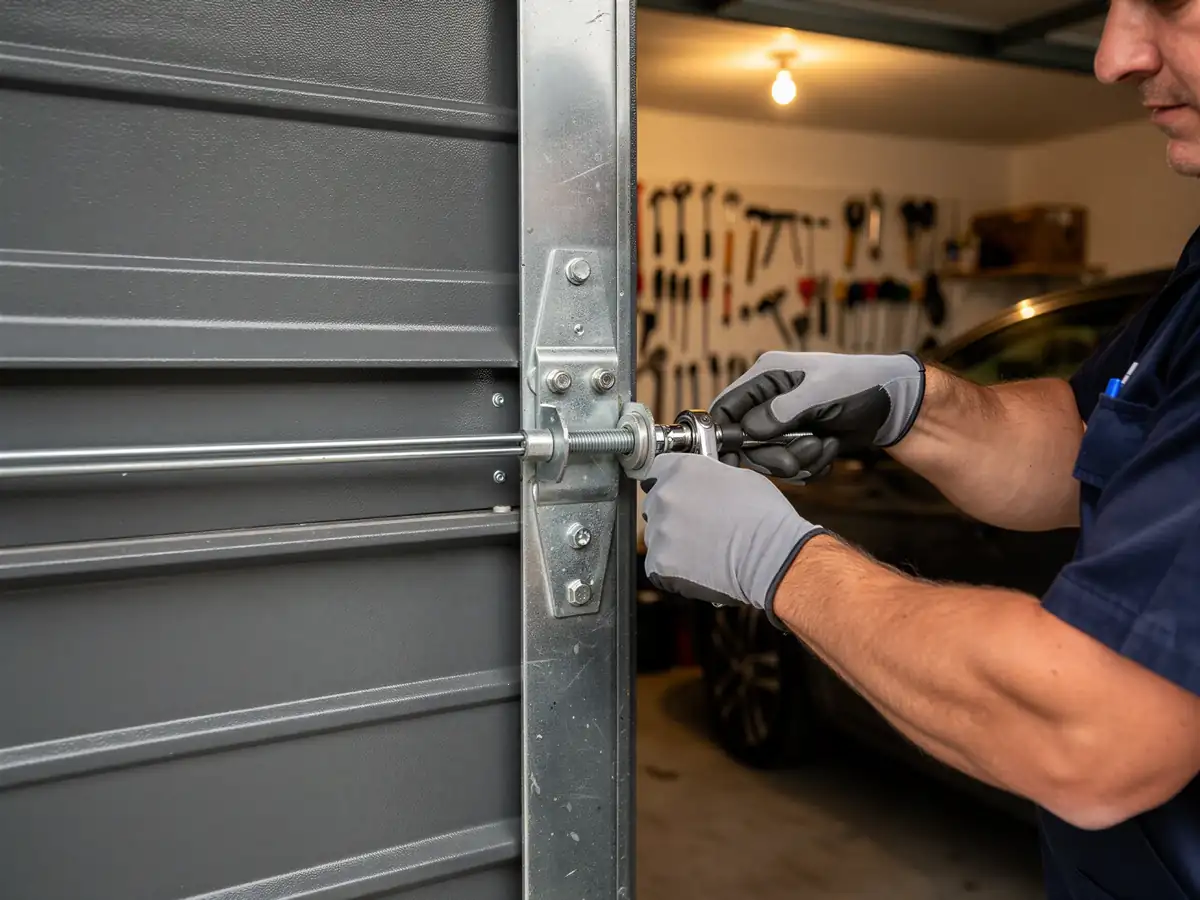
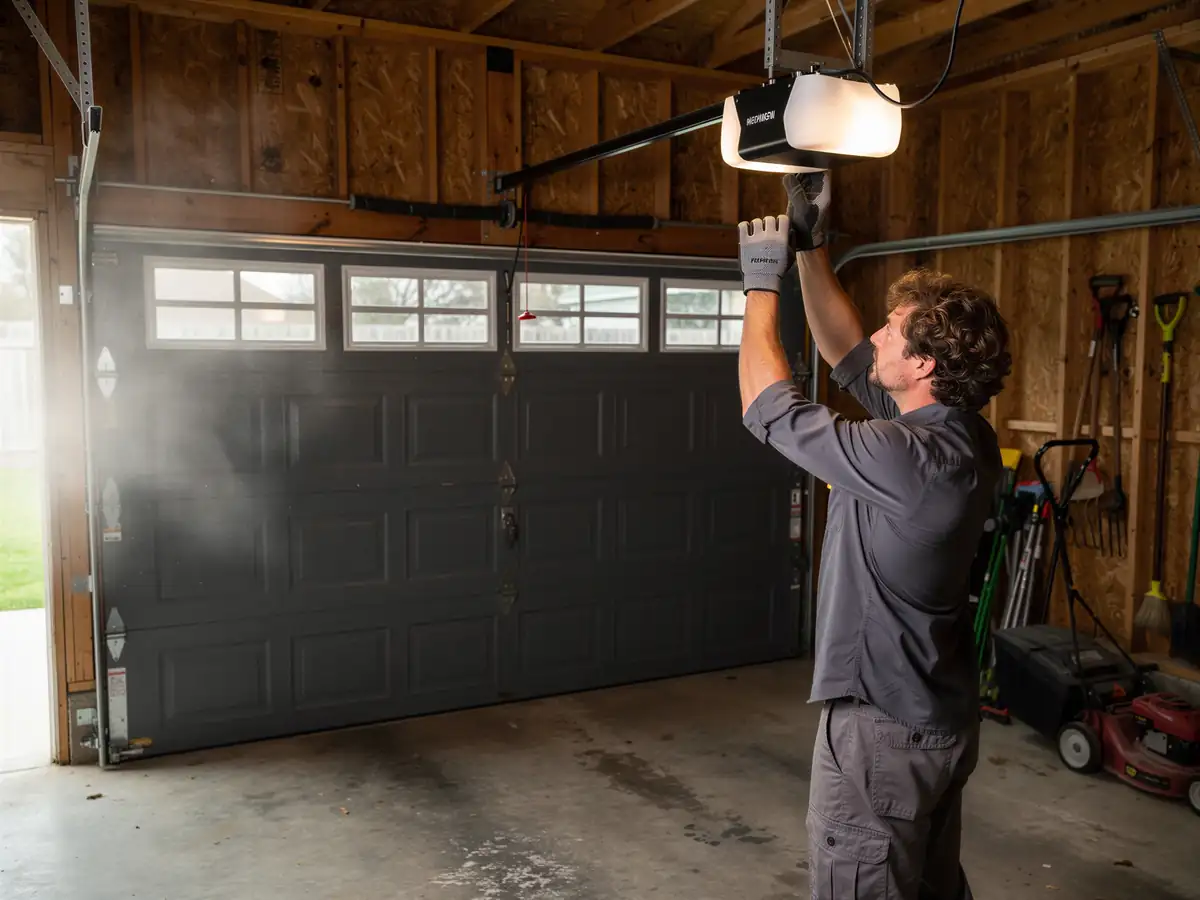
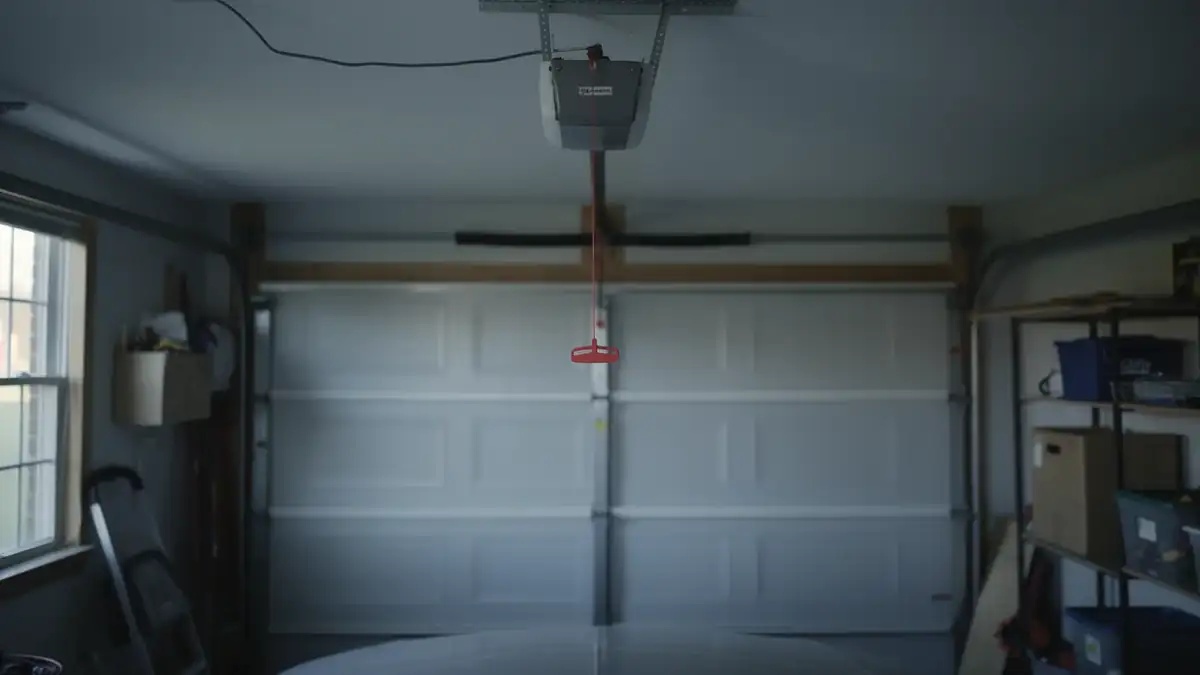
The manual release (the red cord hanging from the trolley) disconnects the opener so you can lift the door by hand. It works on every opener we've seen, old or new, but a lot of homeowners have never pulled it and don't know where the slack is or how much effort it takes on a heavier insulated door versus a lighter single-layer panel.
We also see owners who assume a dead opener means a dead door. Usually it doesn't - the door is mechanical, the opener is just convenience. Knowing the difference saves a panicked call in the middle of a storm when the lines are down and every electrician and contractor in the area is already booked.
What Most People Get Wrong
The biggest mistake we see: assuming a battery backup opener means you never have to touch the manual release again. A backup battery is good for a limited number of cycles before it needs recharging or replacing, and in a multi-day outage - which happens in this climate band - it can run out. Know the release cord location regardless of what opener you have.
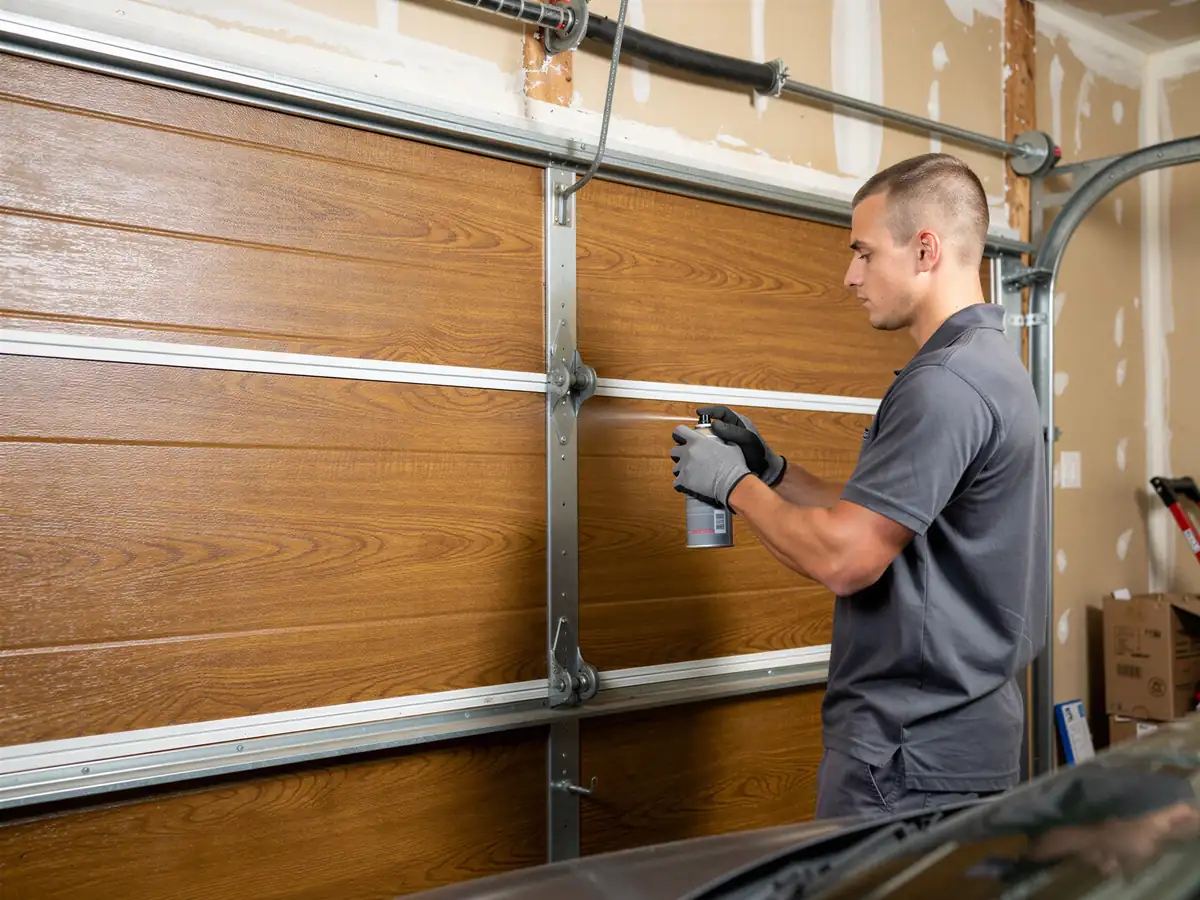
The second mistake is waiting until a storm to test anything. If your opener is original to a house from the 1960s or 70s, it's had decades to accumulate wear on the parts that matter during a power event - the trolley, the chain or belt tension, the release mechanism itself. A quick check before storm season tells you more than any owner's manual will.
One honest limitation: we don't stock every battery backup unit on the shelf for every opener brand on a same-day basis. Some older or less common openers need a part ordered in, and that can mean a short wait. We'll tell you up front if that's your situation rather than promise a same-day fix we can't deliver.