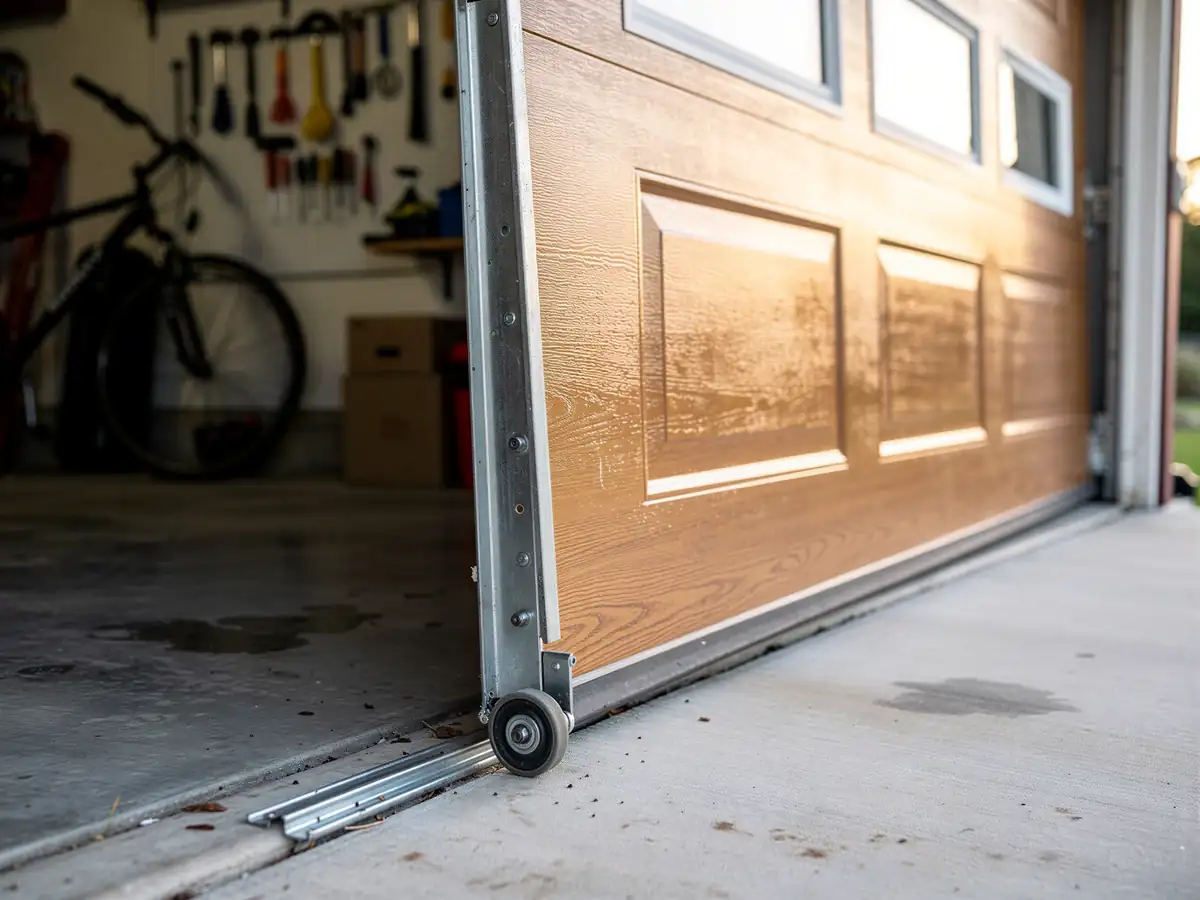
The Symptom
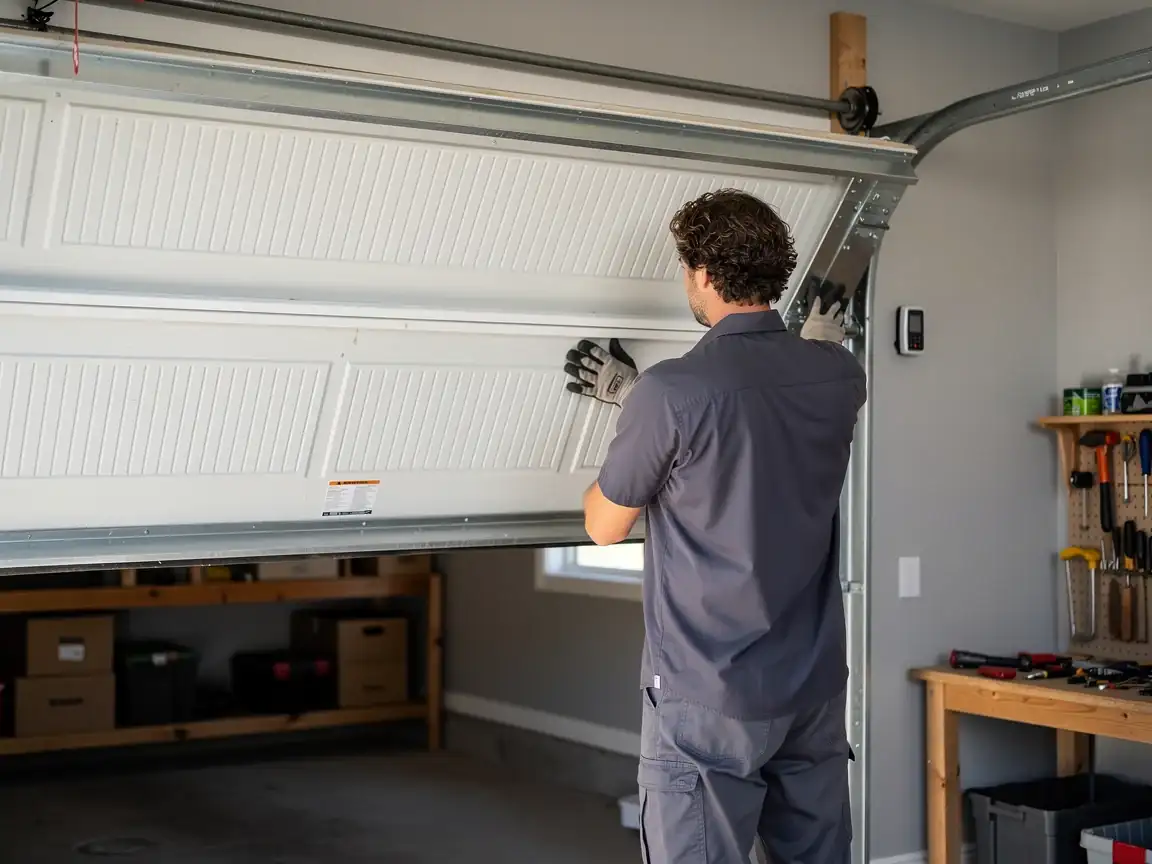
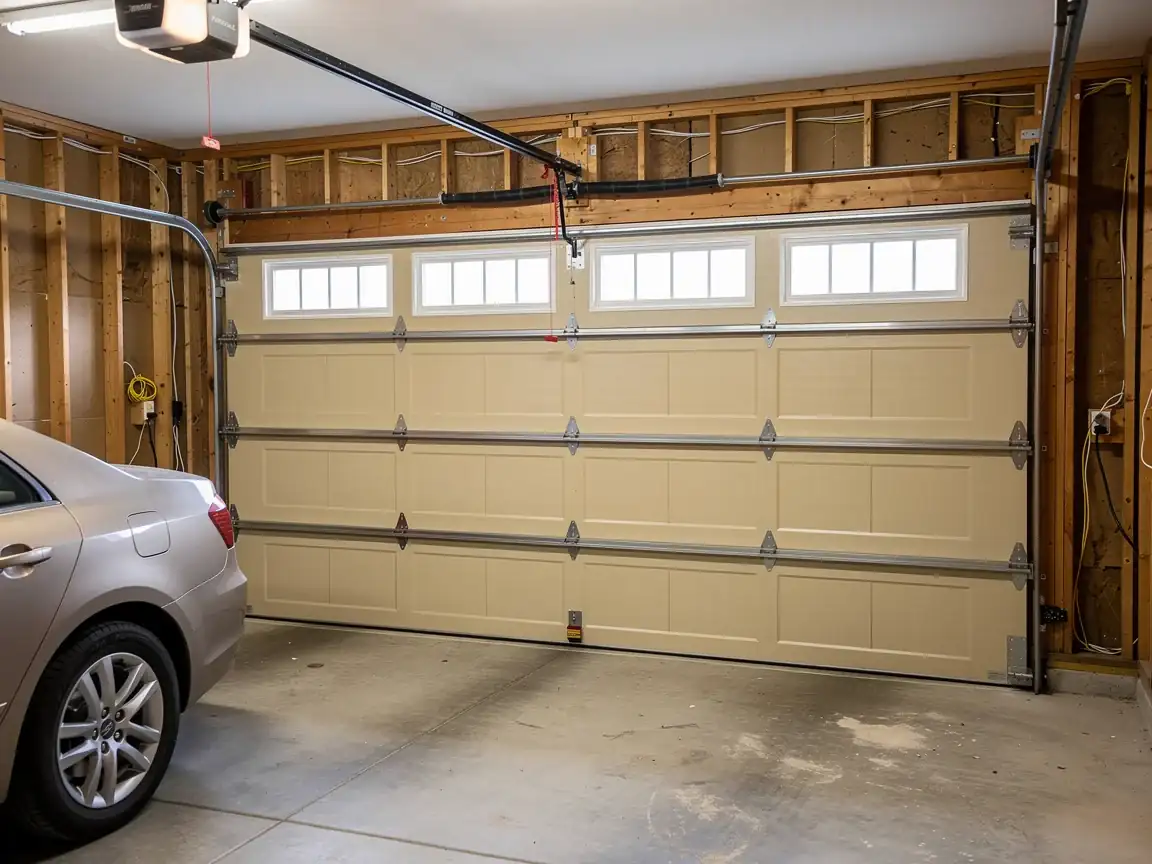
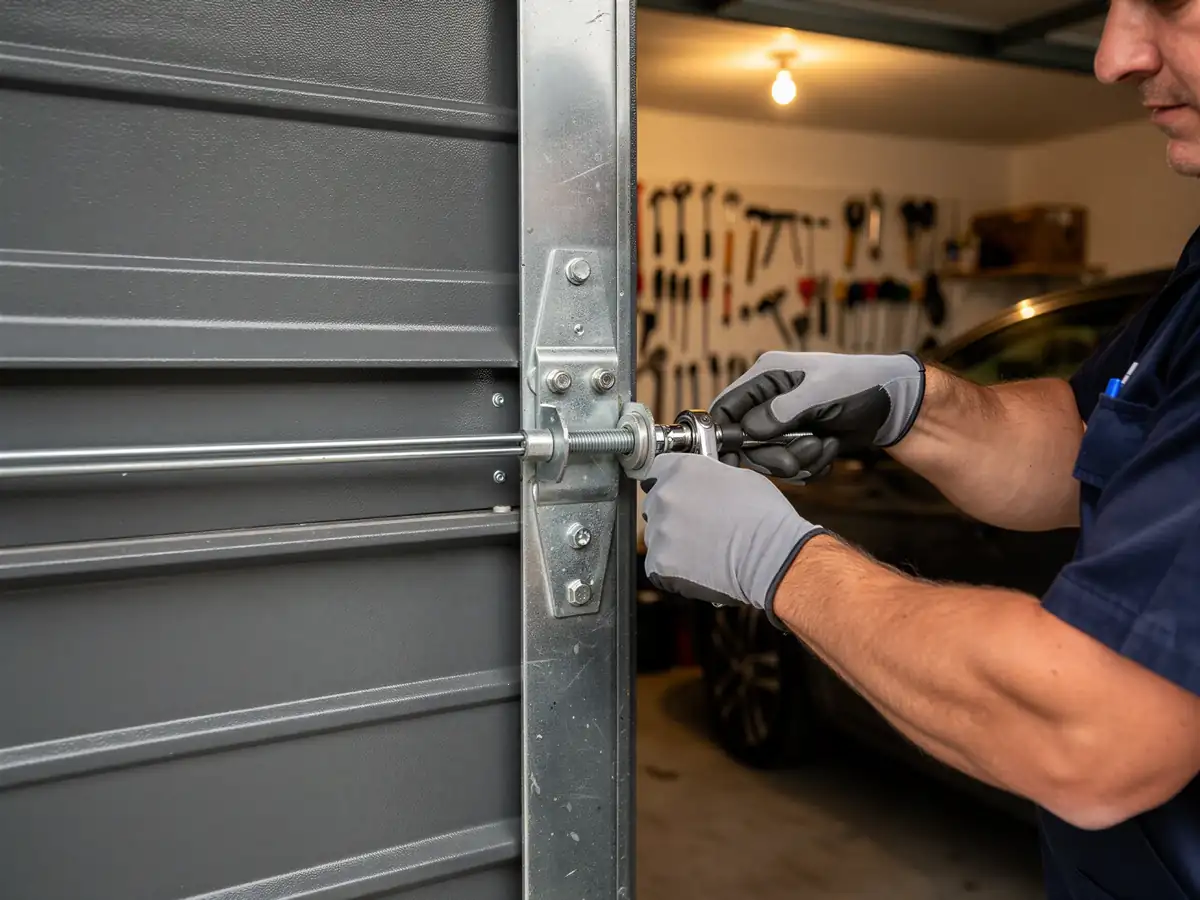
The door starts up and stops crooked, hanging lower on one side than the other. Sometimes a roller has popped clean out of the track and you can see daylight between the wheel and the rail. Other times the door looks fine at rest but grinds or binds a few inches into the cycle, and if you keep hitting the opener button you risk bending the track further or pulling the opener arm loose from the panel.
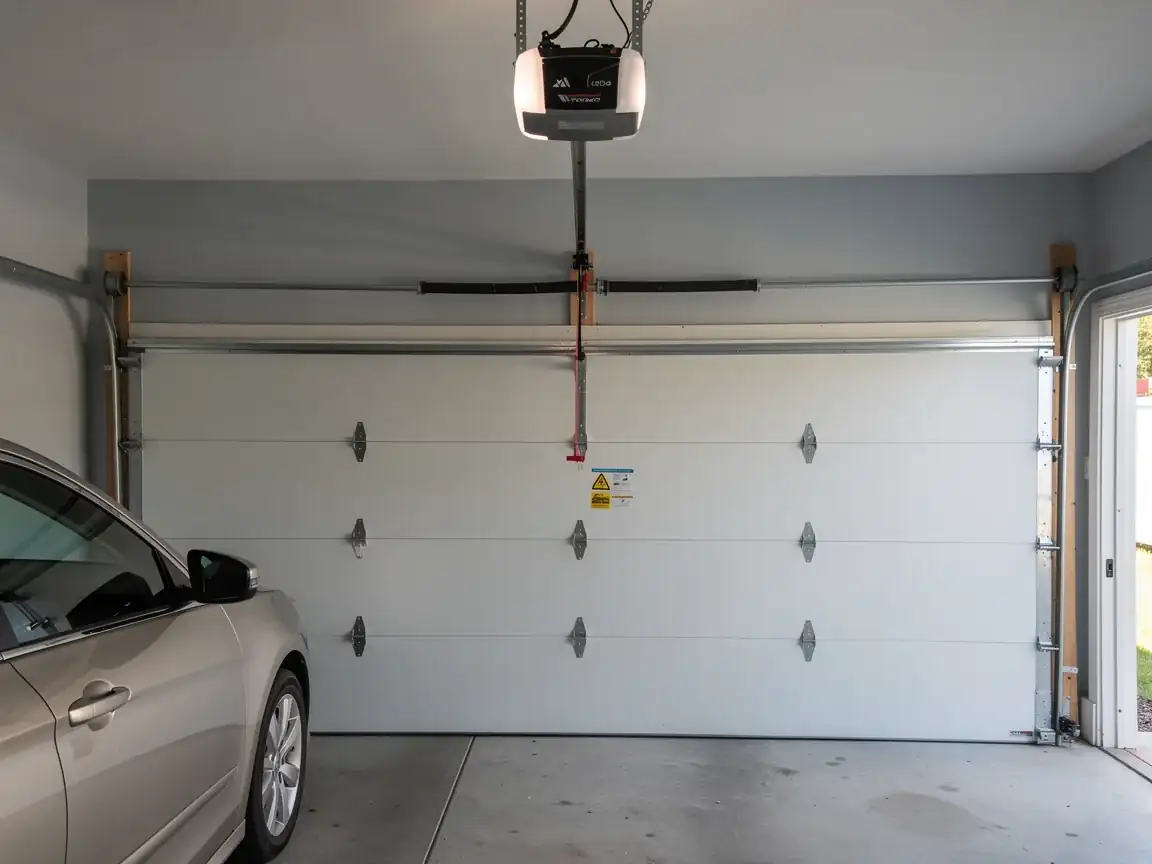
An off-track door is not the same as a door that just won't open. A dead opener or a snapped spring usually leaves the door sitting flat and stuck. A door that's off track is tilted, gapped at a corner, or dragging against the jamb, and it's doing real damage to itself every time someone tries to force it through a cycle. If you can see a roller outside the rail or a bent section of track, stop using the opener and call before the next cycle, not after.
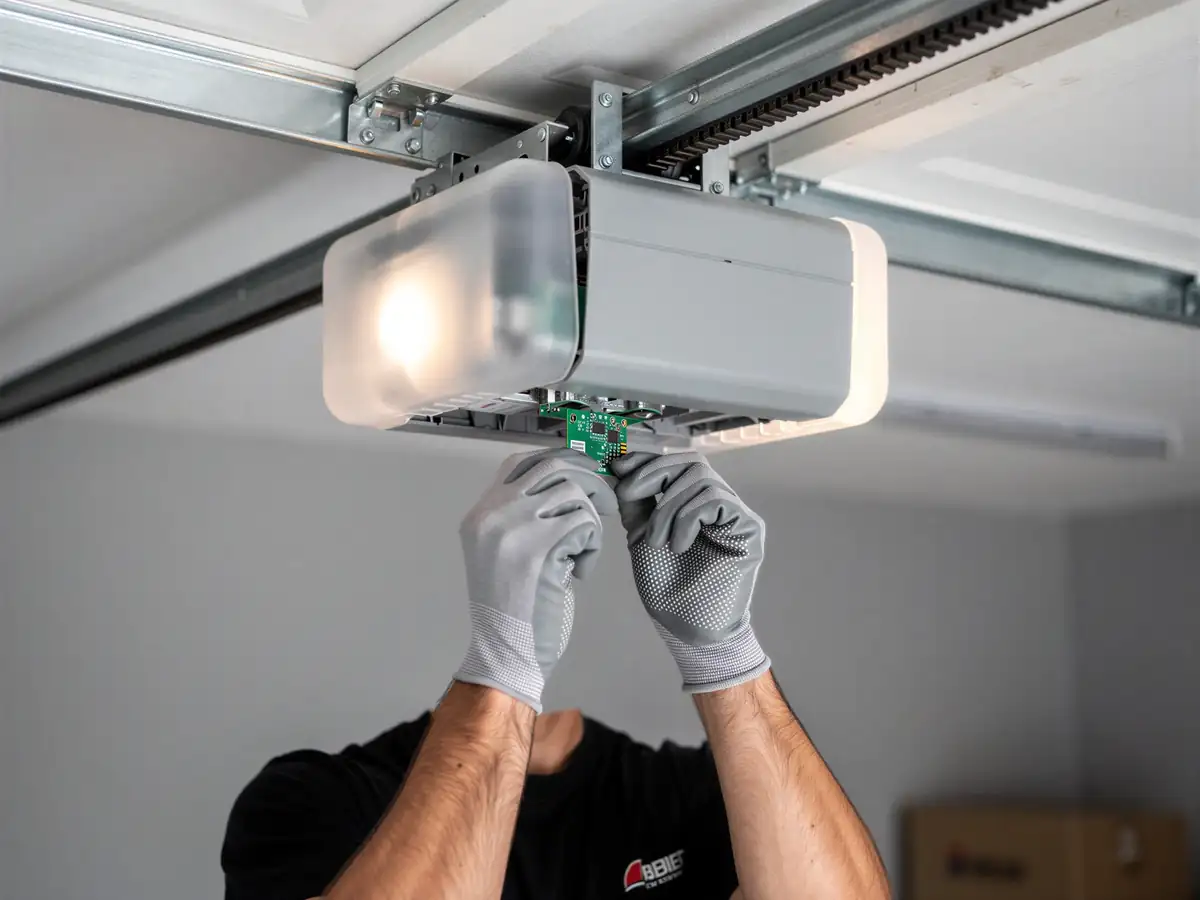
This is a mechanical problem, not an electrical one, which is why unplugging the opener and waiting doesn't help. The door is physically fighting its own hardware.
Why This Fails Locally
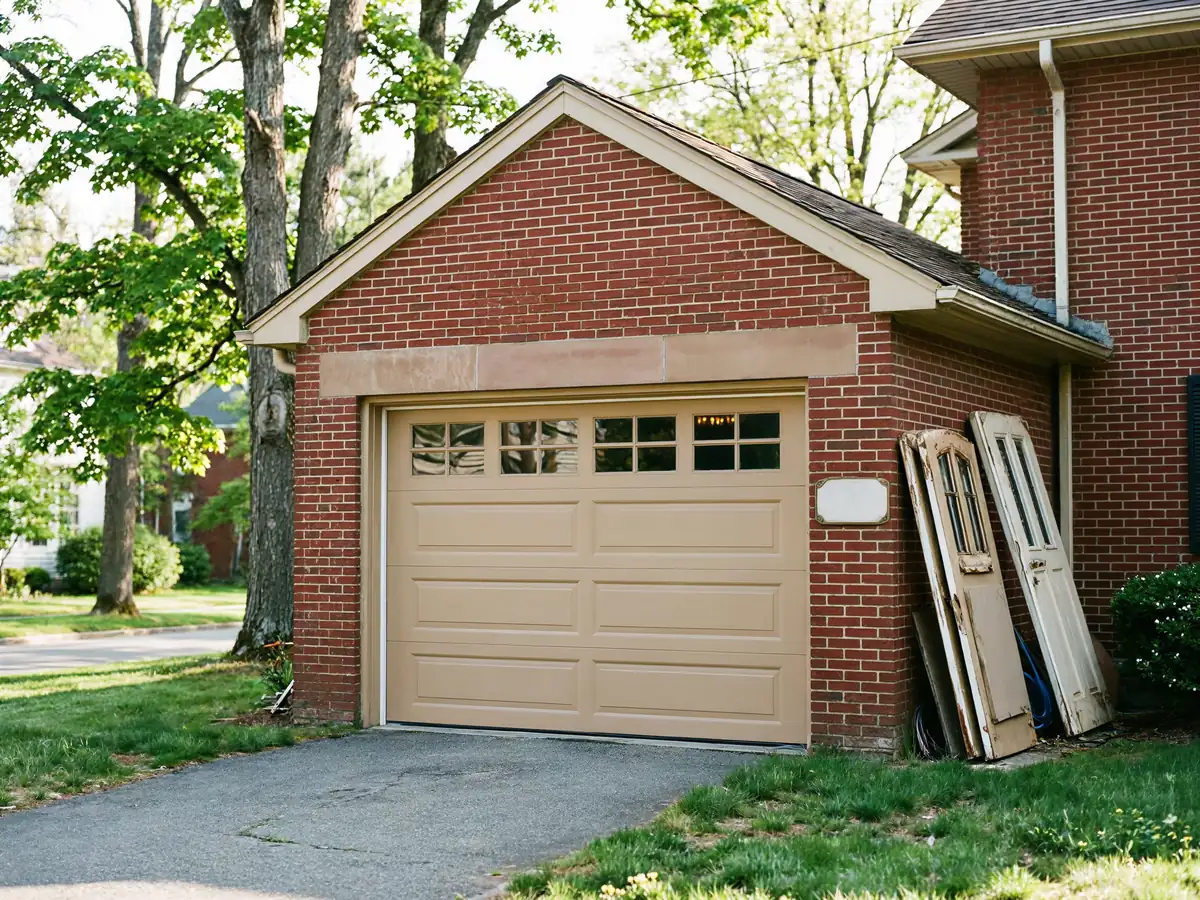
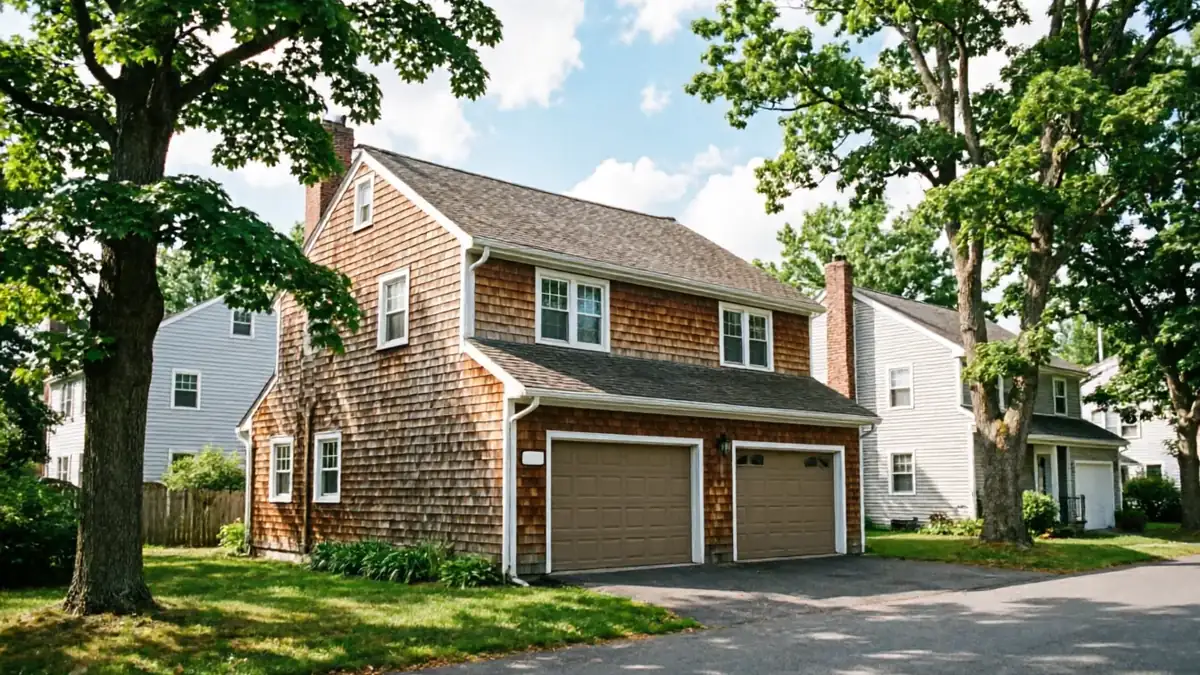
Most of the housing stock in this part of Connecticut was built between 1938 and 1990, with a lot of it concentrated in the 1960s and 70s. Garage doors and their track hardware from that era were mounted directly to wood framing that has had fifty-plus years to shift, settle, and dry out unevenly. A track that was shimmed level when the house was framed in 1968 is rarely still level today, and a door riding on a slightly twisted track is already most of the way to jumping it.
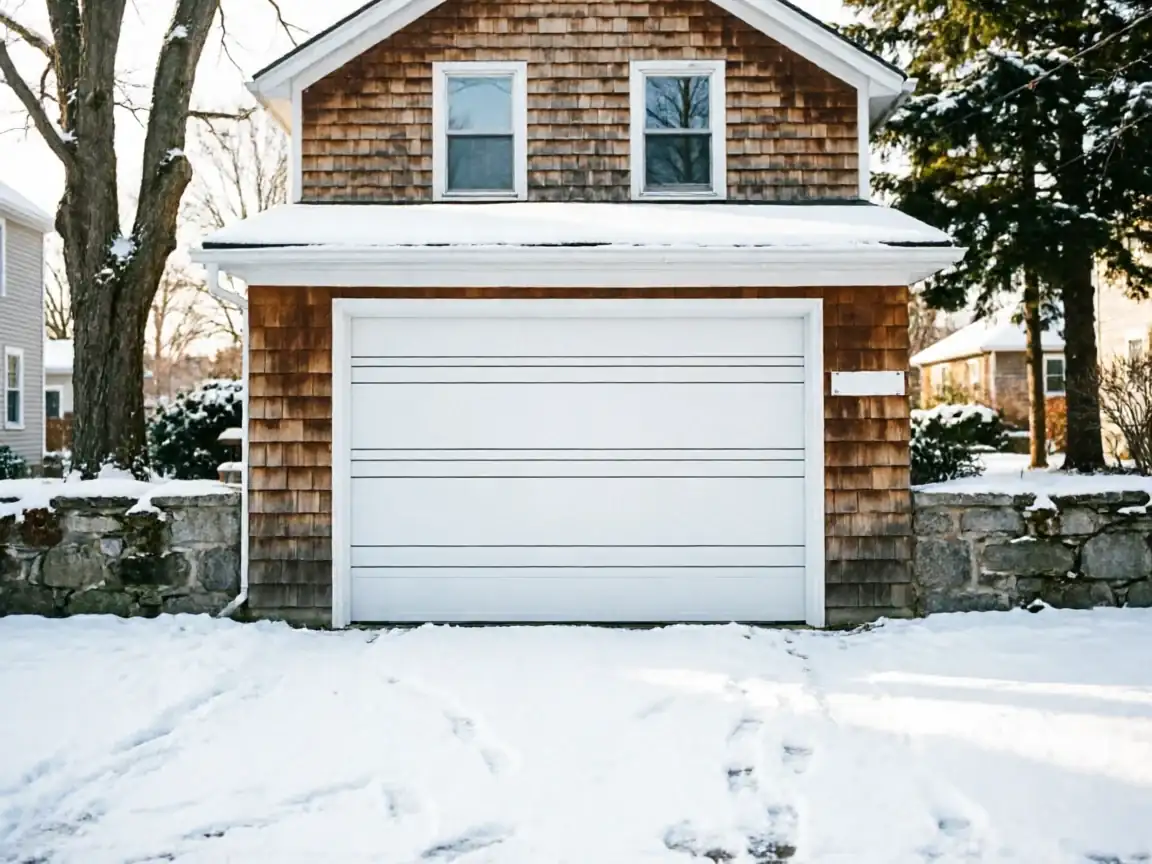
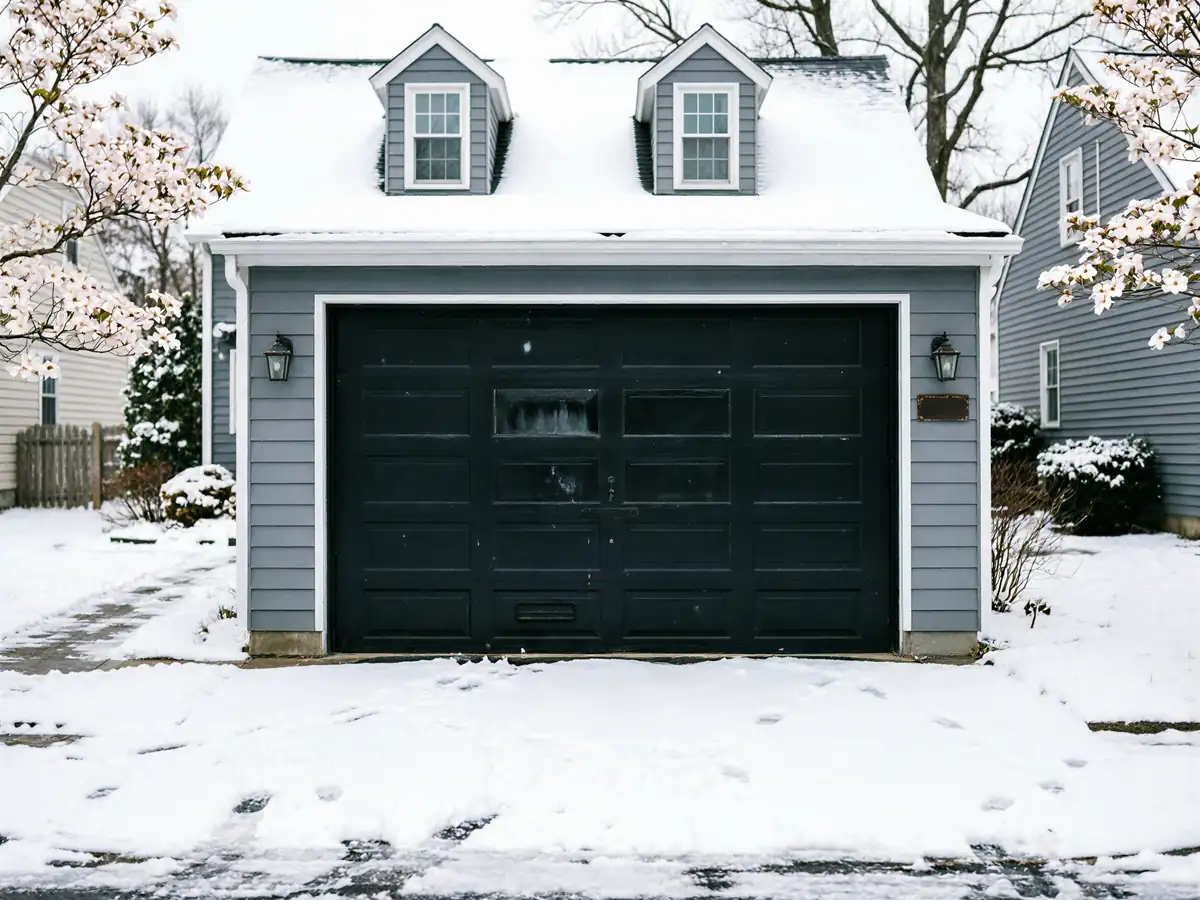
Add a cold-climate winter to that equation and you get the second half of the problem. This area sits in a severe cold climate band, which means repeated freeze-thaw cycles on slabs and aprons every year. Ice buildup at the bottom of the track, or a slab that's heaved a quarter inch on one side, is enough to throw a roller off its rail on a door that was already running a little loose. We see this pattern across the 61-plus named areas in this region, not just in one neighborhood - older framing plus hard winters is a regional combination, not a one-house fluke.
What You Pay
We don't have a flat number to quote here without seeing the door
Because the range depends on what actually failed. A roller that's simply popped out of a clean track is a short visit. A bent track, a track pulled away from the jamb, or a door that's been forced hard enough to bend hinges or crack a panel is a longer job with parts involved.
What we can tell you is what drives the cost up
How many sections of track need straightening or replacing, whether the rollers themselves are worn out and need swapping along with the fix, and whether the opener arm or bracket took damage from being run against a stuck door. Homes in this area tend to have original one-piece or early sectional doors on hardware that's getting hard to source in exact replacement parts, so sometimes matching an odd gauge of track takes an extra call to a supplier rather than a truck restock.
We'll look at the door, tell you straight whether it's a bent-track repair or whether the door's old enough and the track worn enough that replacing the hardware outright is the better money, and give you a number before any work starts
Time on the Job
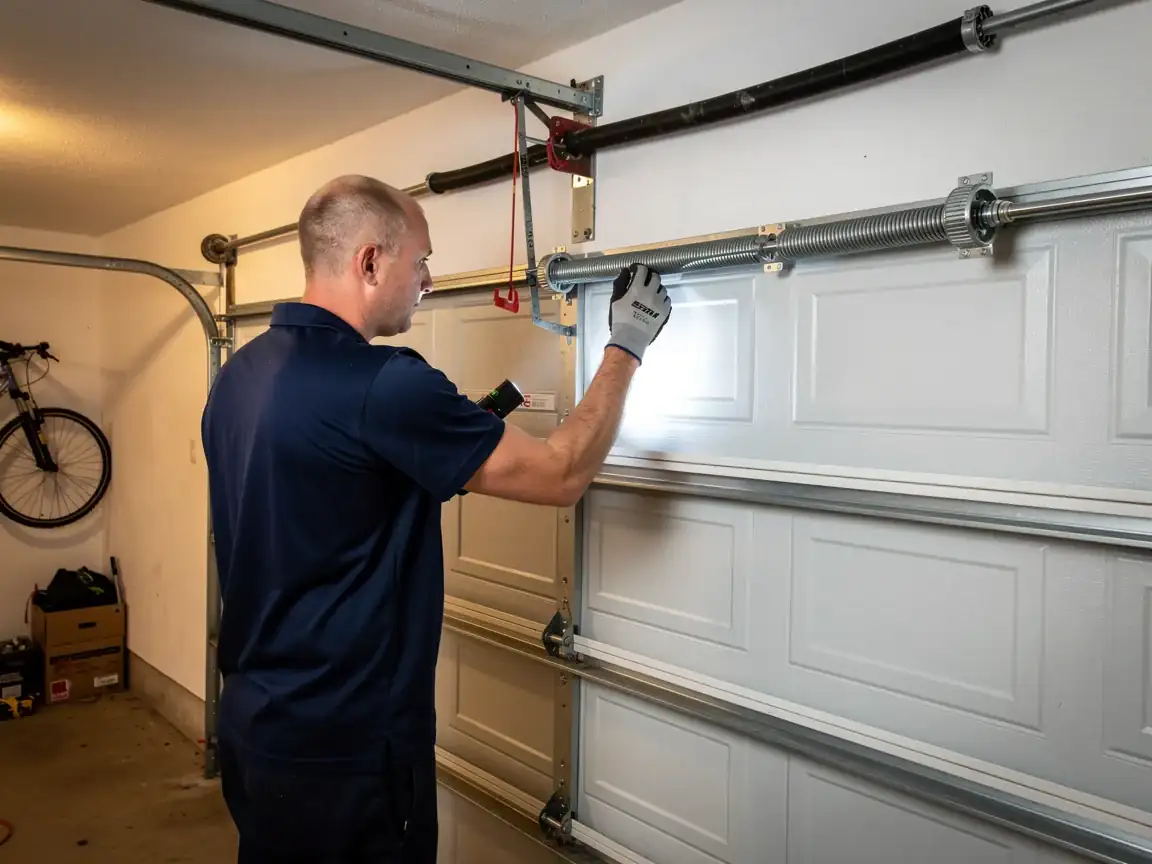
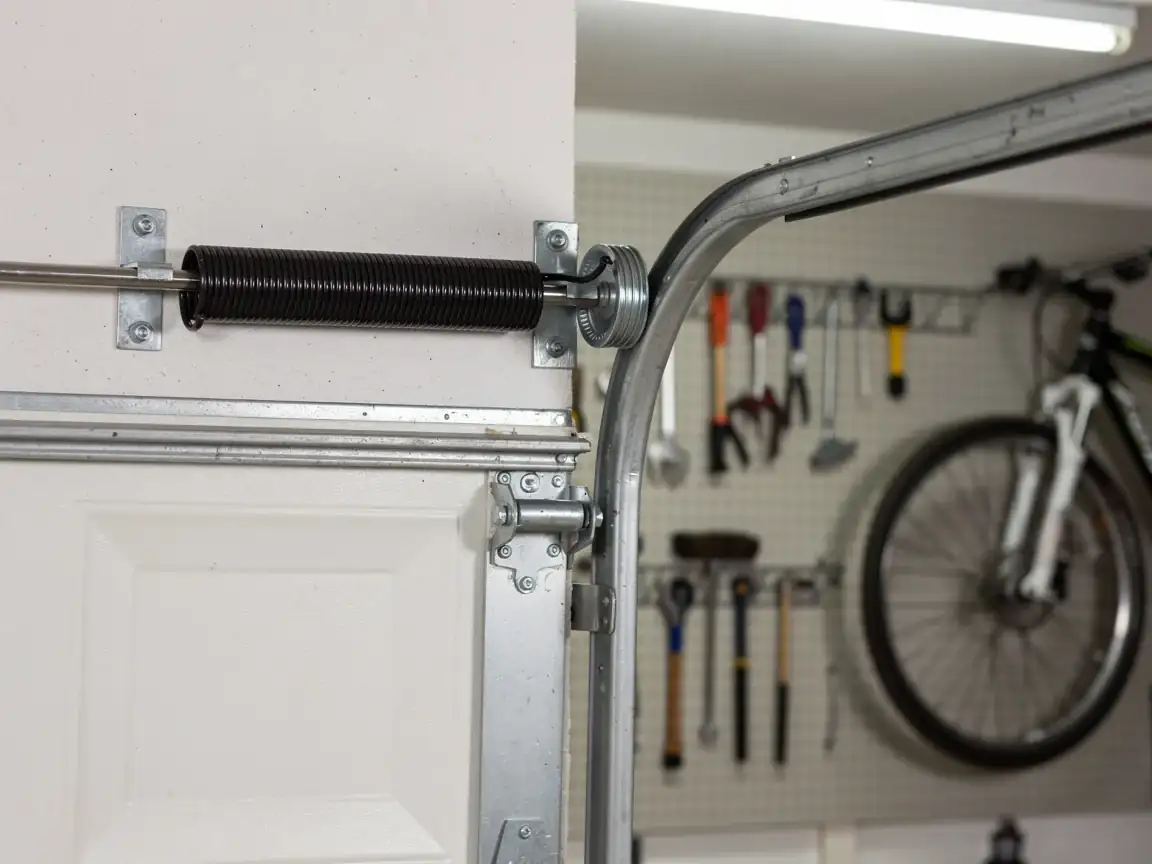
A straightforward roller-out-of-track fix on one side, with no bent rail, is typically the shortest kind of call we run - the door gets re-seated, rollers checked, and track re-secured to the jamb. If the track is bent or pulled loose from framing that's shifted over the decades, we're bending or swapping sections, re-shimming to plumb, and running the door through a full cycle a few times to make sure it's not going to walk off track again next week.
The one thing we won't do is rush a re-seat on a track we haven't checked for square. Forcing a roller back in without fixing why it came out just means you call again in a month, probably in worse cold. If the jamb itself has shifted enough that the track won't hold plumb, that's a conversation about the frame, not just the door, and we'll tell you that on site rather than patch around it.