What Local Conditions Do
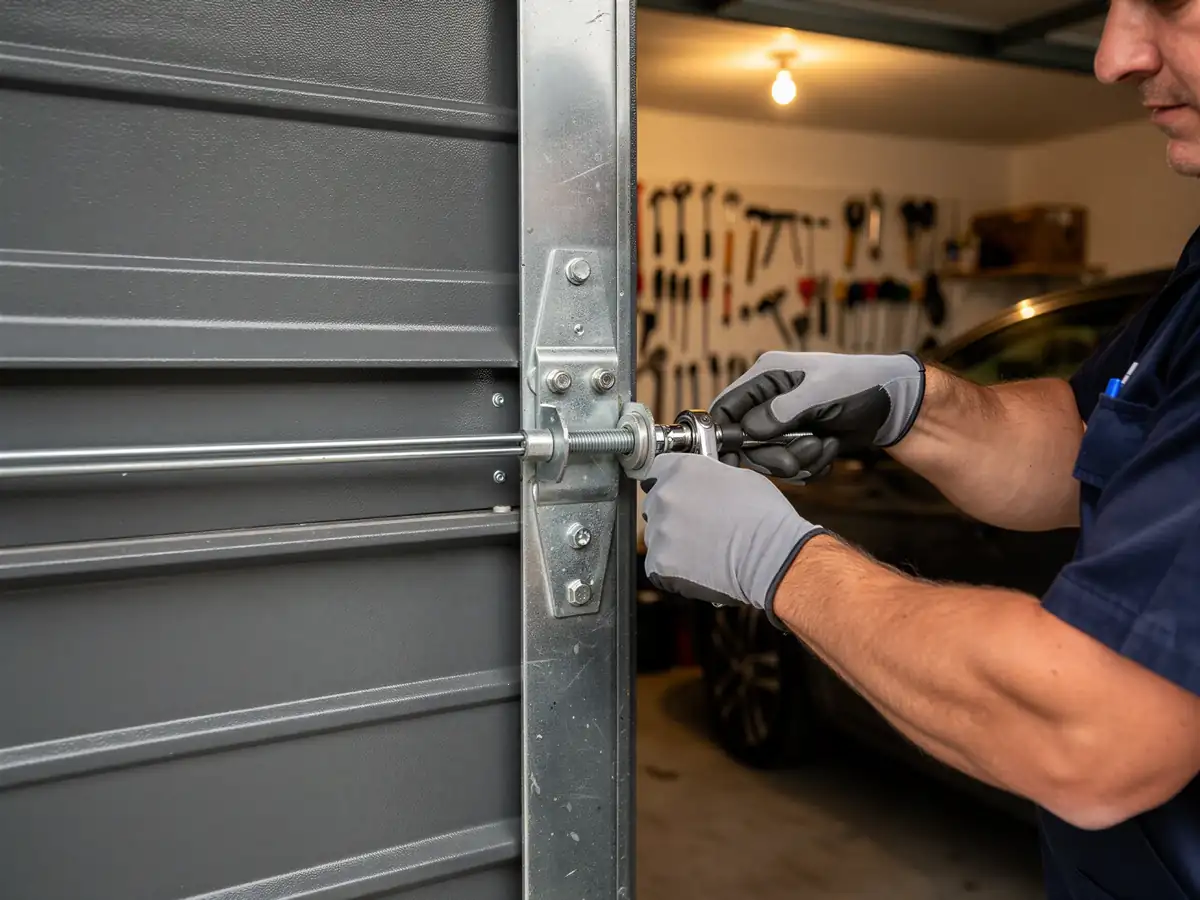
Most houses on this side of the river went up between 1938 and 1990, with the median build year sitting around 1973. That matters because track alignment depends on the framing it's bolted to, and a lot of that framing has shifted a little over fifty-plus years. Add a climate that the federal data classes as severe cold, and you get seasonal swelling and contraction in wood jambs that the track brackets are lagged into. Every freeze-thaw cycle works those lag screws a fraction looser. It's not dramatic, it's not fast, but it's constant, and it's the single biggest reason we see rollers riding up on the edge of the track instead of sitting flat in the channel. Newer vinyl-jamb construction doesn't move the same way - but that's not what's common on a 1960s or 70s build near Glastonbury Center or out toward the Wethersfield line, which is where a lot of this housing sits.
The Situation
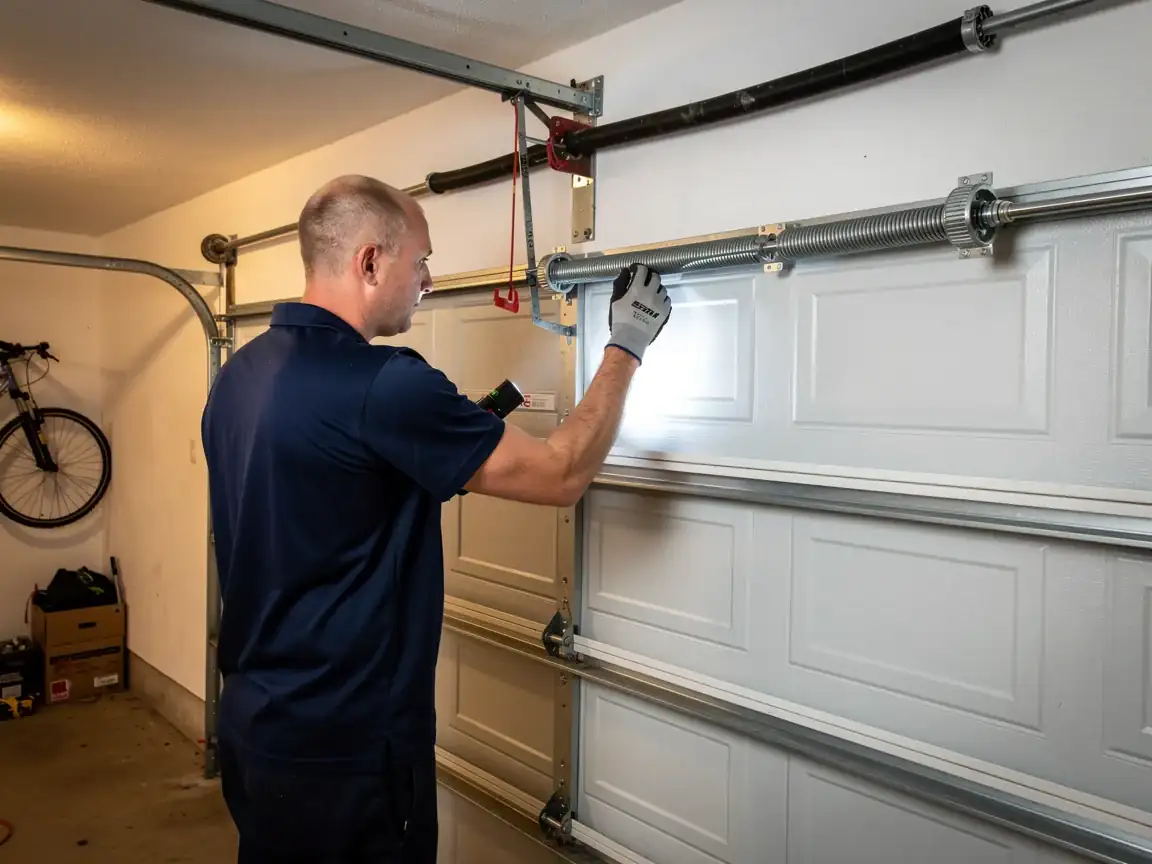
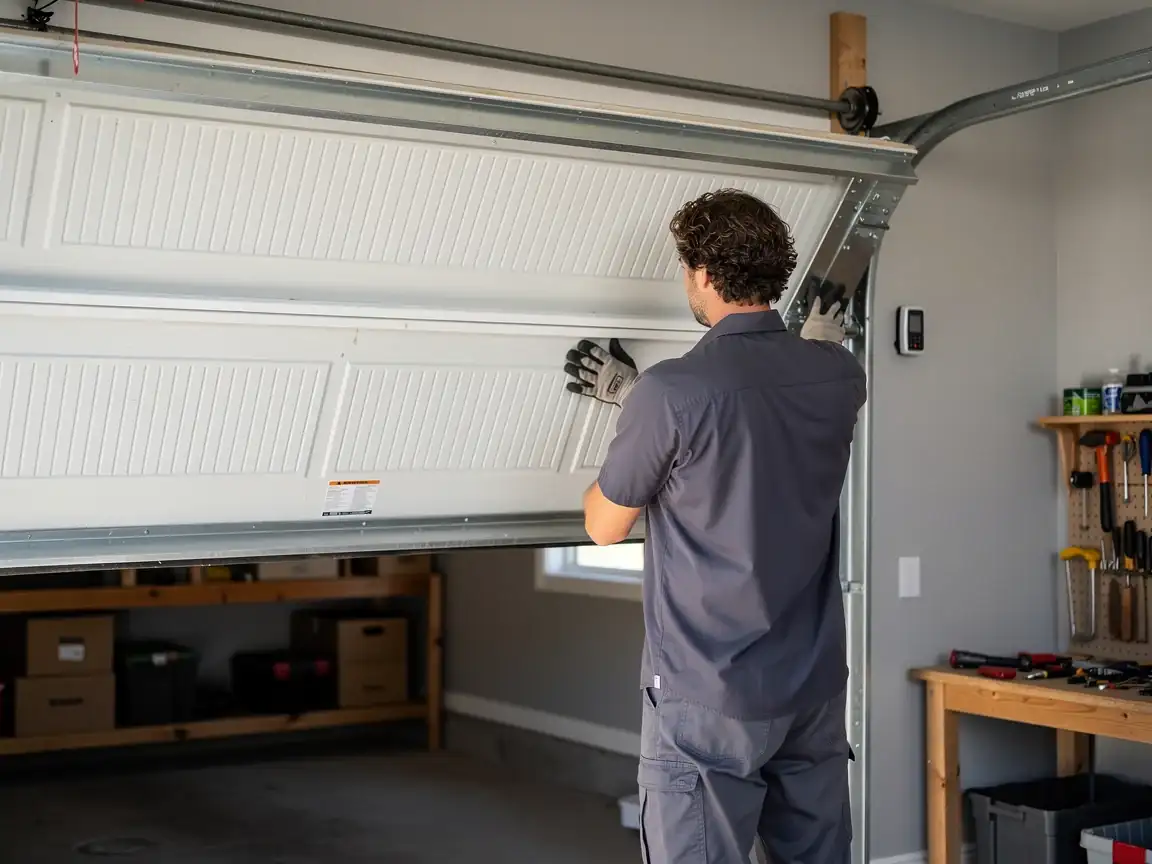
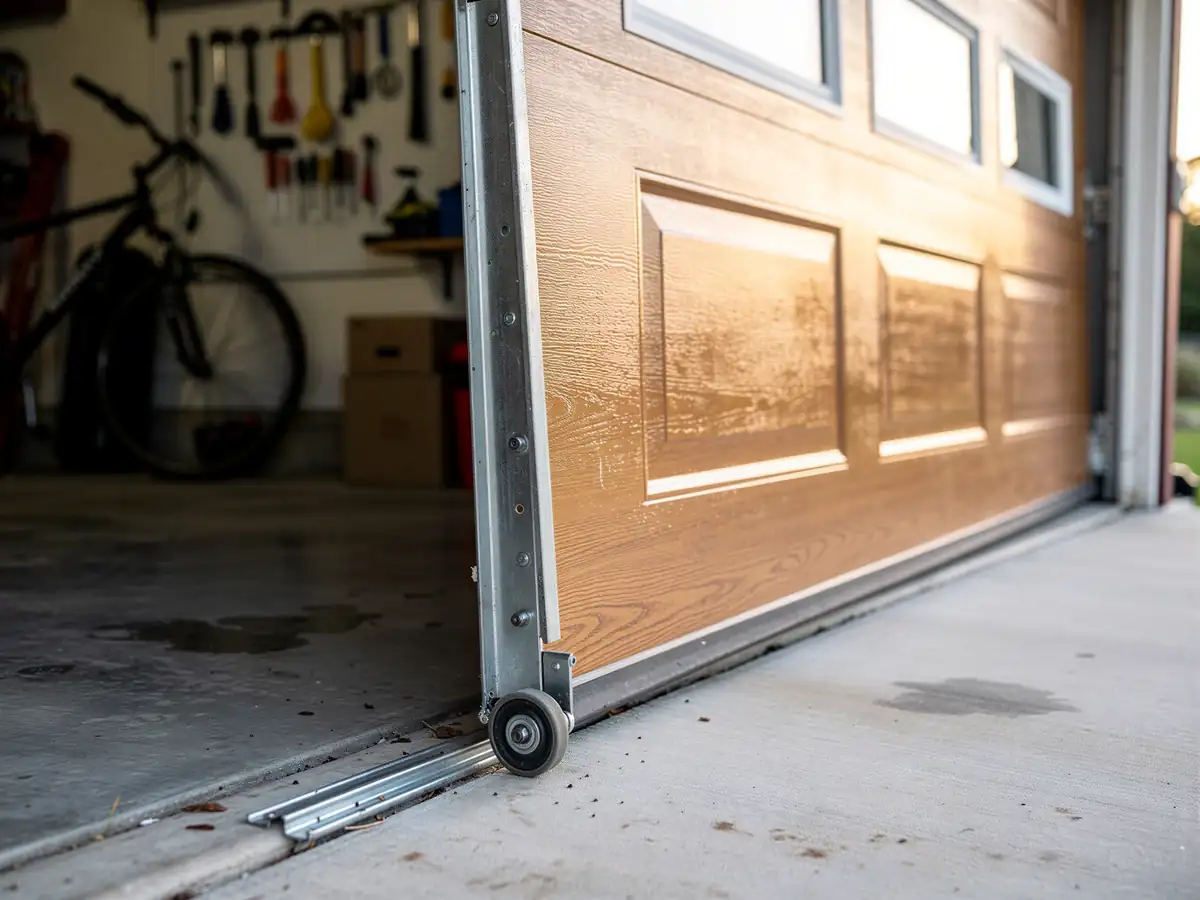
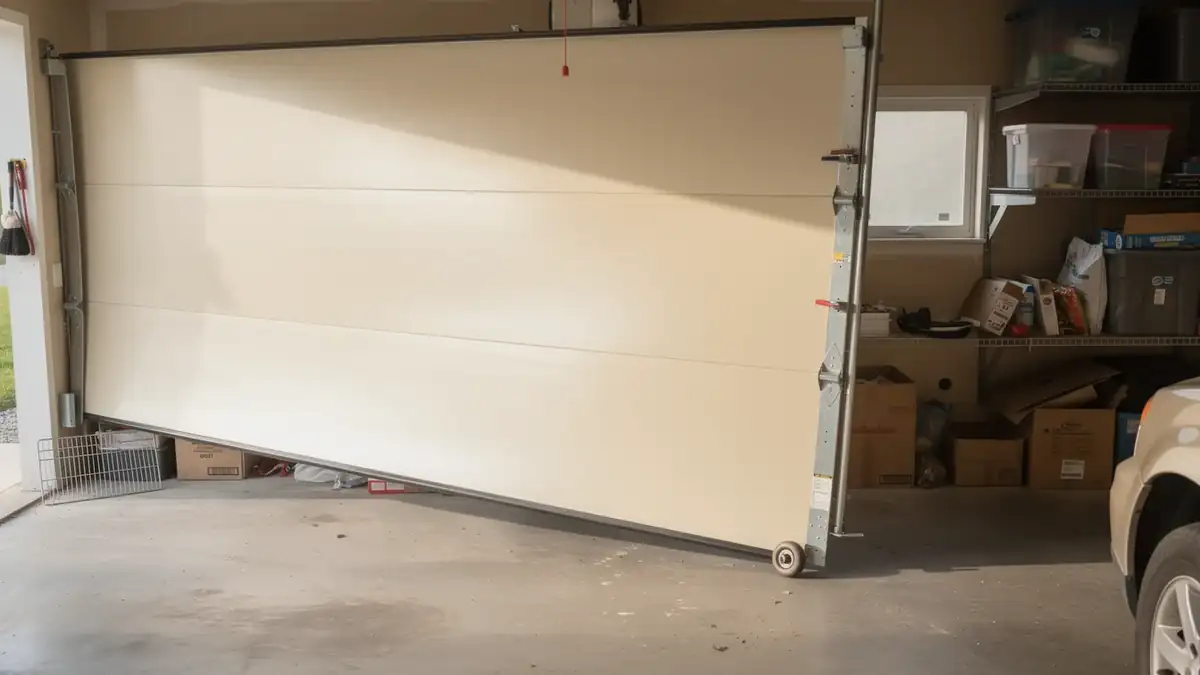
A door goes off track one of two ways: slow or sudden. Slow is what the climate does - brackets loosen, the track bows a few degrees out of plumb, and the rollers start chewing the inside edge of the channel instead of running clean. You'll hear it before you see it, a grinding or a thunk as the door travels. Sudden is usually a broken cable or a snapped spring on one side of a double door, which lets that side drop and yanks the panel sideways out of both tracks at once. Given the age of the housing stock in this service area, we see plenty of the slow kind - original hardware on homes built in the 1960s and 70s that's simply worked loose over decades of New England winters. The sudden kind shows up on any era of door, but it's more common where the springs are original to a house built well before 1990.
What Most People Get Wrong
The common mistake is assuming a door off track just needs to be pushed back into the channel. On a door with original brackets from a 1960s or 70s build, pushing it back in without re-securing the bracket just sets up the next failure, often within weeks. The other mistake is waiting - once a roller starts riding the edge of the track, it's wearing a groove into that edge every time the door cycles, and a groove in the track is not something you tap back into shape. Here's the honest limit: if the track itself is bent rather than just loose, we're not going to hammer it straight and call it fixed. Bent steel track gets replaced. It's a cheaper, more durable fix than trying to coax a kinked rail back to true, and it's the right call even though it costs more than a bracket tightening would.