Serving Glastonbury, CT & nearby
(860) 217-5253
Glastonbury, CT

Wind, Wide Doors, and Glastonbury's Older Housing Stock

Glastonbury's double garage doors mostly date to the 1960s-70s, long before wind-rated struts were standard. Here's what that means for panels, tracks, and cost.

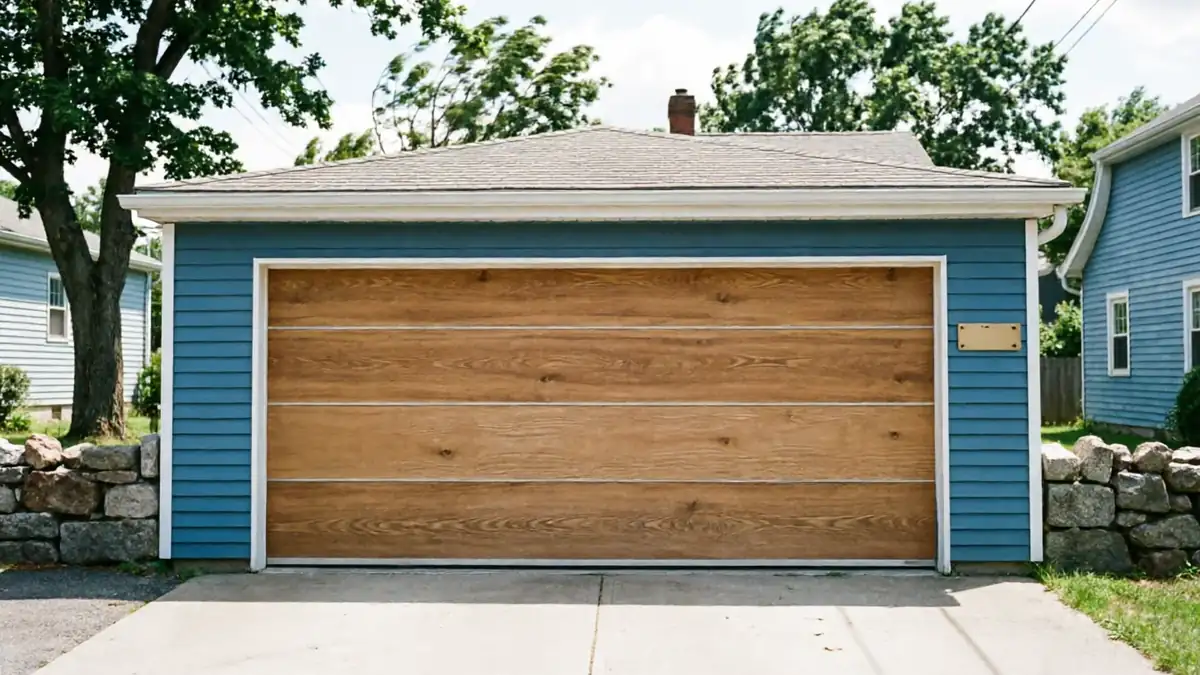
A blue garage with a horizontal wood panel garage door and a stone wall.

What Local Conditions Do

A double-wide garage door has more surface area than any other opening on a house, and that area is exactly what wind pushes against. In Glastonbury, most of that pushing happens against doors that were never built to resist it. Housing here runs from 1938 to 1990, with the median build year at 1973 - a stretch of decades before manufacturers started putting horizontal struts across wide sections as a standard feature rather than an upsell. A door from that era is a flat steel or wood panel held in place mostly by its own weight and a center lock, not by any internal bracing.

Add the climate band this area sits in - COLD severe - and you get a second problem layered on the first. Steel panels contract in winter cold. A contracted panel is stiffer and has less flex to absorb a gust than the same panel would have on a 60-degree day. So the wind isn't hitting a door at its most forgiving; in the months wind tends to matter most here, it's hitting the panel at its stiffest. That combination - an unreinforced wide panel, cold-hardened steel - is what actually bows a door, not wind alone.

The Situation

Walk the 61 named areas that make up this territory and you'll find the same pattern repeating: 1960s and 70s double garage doors, original or close to it, installed without a center strut because that wasn't code or common practice when the house went up. These doors were sized for a two-car opening, which is the widest standard residential span, and width is the variable that matters most here - a single door with the same unreinforced panel just doesn't flex the same way because it's half as wide.

We see this most on houses close to Glastonbury Center and out toward the Wethersfield and East Hartford lines, where the housing age matches that 1938-1990 window closely. A bowed panel usually shows first as a visible bulge between the rollers when the door is down, or as a track that's started to walk out of its bracket on one side because the panel flexed and pulled it. Neither fixes itself, and neither is cosmetic - once a track is pulled, the door is running on hardware it wasn't designed to run on.

What You Pay

  1. Reinforcing an existing wide door with a strut kit is less work and less money than replacing the door outright

    And it's the right call on a door that's otherwise sound - rollers good, no rust through the panel, springs sized correctly for the weight. If the panel is already bowed, a strut won't pull it back flat; at that point you're looking at panel replacement or a full door swap. We don't sell a strut kit as a fix for a door that's already failed.

  2. We can't give you a number here without seeing the door

    Panel width, material, and whether the track needs resetting all change the job. What we can tell you is that putting it off doesn't save money. A pulled track wears the rollers unevenly, and rollers running crooked wear the next set of rollers the same way. Given the median household income in this area sits well above $107,012, most of our calls here are from owners who'd rather spend on the strut now than on a full door replacement after a bad winter.

What Most People Get Wrong

The most common mistake is assuming a door that's closed and locked is a braced door. A center lock holds two panel sections together at one point; it does nothing to stiffen the panel itself against bowing. People also assume the fix is a heavier door, when actually the fix is usually a strut - the horizontal bar bolted across the back of the panel - which adds almost no weight but changes how the panel distributes force across its width.

The other mistake, more specific to this area, is waiting for warm weather to deal with it. Given the COLD severe climate band here, the panel is at its stiffest and least forgiving exactly when most people stop thinking about their garage door - midwinter. If you've noticed a bulge or a gap at the top of a wide door, that's worth a look before the cold sets in further, not after. One honest limit: if the panel is already badly bowed or rusted through, a strut kit won't save it, and we'll tell you to replace rather than reinforce.
How it works

From “it’s stuck” to “it’s fixed”

A quick, honest process - no guesswork and no surprises.

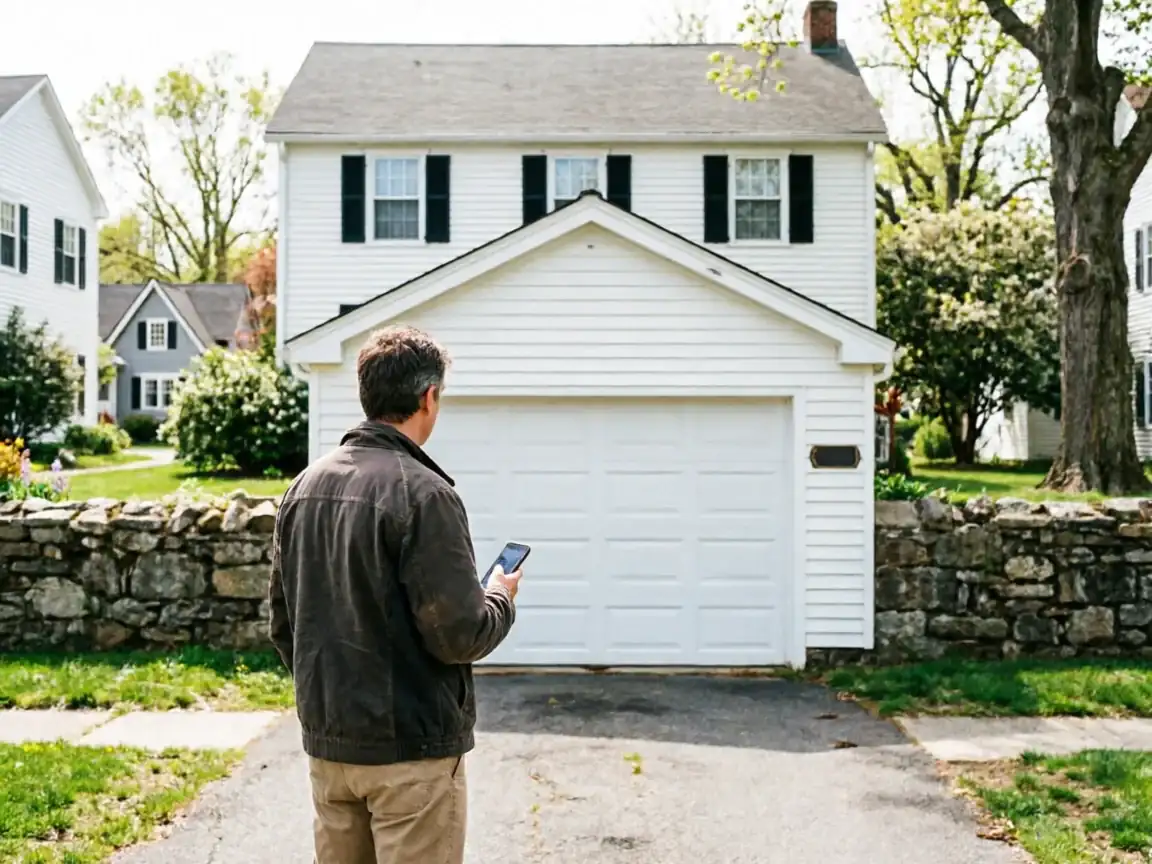
  1. A man stands in a driveway holding a phone, facing a white garage door.
    1

    Tell us what’s wrong

    Describe the symptom - won’t open, loud bang, opener runs but the door won’t move.

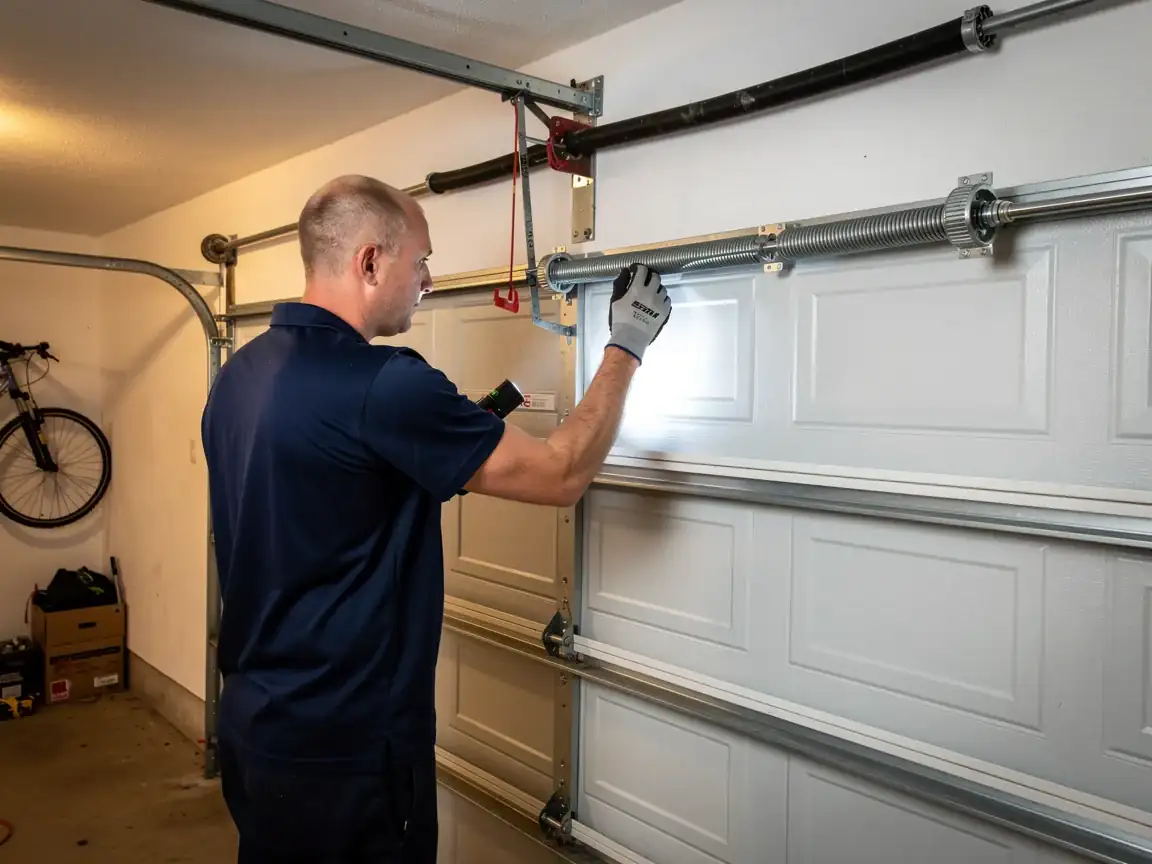
  2. A technician shines a flashlight on a garage door torsion spring.
    2

    On-site diagnosis

    A technician tests the door under power and by hand and finds what actually failed.

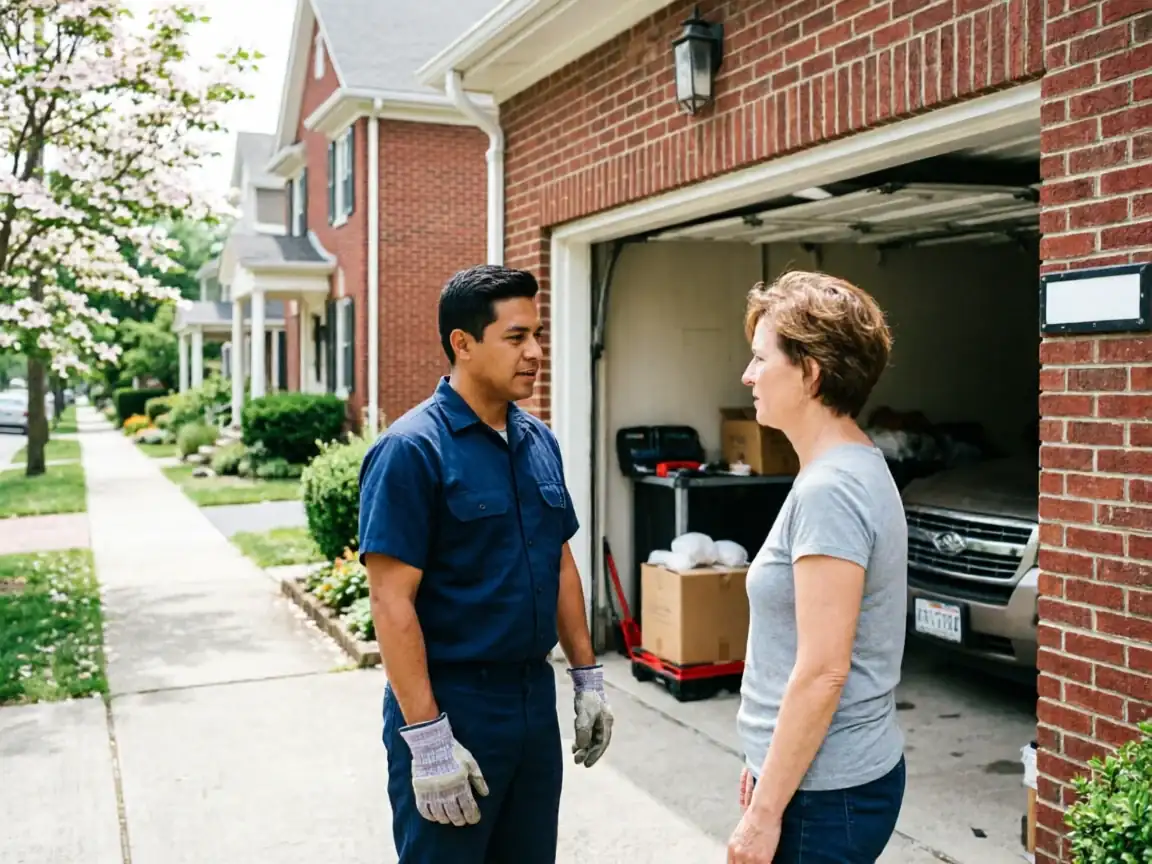
  3. A technician talks to a woman in front of a brick house with an open garage.
    3

    Clear, up-front plan

    You get the fix that’s needed and what drives the cost - before any work starts.

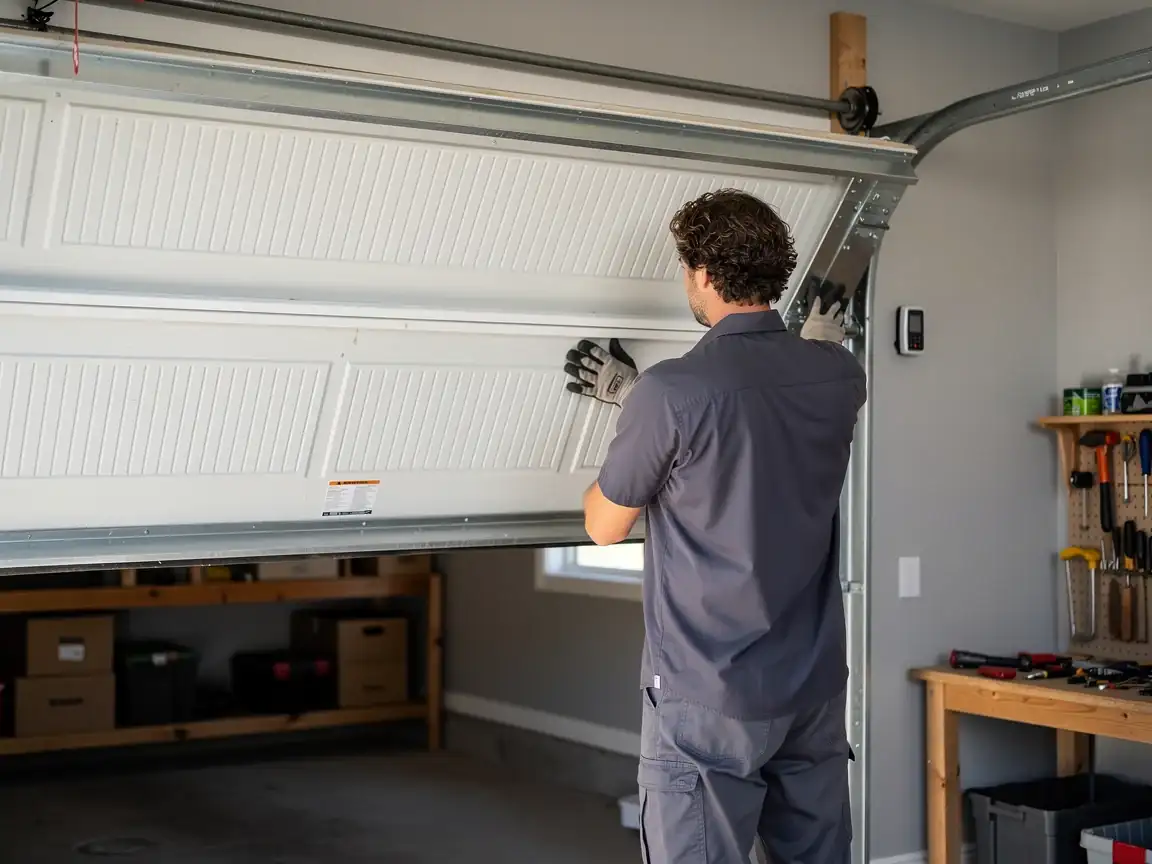
  4. A technician in a gray uniform is working on a white garage door.
    4

    Repaired & tested

    The repair is done, the door is set true and tested, and the work area left clean.

Not sure which repair your door needs in Glastonbury, CT? Describe what it’s doing - every job starts with a diagnosis.

How we work

What to expect

  • Diagnosis firstEvery visit starts by finding what actually failed - not a pre-written parts list.
  • The right part for the doorSprings and openers matched to the door’s weight and age, so the fix holds up.
  • Straight answersWhen a repair makes more sense than a replacement - or the reverse - you hear it plainly.
  • Clean, careful workTension released safely, hardware set true, the door tested under power before we leave.
What we do

Garage Door Services

Repair and installation work for Glastonbury homes and businesses.

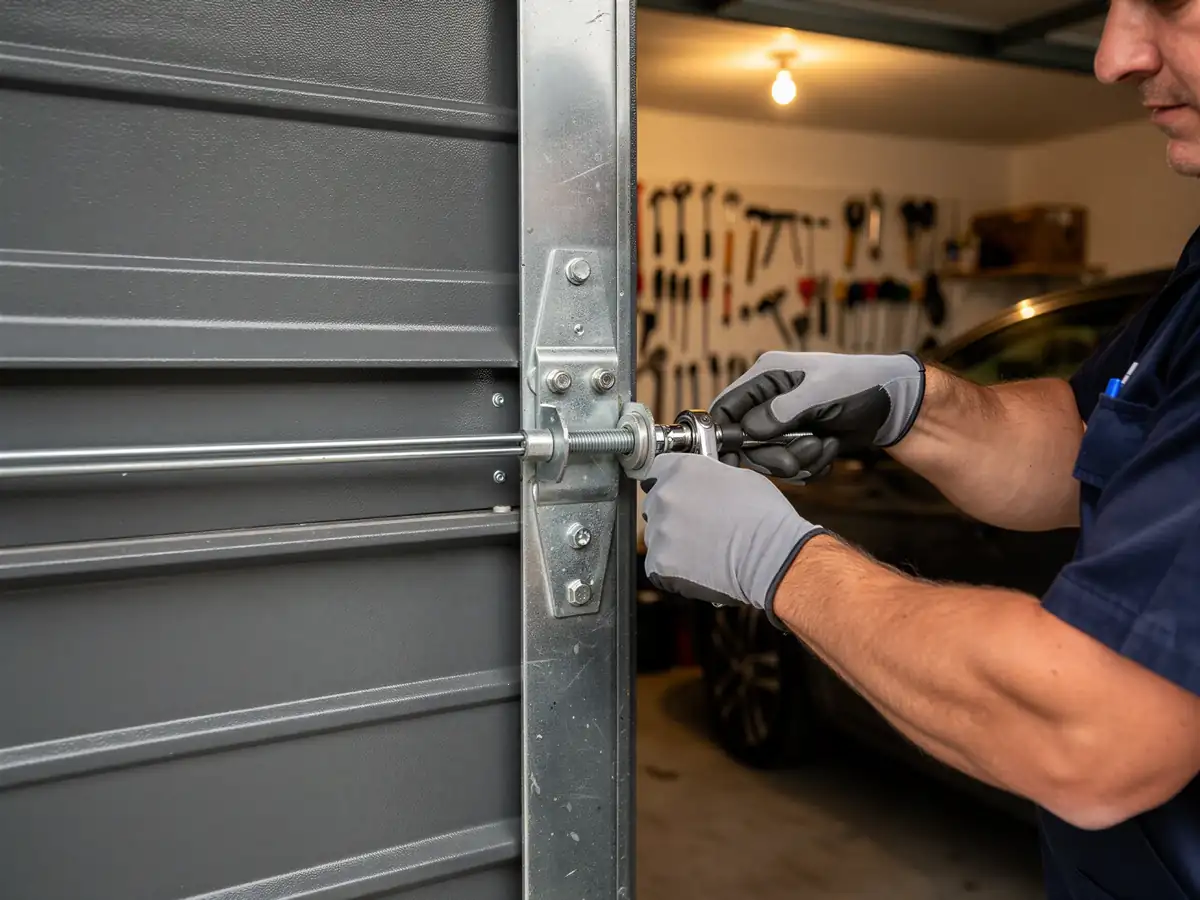
A technician in gloves adjusts a garage door roller and track.

Garage Door Repair

Garage door repair for Glastonbury homes built between 1938 and 1990, where original torsion hardware and cold-weather strain cause the most common spring and opener failures.

Learn more
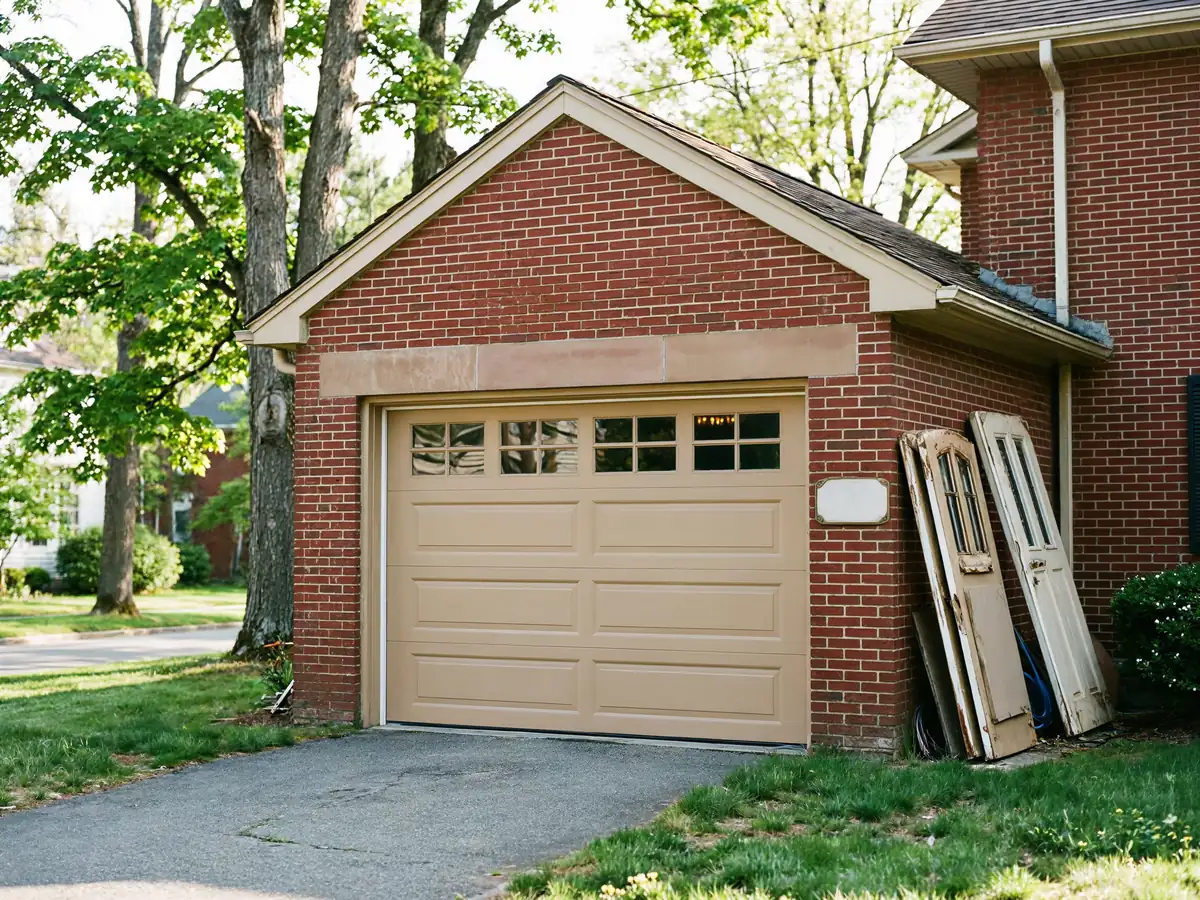
A tan garage door with windows is on a brick garage next to a driveway.

Garage Door Installation

Garage door installation in Glastonbury, CT for homes built mostly 1938 to 1990, where original openers and tracks no longer match new doors or cold winters.

Learn more
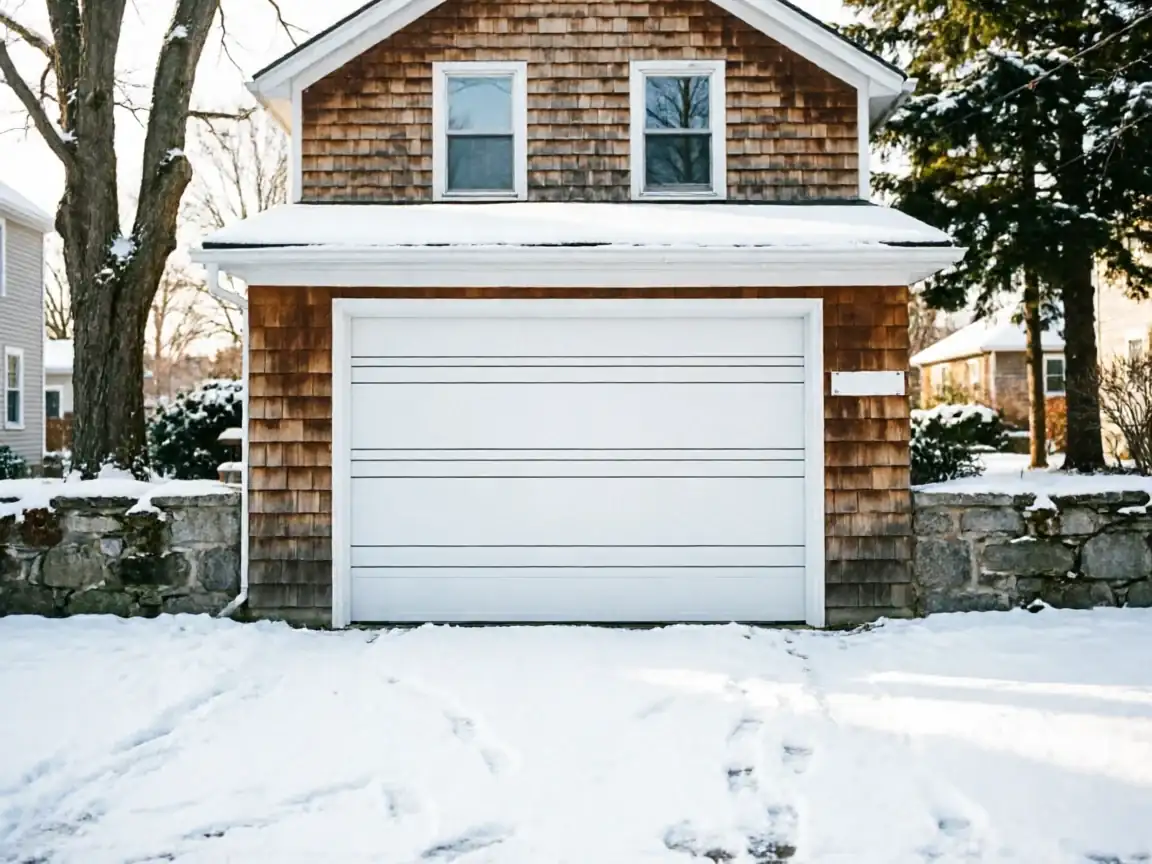
The house has a white garage door, cedar shake siding, and a snow-covered driveway.

Garage Door Service

Garage door repair for Glastonbury's 1960s-70s housing stock. We know why torsion springs and openers fail here, and what a cold Connecticut winter does to them.

Learn more
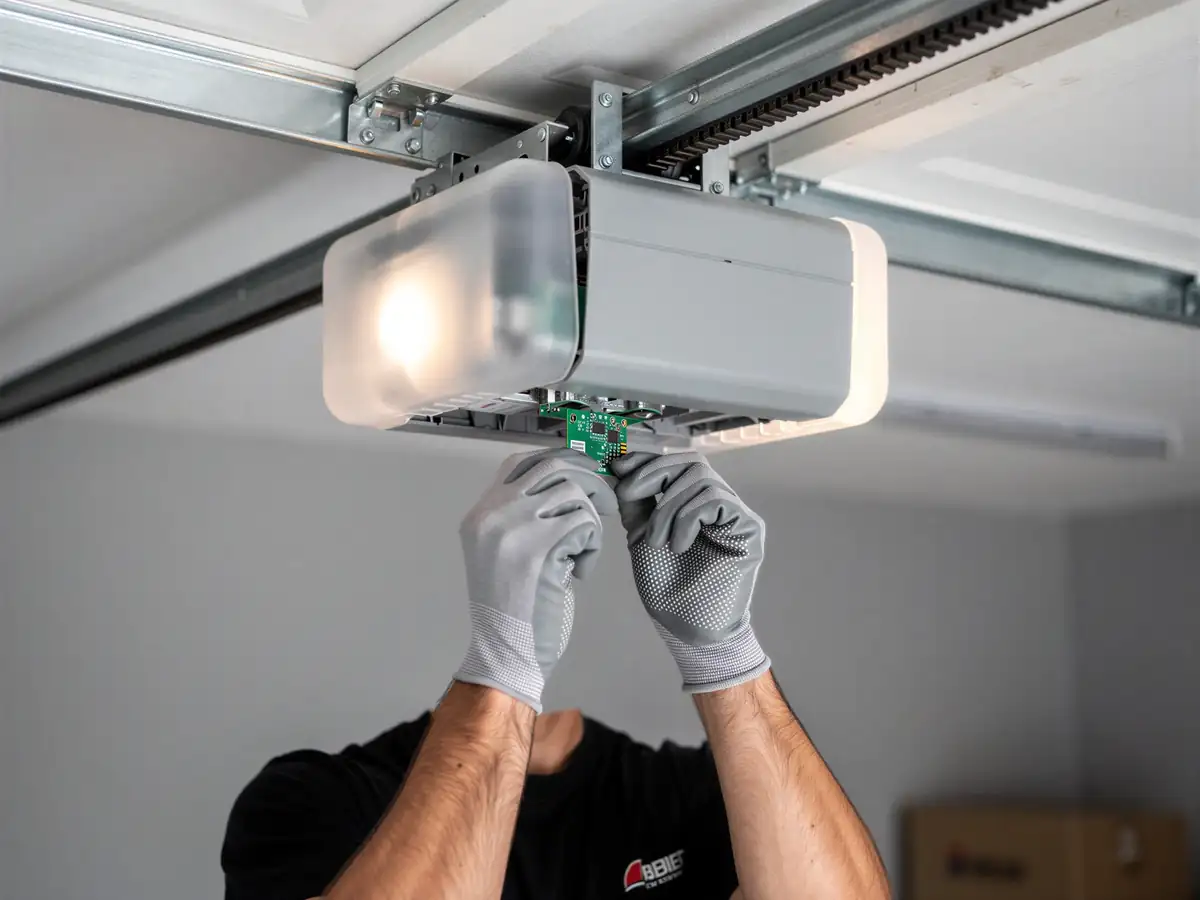
A technician in gloves works on the circuit board of a garage door opener.

Opener Repair

Opener dead or acting up in a Glastonbury home built before 1990? We diagnose the fault, price the fix plainly, and get the door moving again the same visit.

Learn more
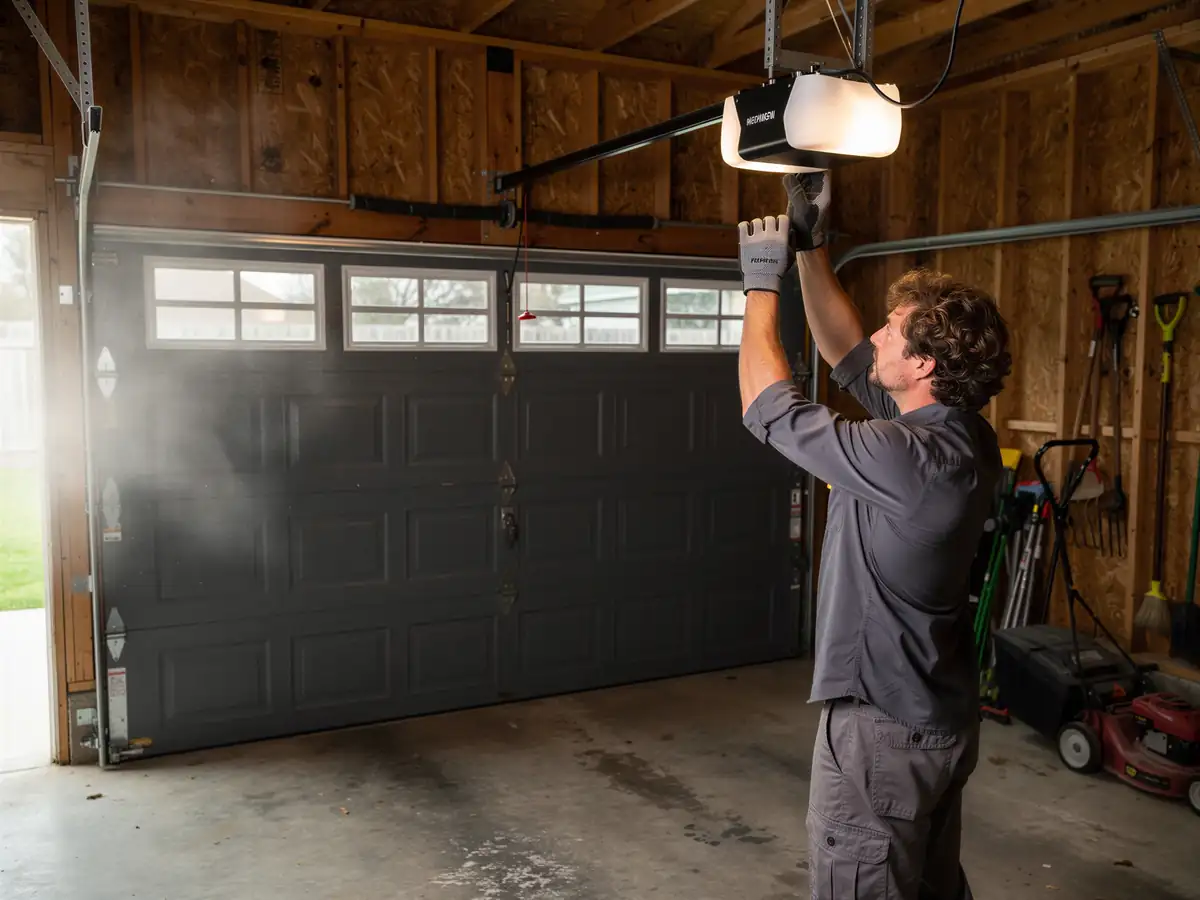
A technician adjusts a garage door opener above a dark gray garage door.

Opener Installation

Opener installs and swaps for Glastonbury homes built mostly between 1960 and 1990, where original drive units are decades past their rated life in a cold climate.

Learn more
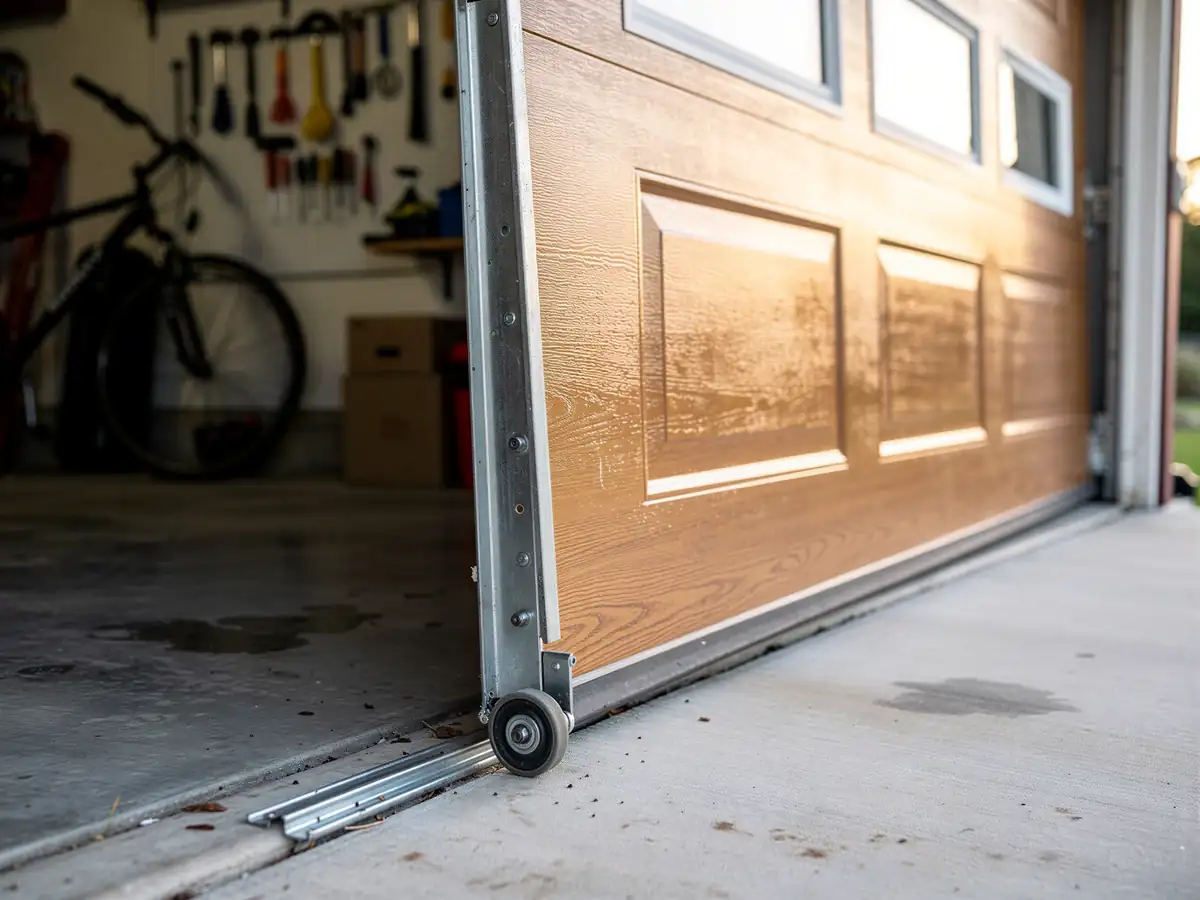
The garage door is partially open with a roller off its track.

Off-Track Repair

Garage door jumped its track in Glastonbury? We explain why it happens so often in homes built 1938-1990 and what the fix actually costs.

Learn more
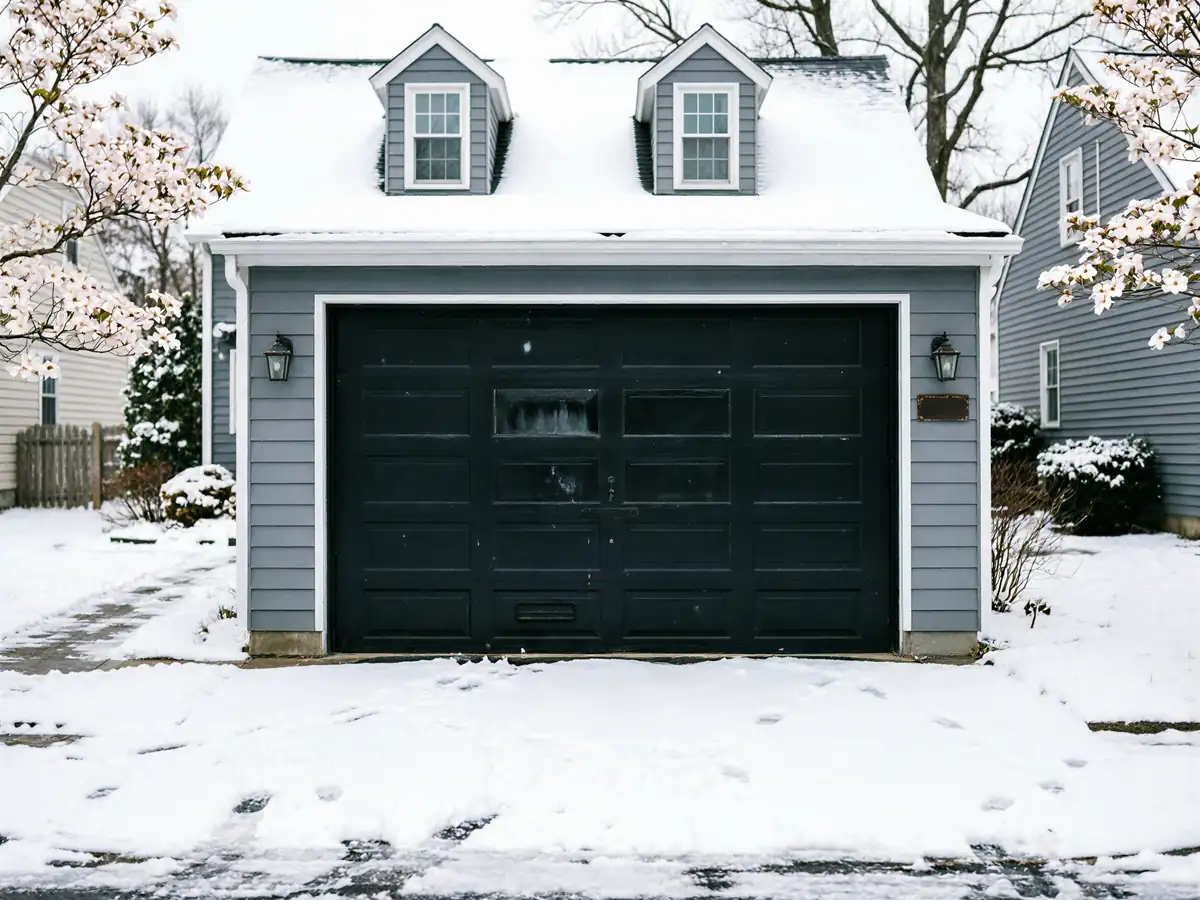
A gray garage with a black door and two dormer windows is covered in snow.

Panel Replacement

Cracked, dented, or rusted garage door panel in Glastonbury? We match panels on 1960s-70s doors and explain what drives cost and timeline for this housing stock.

Learn more
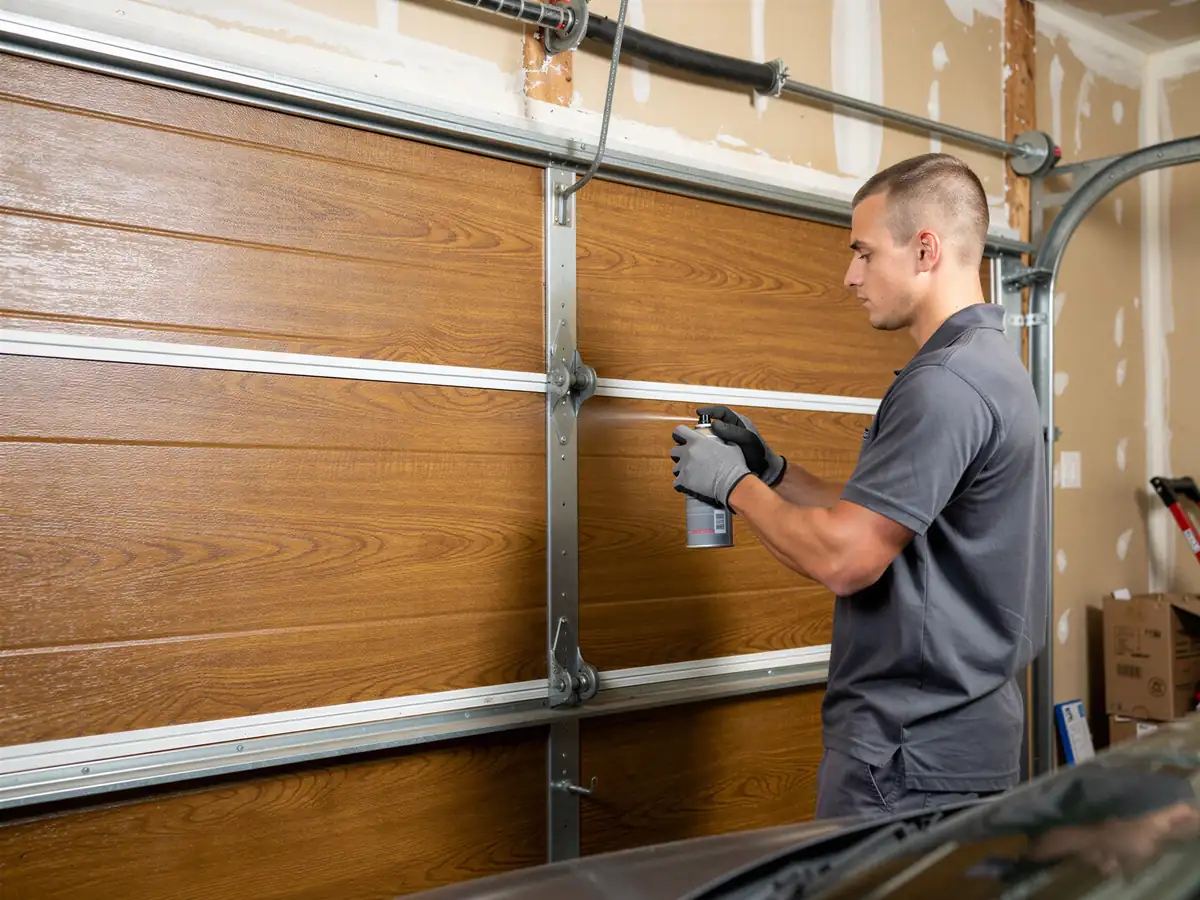
A technician in gray gloves sprays lubricant on a brown garage door.

Maintenance

Glastonbury homes built between 1938 and 1990 carry original hardware that wasn't made for New England winters. Here's what maintenance actually catches before it fails.

Learn more
Questions

Frequently asked

Straight answers about garage door repair in Glastonbury. Still unsure? Ask us directly.

Can I add a strut to my garage door myself?

You can buy strut kits, but sizing and placement matter - a strut in the wrong spot doesn't do much. On a double door built in the 1960s or 70s, the panel gauge and existing hardware also affect whether a strut will bolt on cleanly or whether the track needs adjustment too. We'd rather you ask than guess on this one.

How do I know if my door is already bowed?

Close the door and look along the horizontal line of each panel from the side, not straight on. A slight outward curve between the roller brackets is the sign. You might also notice the door harder to open by hand, or a gap appearing at the top corners that wasn't there before.

Does a wider door really matter that much more than a single door?

Yes. Wind force on a flat surface scales with area, and a standard double opening is roughly twice the width of a single. An unreinforced panel that holds up fine on a single-car door can bow on the same material stretched across a double-car span.

Ready to get your garage door sorted?

Tell us what it’s doing and where you are in Glastonbury - we’ll take it from there.

Request a QuoteCall