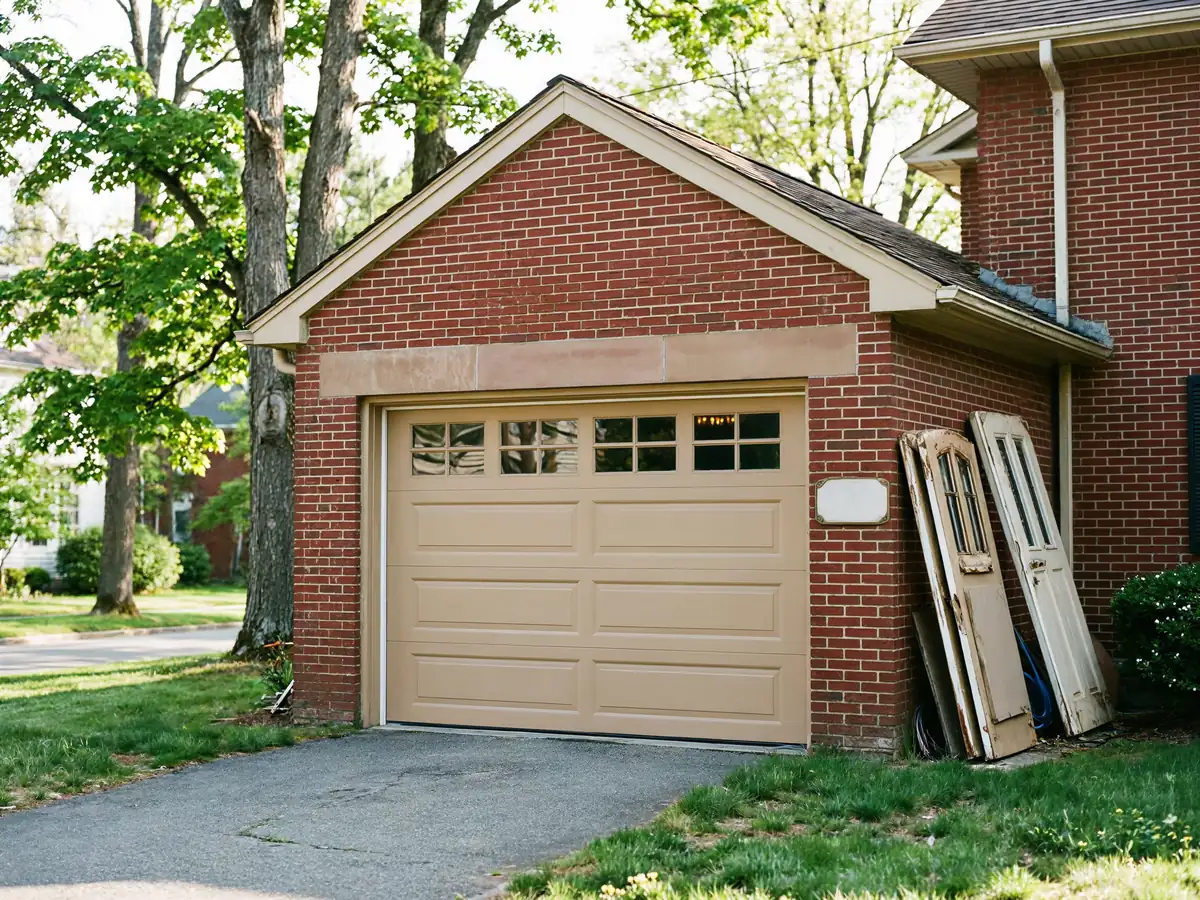
The Symptom
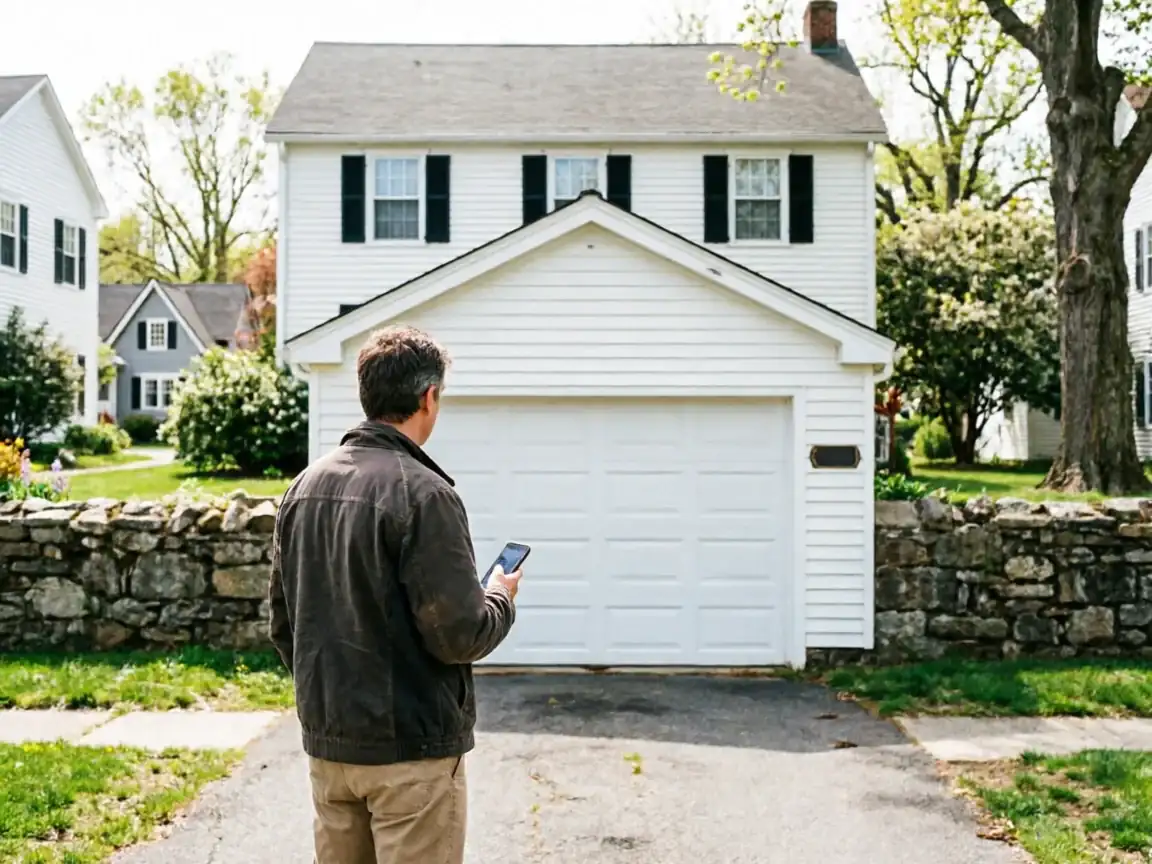
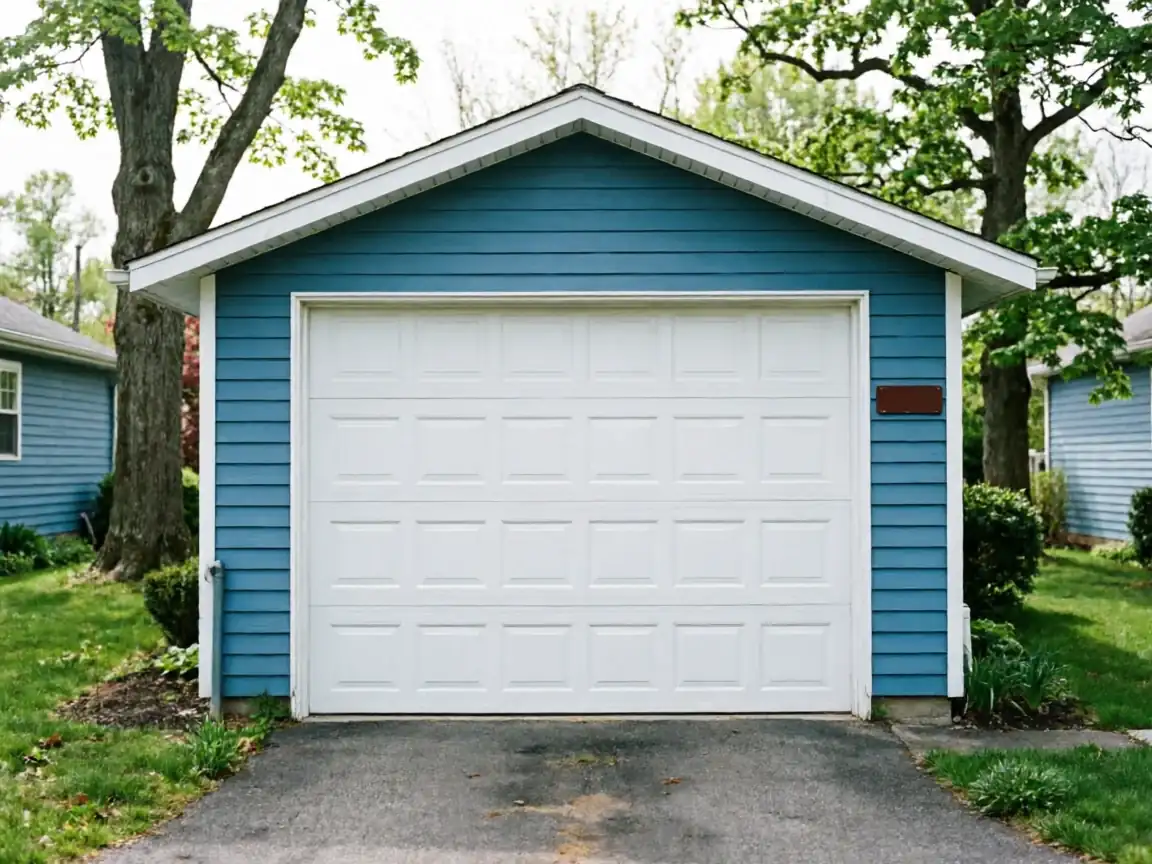
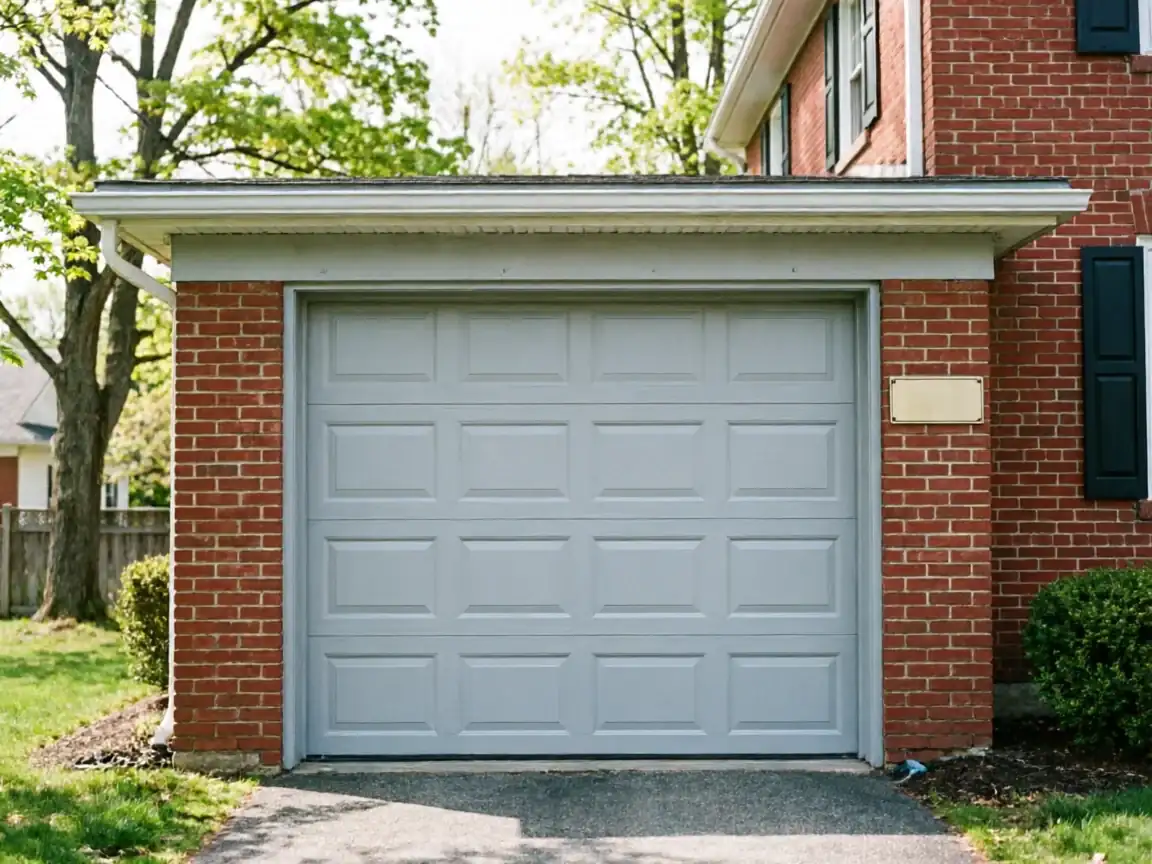
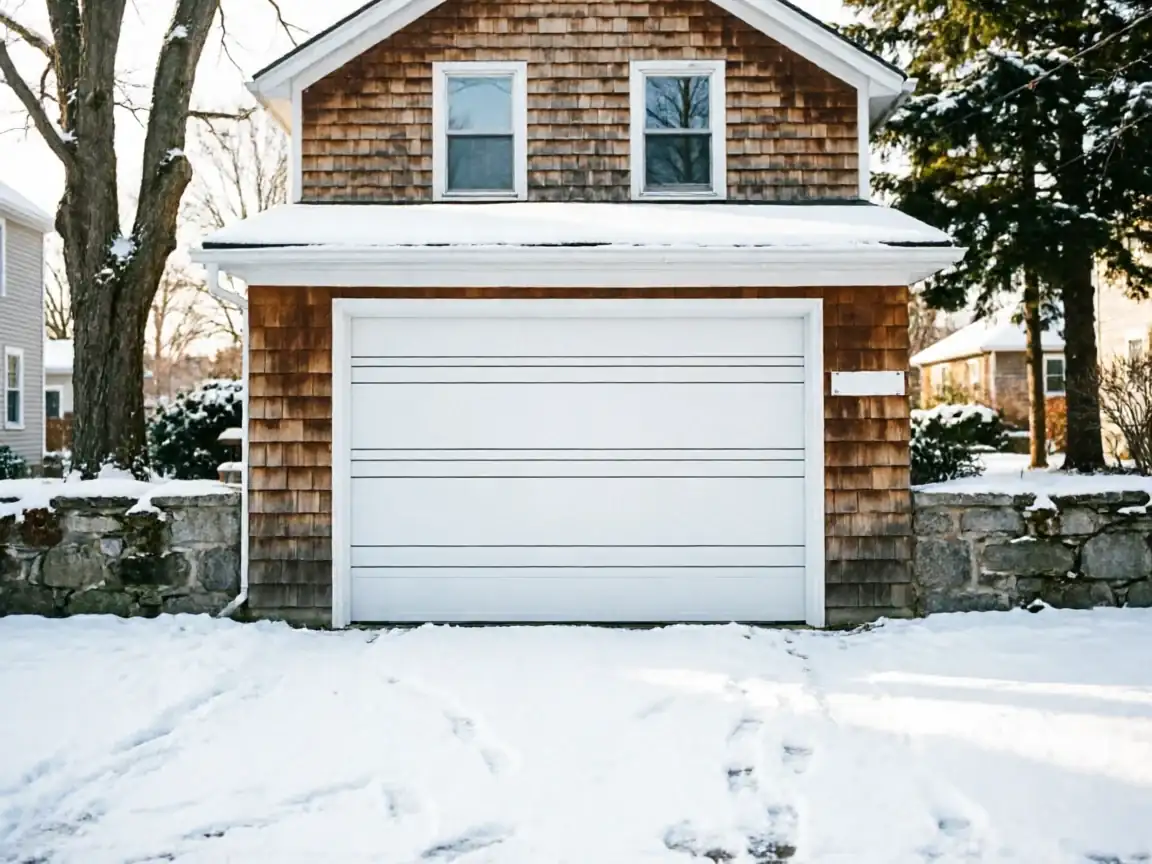
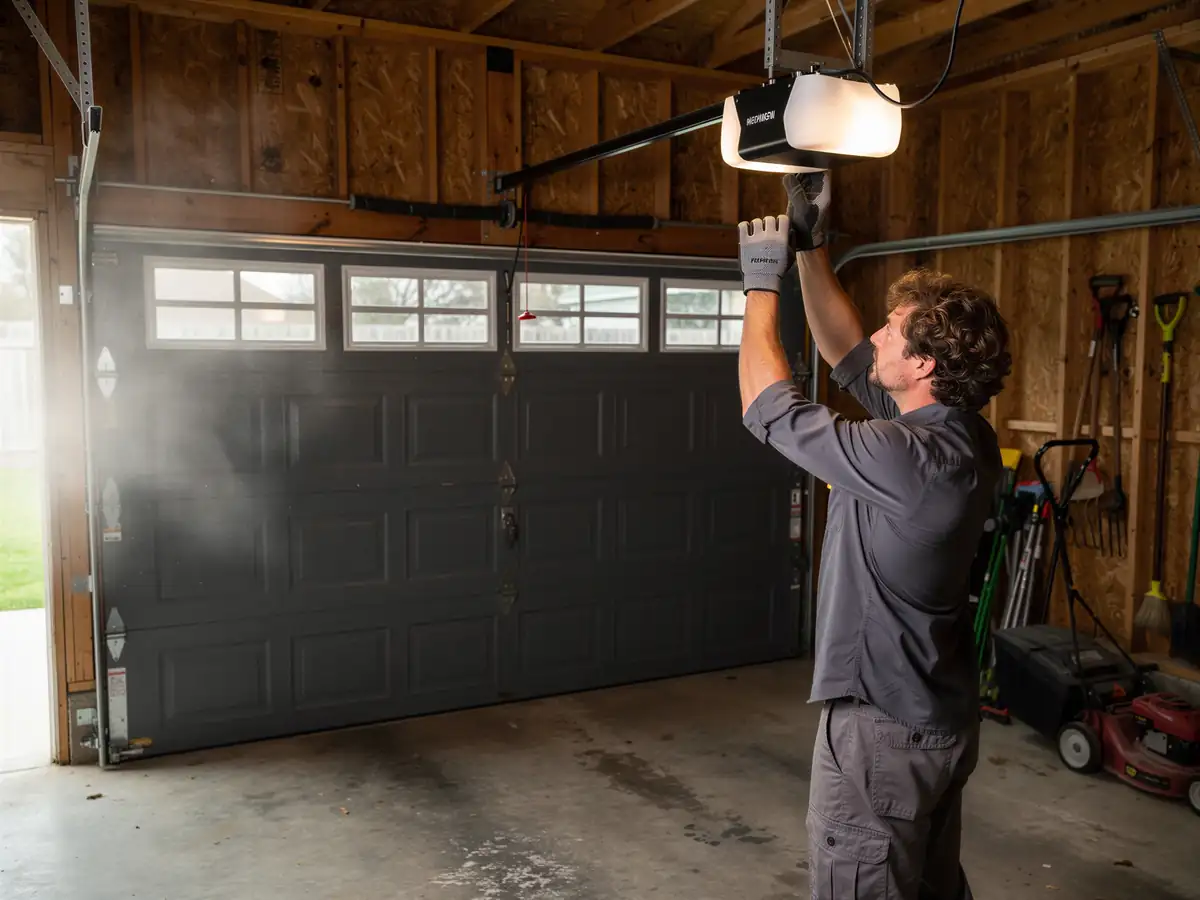
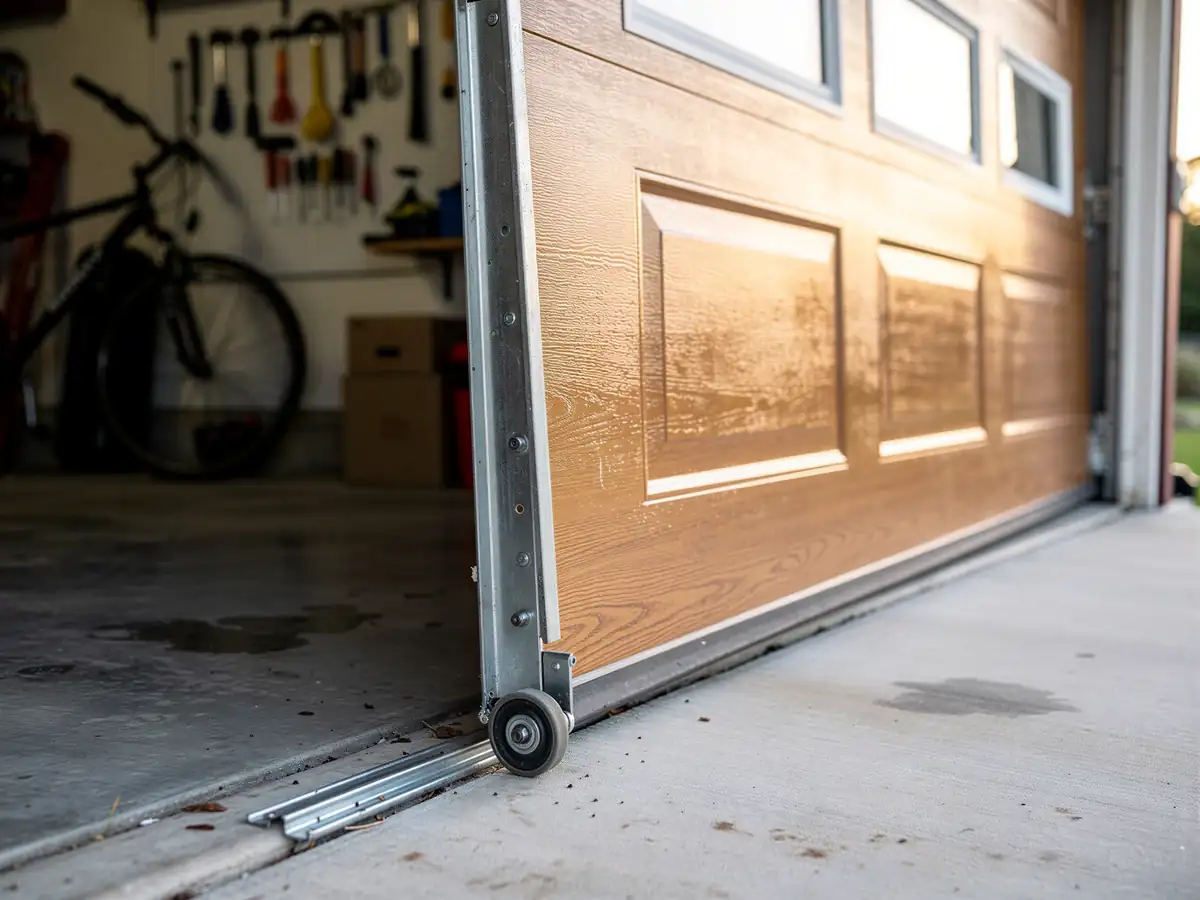
You notice it before you can name it. The door hesitates on the way up, or it closes a half inch off square and the weatherstrip never quite seats. The opener motor runs longer than it used to, straining on a track that's bowed just enough to catch. On older single-car bays the panel itself has gone soft at the bottom corner where thirty winters of melt and refreeze have worked at the steel.
None of this is dramatic. That's the problem - it's gradual enough that most owners live with it for a season or two before calling anyone. By the time the door won't open at all, the spring or the opener has usually been compensating for a misaligned track for months. If your house is one of the many in Glastonbury built mid-century, this is less a one-off breakdown and more the predictable end of a door and hardware set that's run its full life.
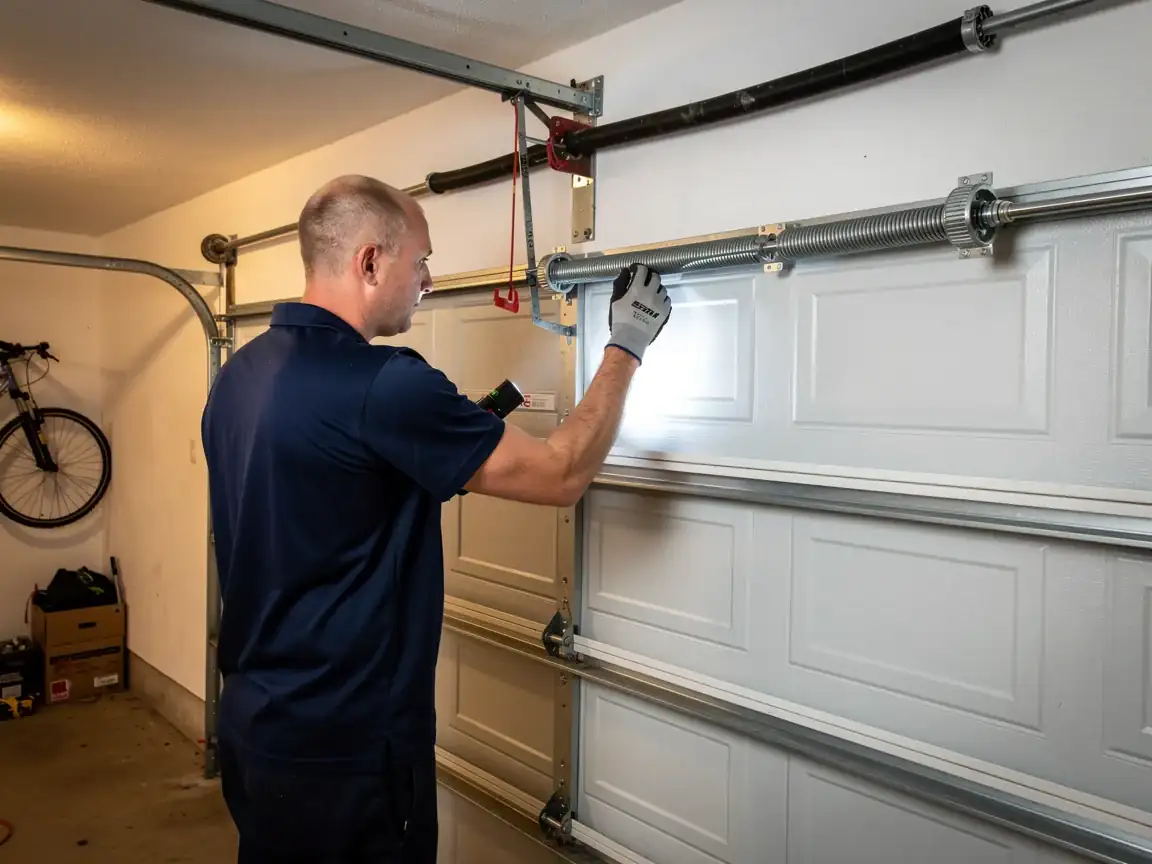
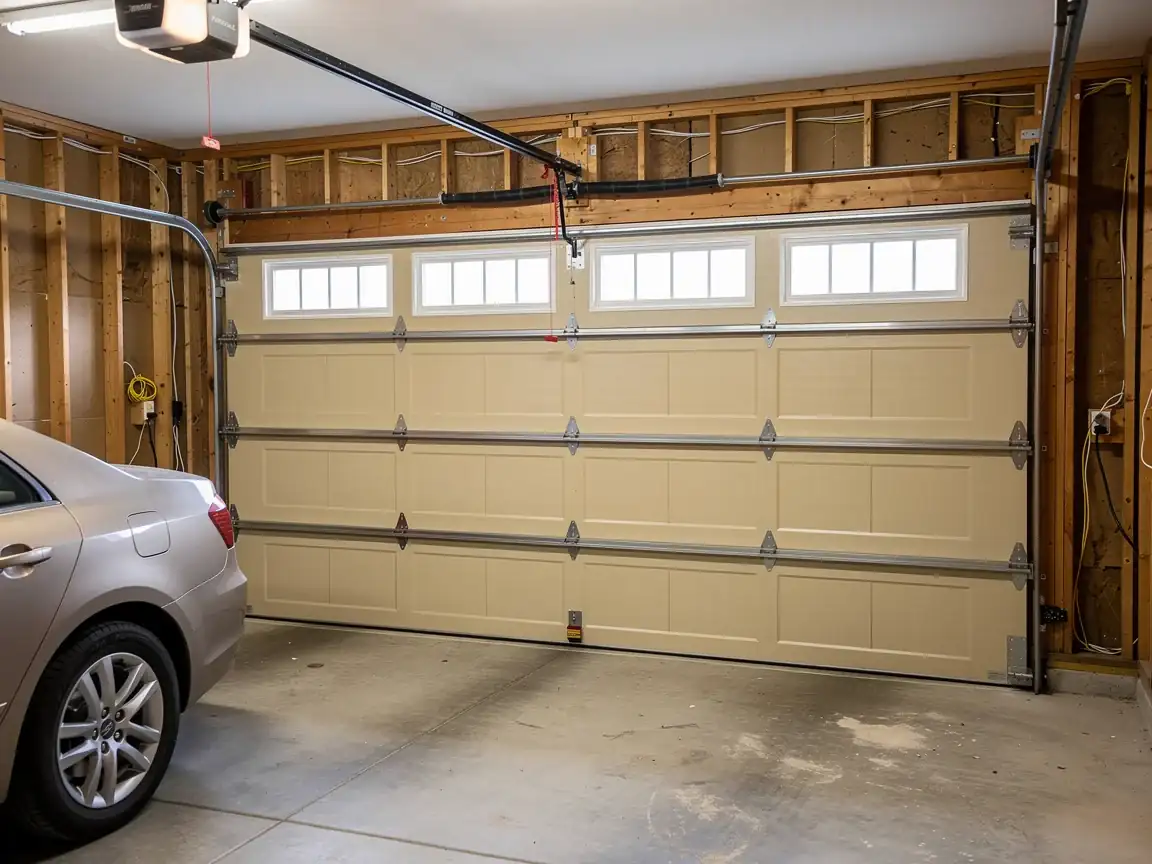
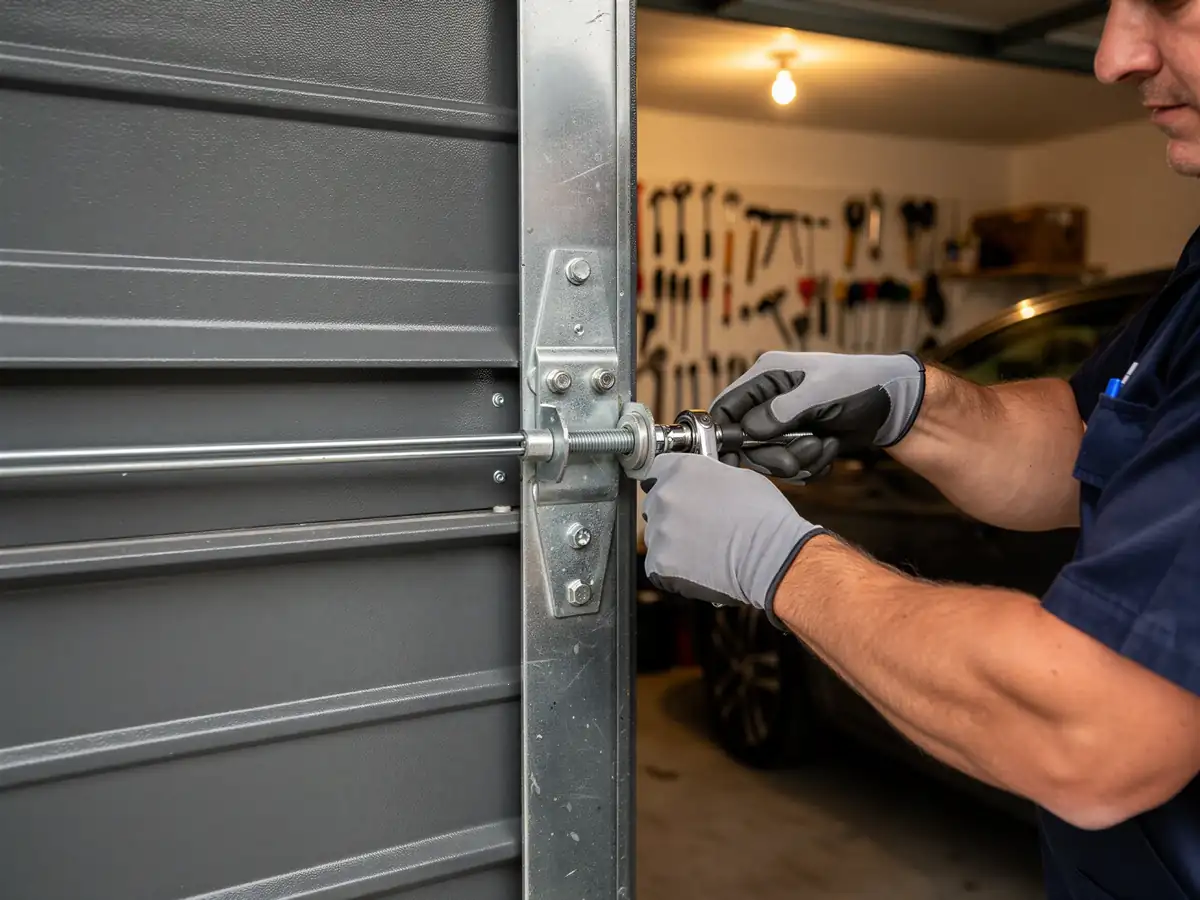
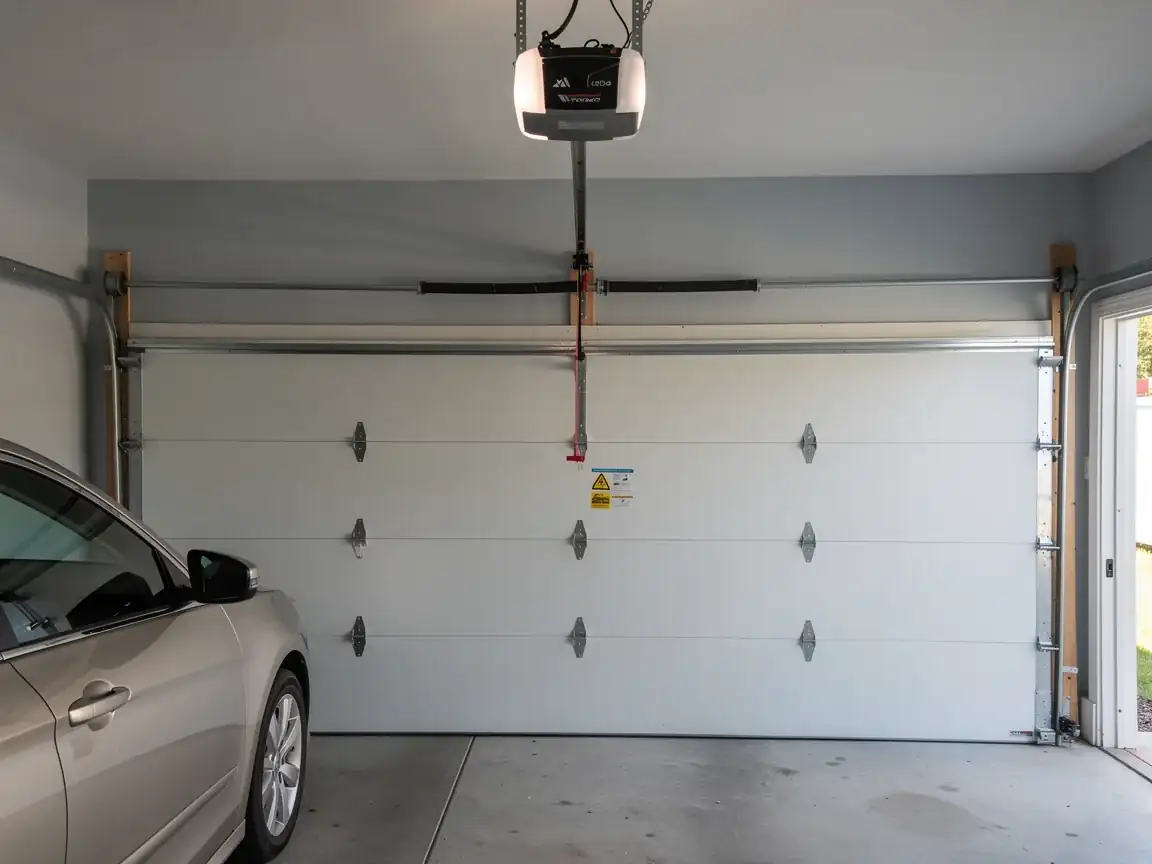
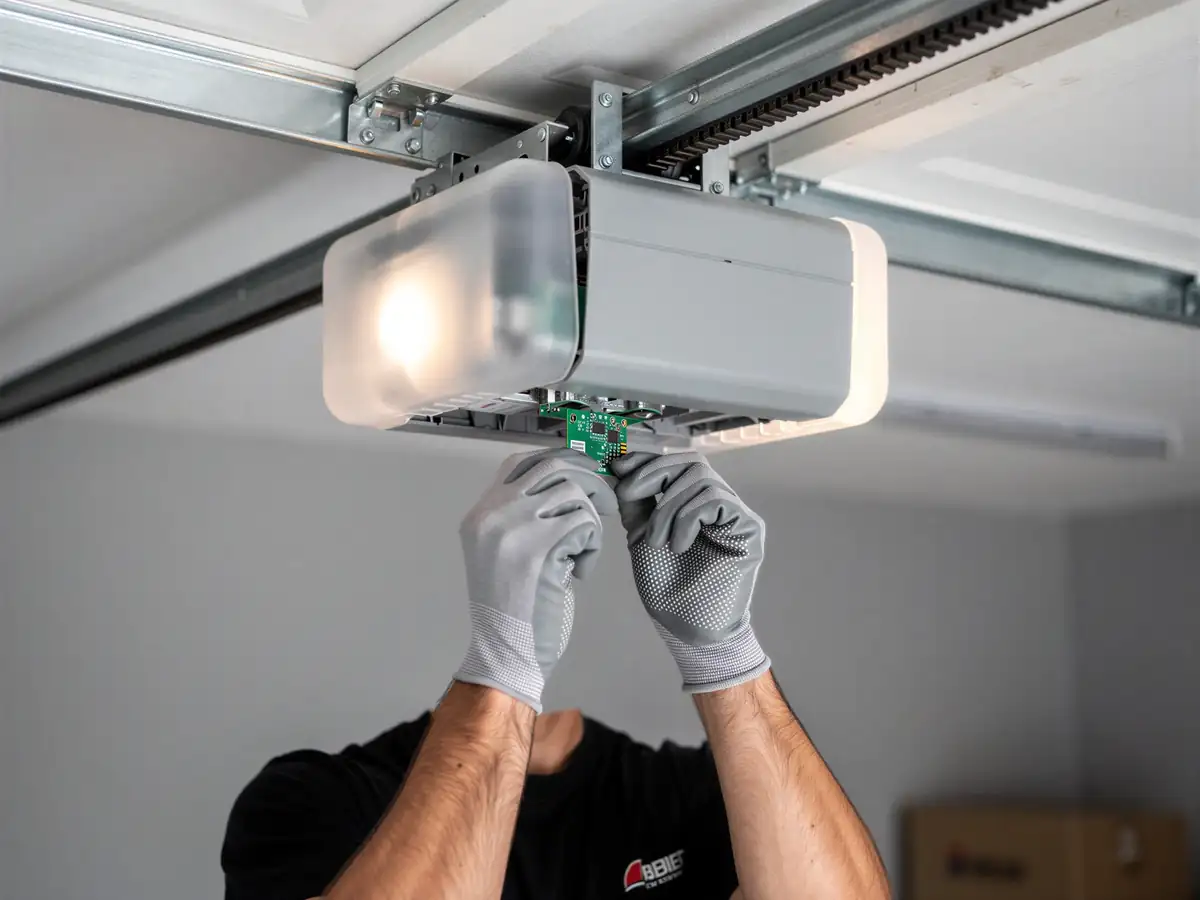
We're not talking about a stuck remote battery here. We're talking about a door assembly - track, rollers, springs, opener - that was sized and installed for a house built decades ago, now being asked to do a job it wasn't built for anymore.
Why This Fails Locally
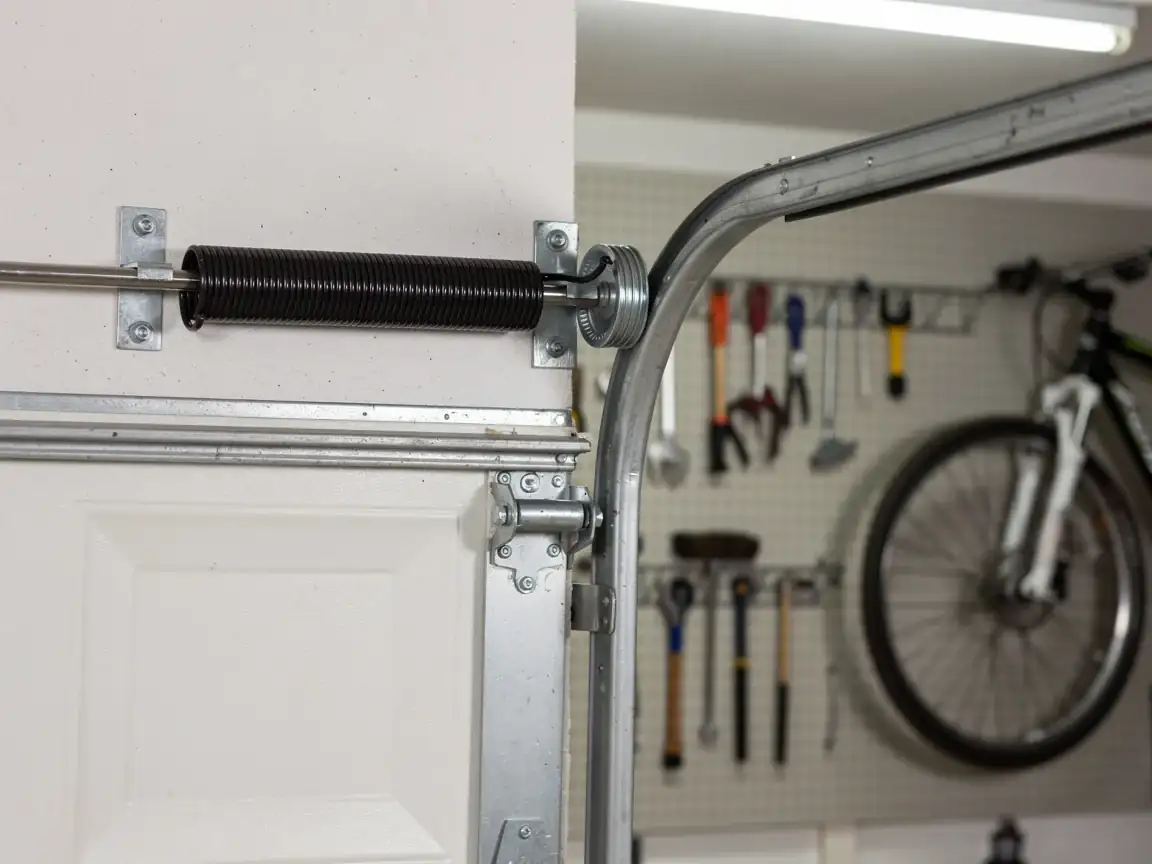
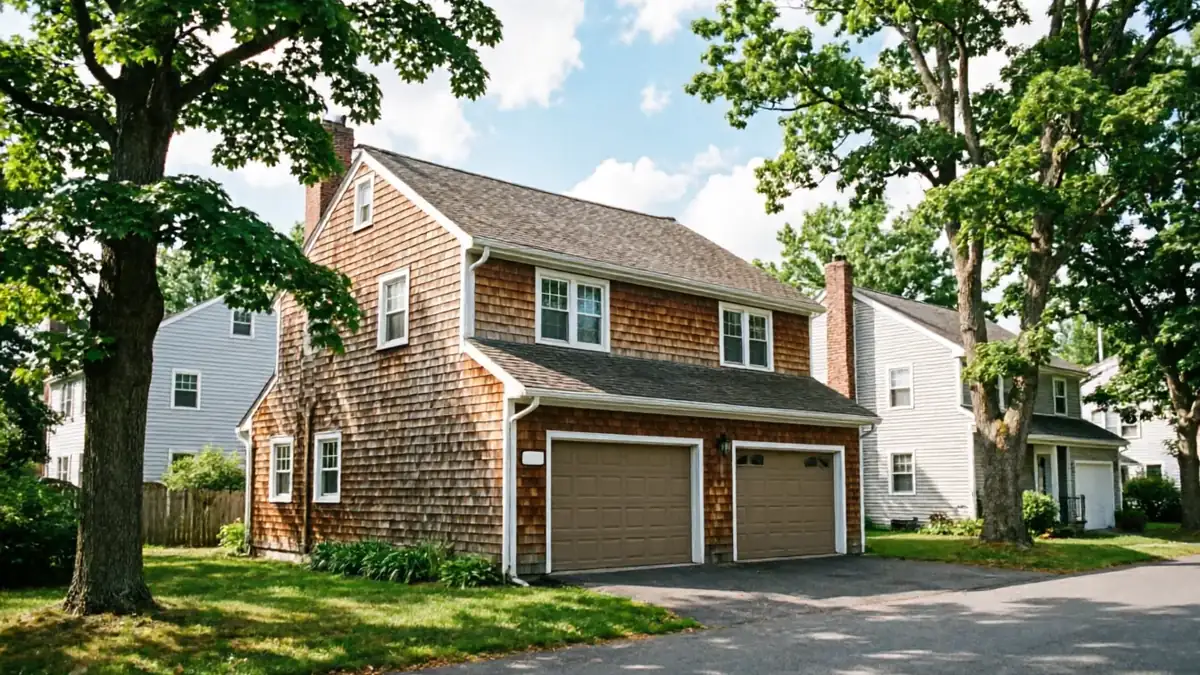
Housing stock in this part of Connecticut mostly went up between 1938 and 1990, with the median sitting around 1973, and that pattern holds across the 61 named sections that make up the wider service area. A door and track system from that era was built to the standards and materials of its time - often lighter-gauge steel, single-torsion spring setups, and openers rated for far less daily use than today's typical household puts on a garage door.
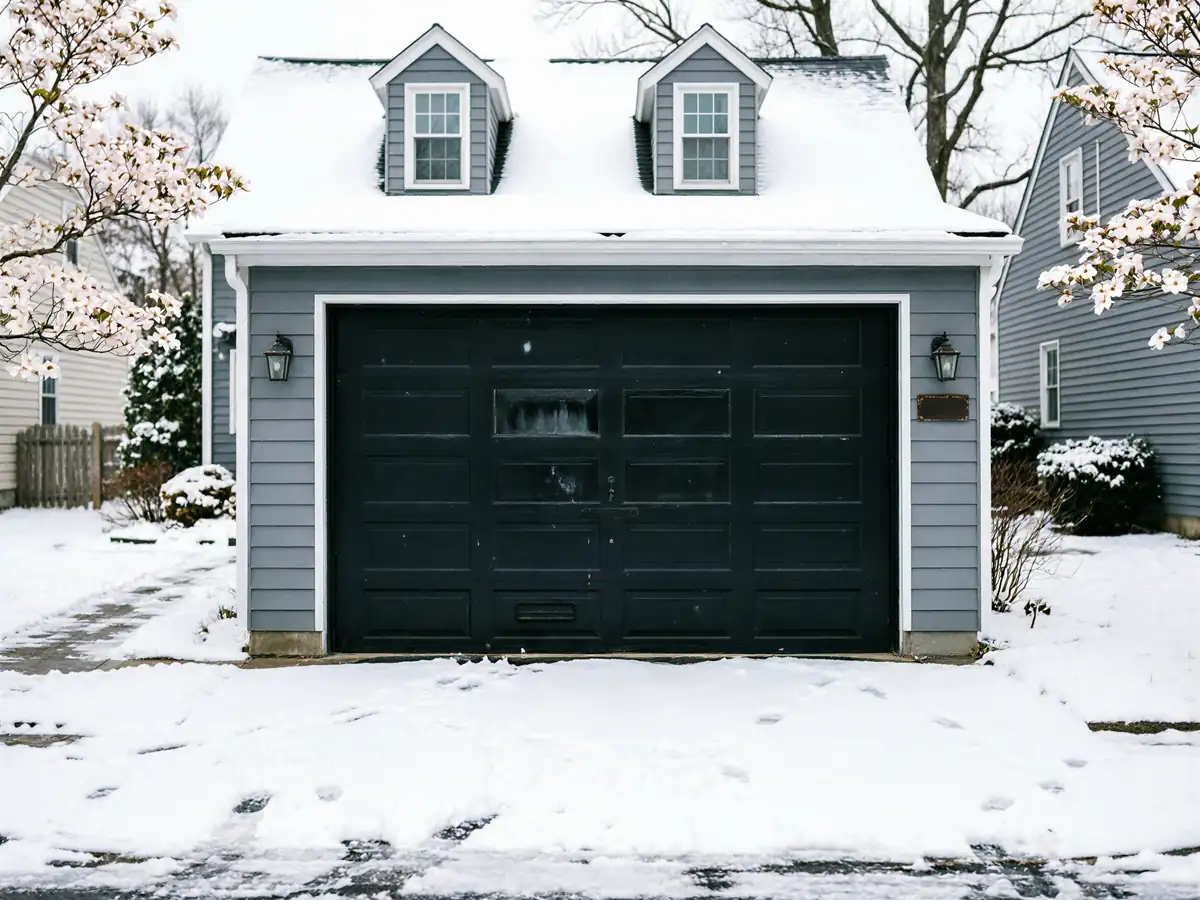
Pair that with a cold climate band rated severe, and you get a specific failure mode: steel contracts in deep cold, nylon rollers crack when they're already brittle from age, and lubricant that worked fine in July gums up or thins out in January. A track that's a sixteenth of an inch out of plumb is a minor annoyance in June and a jammed door in February.
This isn't a general 'old houses have old doors' observation. It's that a door installed when a house was built in, say, 1965 is now sixty years into a climate that cycles hard between humid summers and severe cold winters, twice a year, every year. Metal fatigues. Panel seams open. The failure isn't random - it's the house's age meeting the weather it's always had.
What You Pay
We don't have a published price list here, and we're not going to invent one
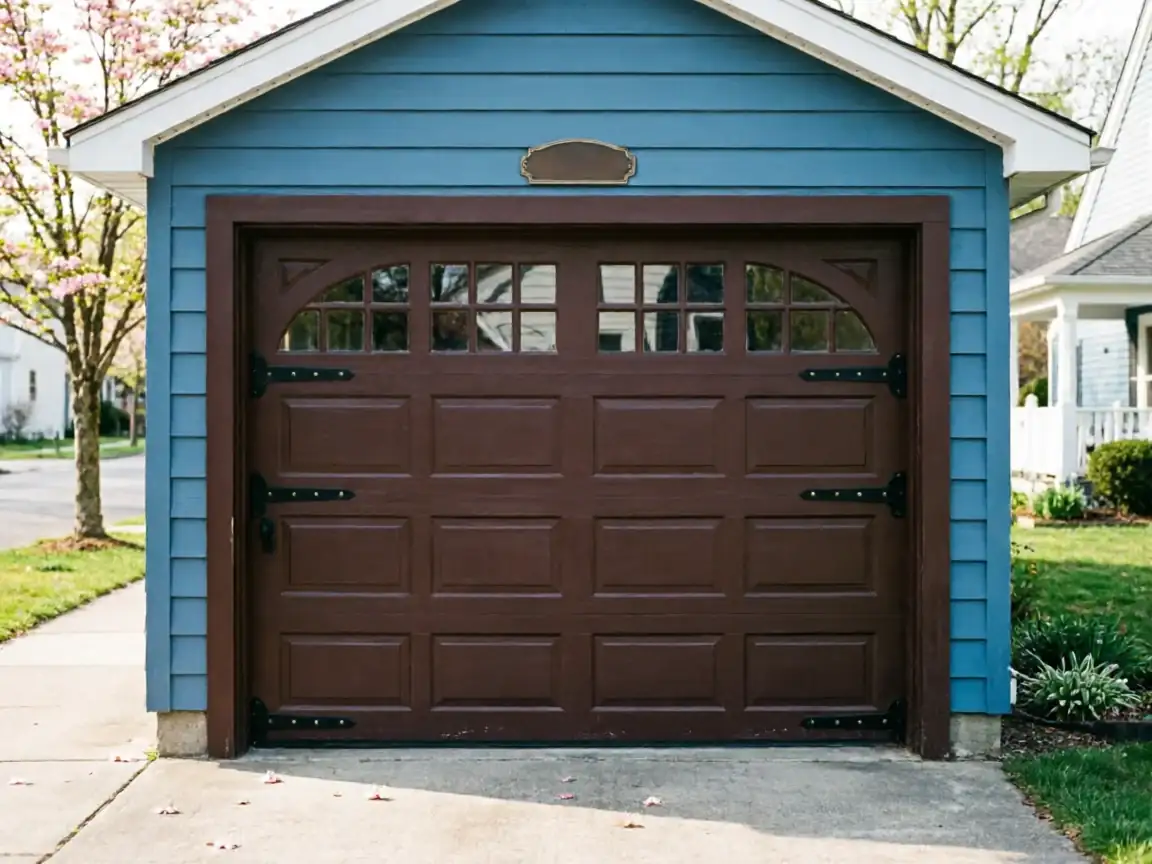
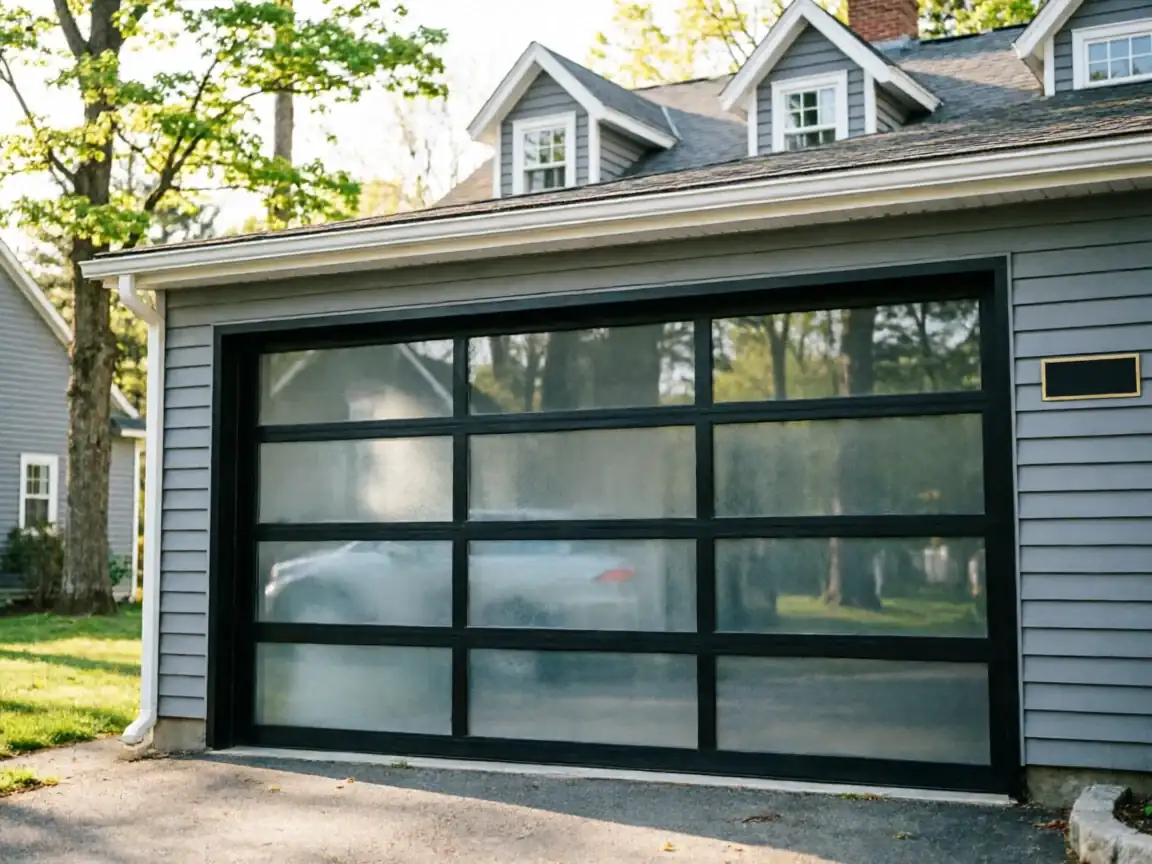
What a new installation costs depends on door size, insulation level, whether the opener gets replaced too, and whether the existing track and framing can be reused or need rework - and that last part matters more in houses with original 1960s-70s framing than in newer construction.
What we can tell you is who's paying for these jobs
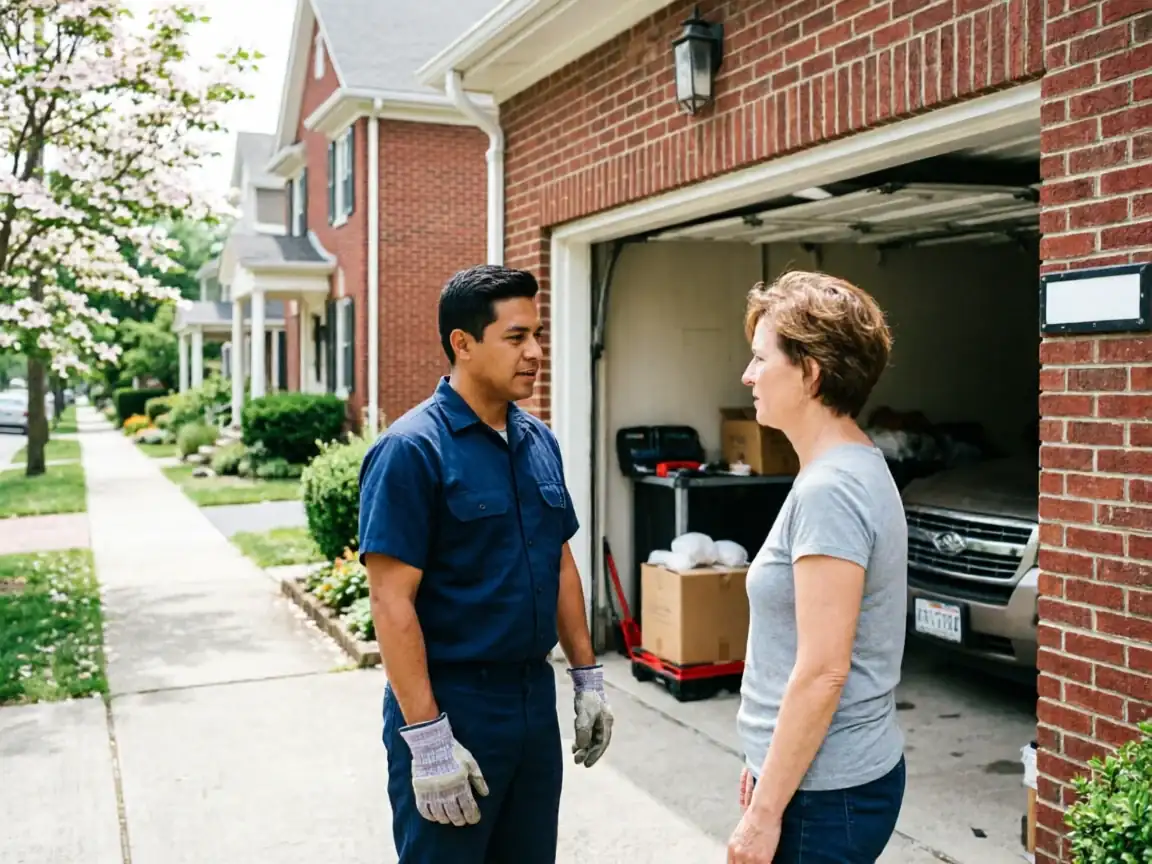
Across the service area, median household income runs around $107,012, and there are roughly 173,708 owner-occupied houses out of 364,772 total households - a market where most people own rather than rent, and most are replacing a door once in a long while rather than every few years. That shapes how we quote: we'd rather walk the opening, see the actual track and framing condition, and give you a number you can trust than guess over the phone and adjust it upward once we're on site.
- $107,012 median household income
- 173,708 owner-occupied
The honest limitation
If your opening is non-standard or the framing needs real carpentry, that adds time and cost beyond a straightforward swap, and we'll tell you that before we start, not after.
Time on the Job
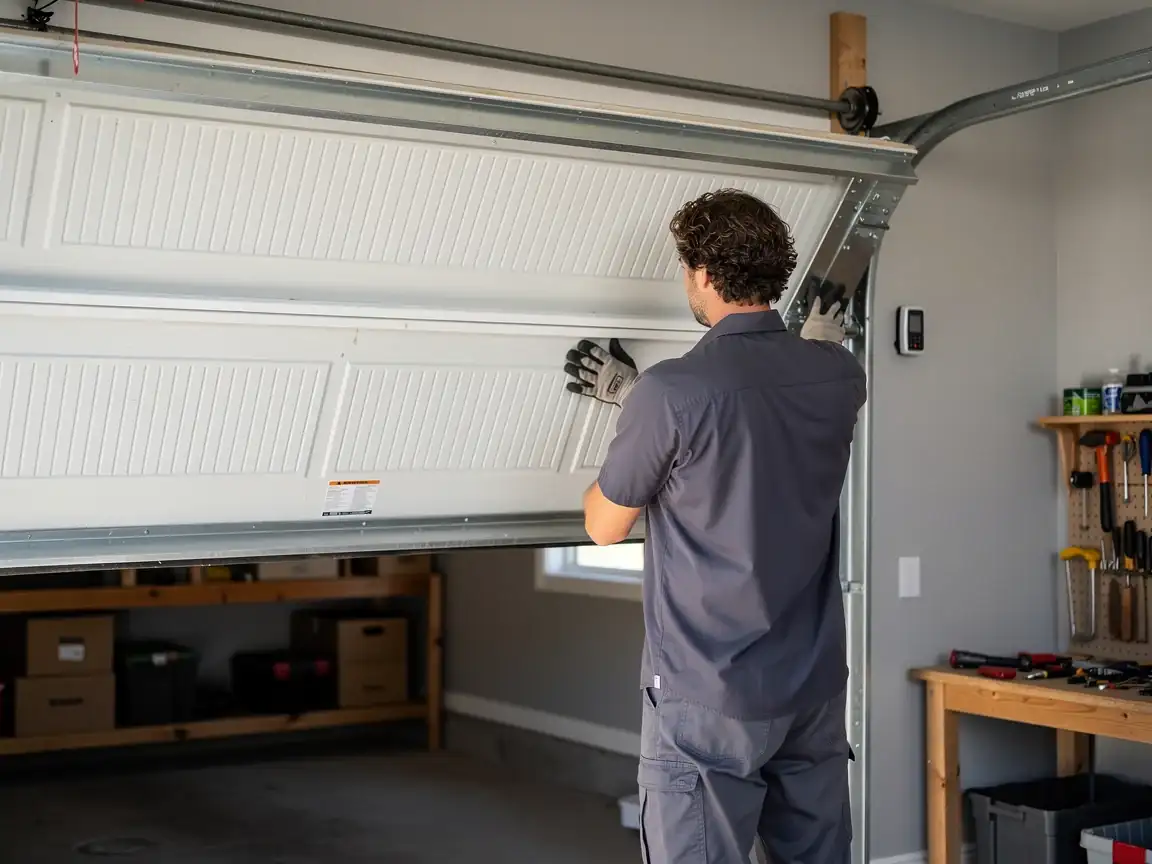
We don't have a fixed turnaround figure to quote you, and giving you one without real data would be worse than saying nothing. What we can say is what drives the time on a given job: whether it's a straight swap of door and opener onto existing track, or a full reframe because the old opening doesn't match a standard modern door size - common enough in houses built well before today's door manufacturing standards existed.
Homes clustered near Glastonbury Center, and out toward Wethersfield, East Hartford, and Rocky Hill, tend to share similar framing quirks from the same building era, which means once we've seen a few openings in a given neighborhood we usually know what we're walking into before we arrive. That doesn't make the job faster, but it does make the estimate more reliable.
What does add time, consistently: discovering rot in the jamb once the old door comes off, or finding an opener wired into a circuit that needs an electrician's attention first. We'd rather find that on the walkthrough than mid-install. If we do find it, we'll say so plainly and tell you what it changes about the schedule, rather than quietly running long.