Time on the Job
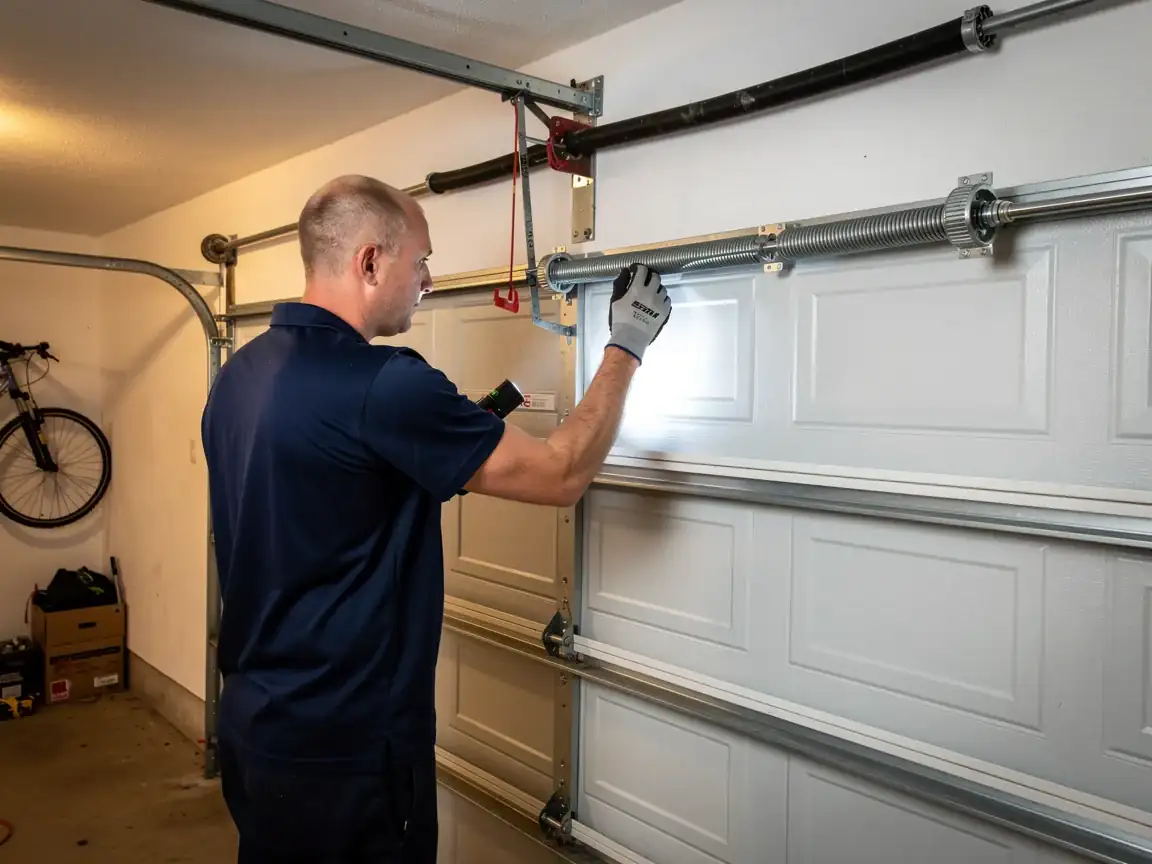
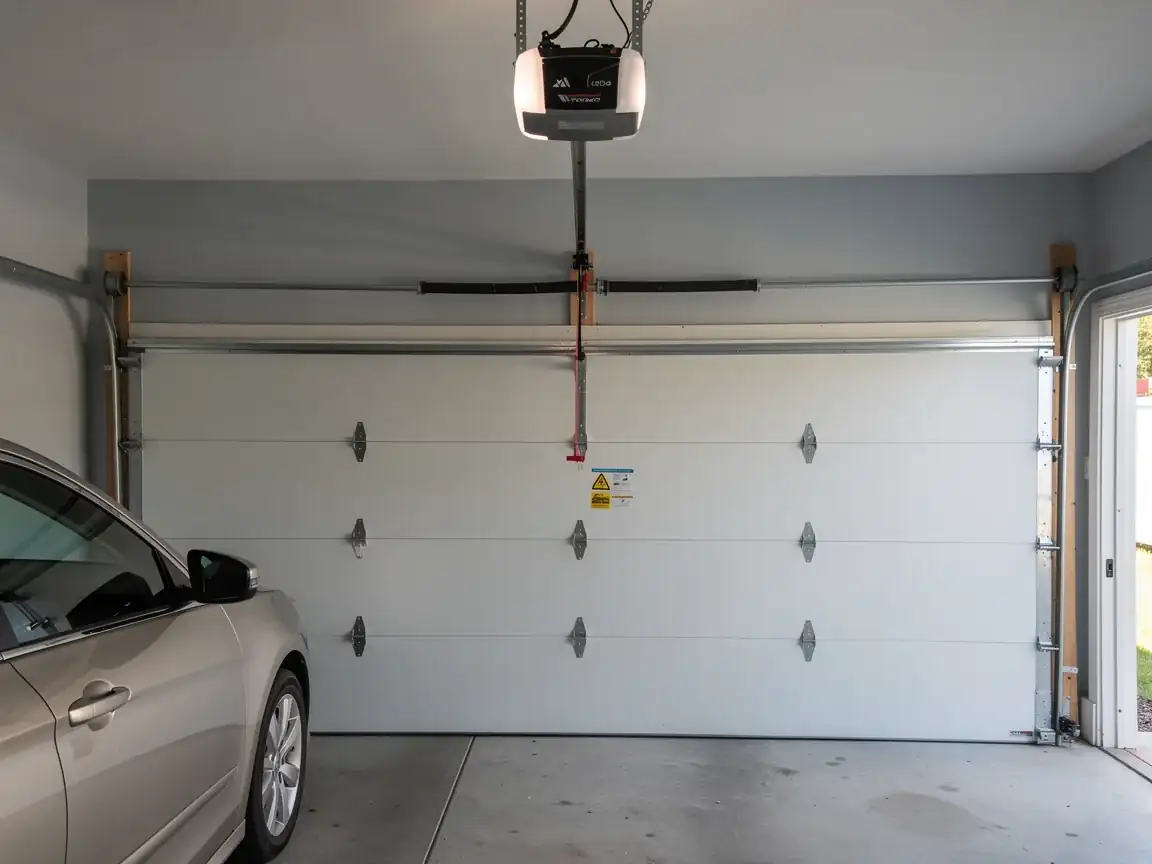
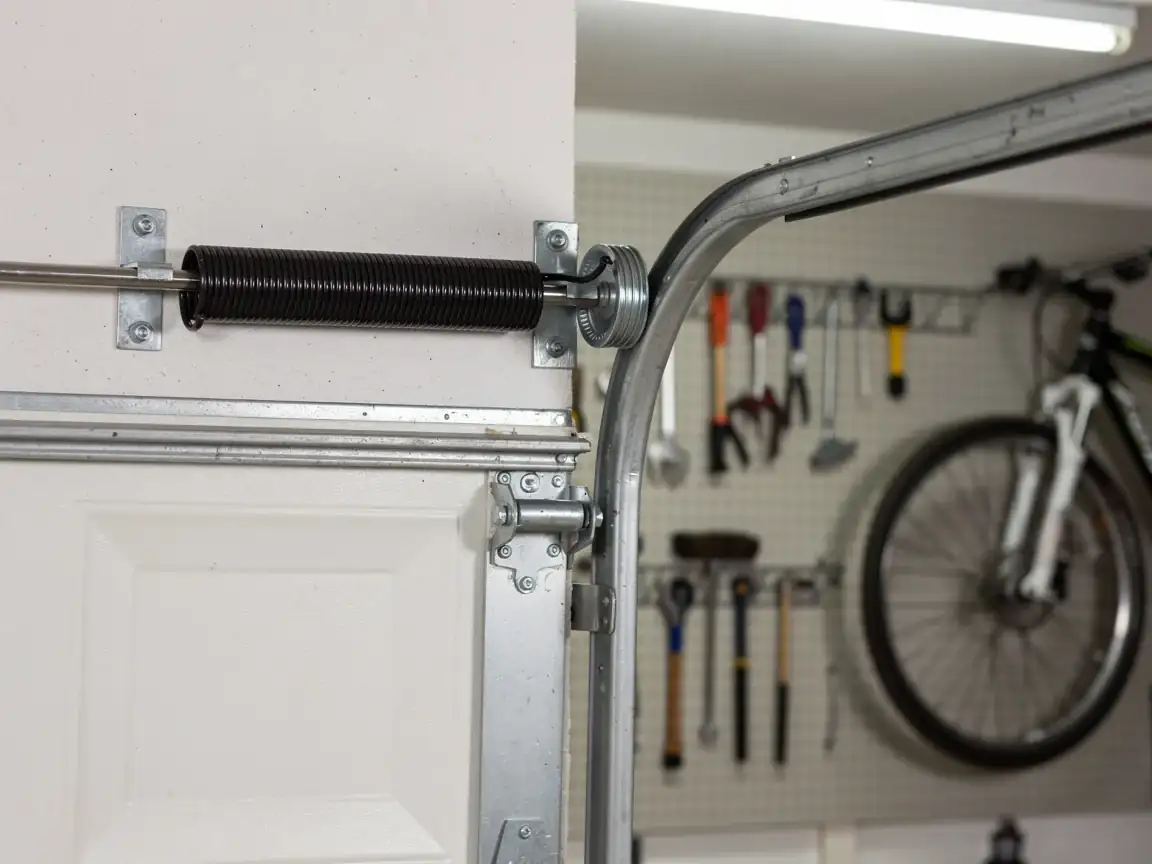
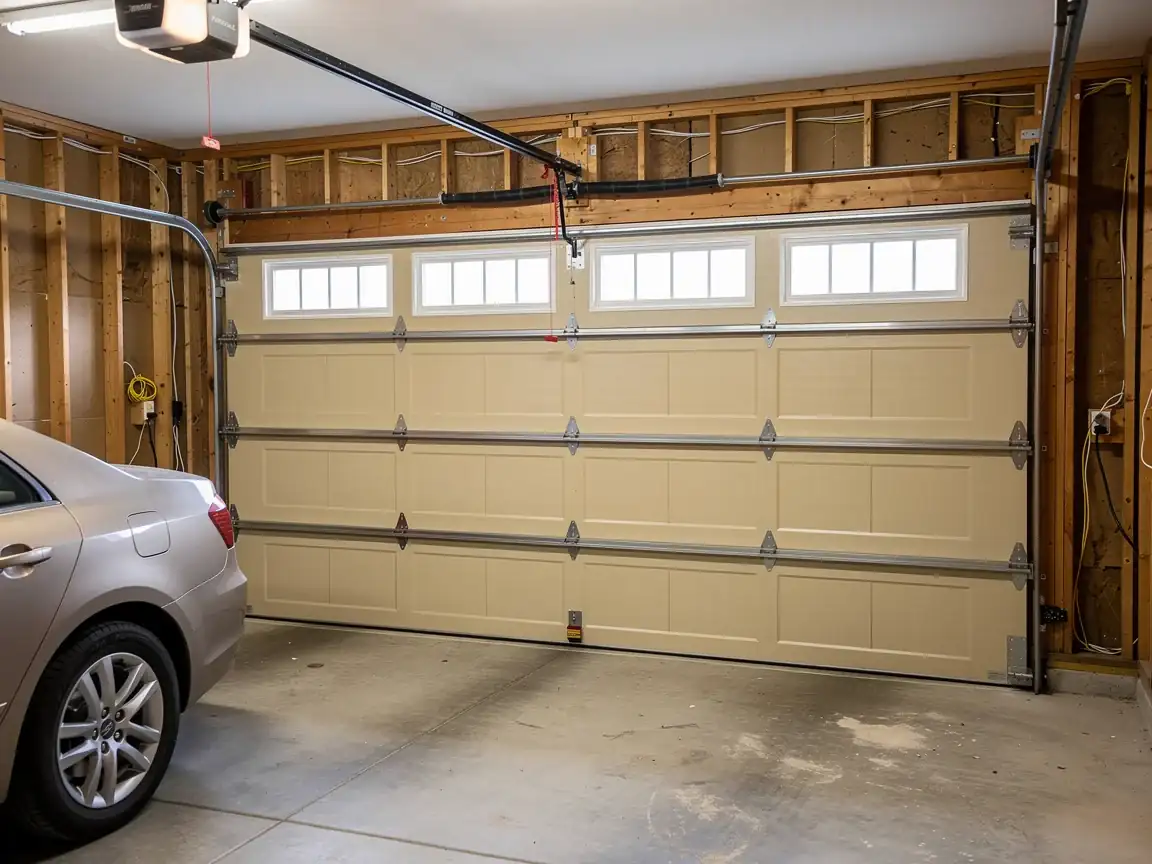
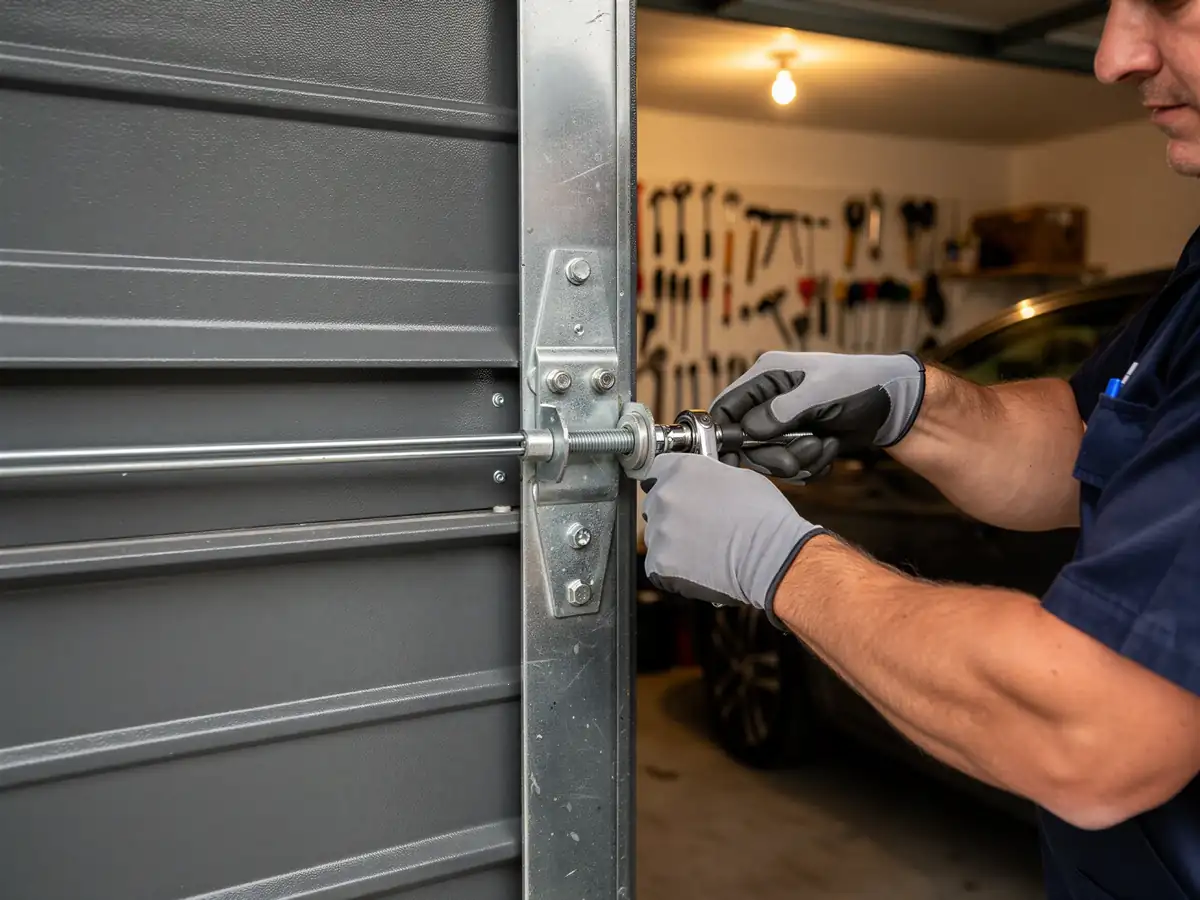
The fault we see most in West Hartford isn't exotic. It's an extension spring stretched past what it was built for, or a torsion spring that's been carrying a door heavier than the original hardware ever expected. On a lot of these jobs, somebody added a heavier insulated door sometime in the last twenty years and left the 1950s-era track and jamb hardware in place. The spring tension never got recalculated. That mismatch is what blows a cable or snaps a spring on a cold morning.
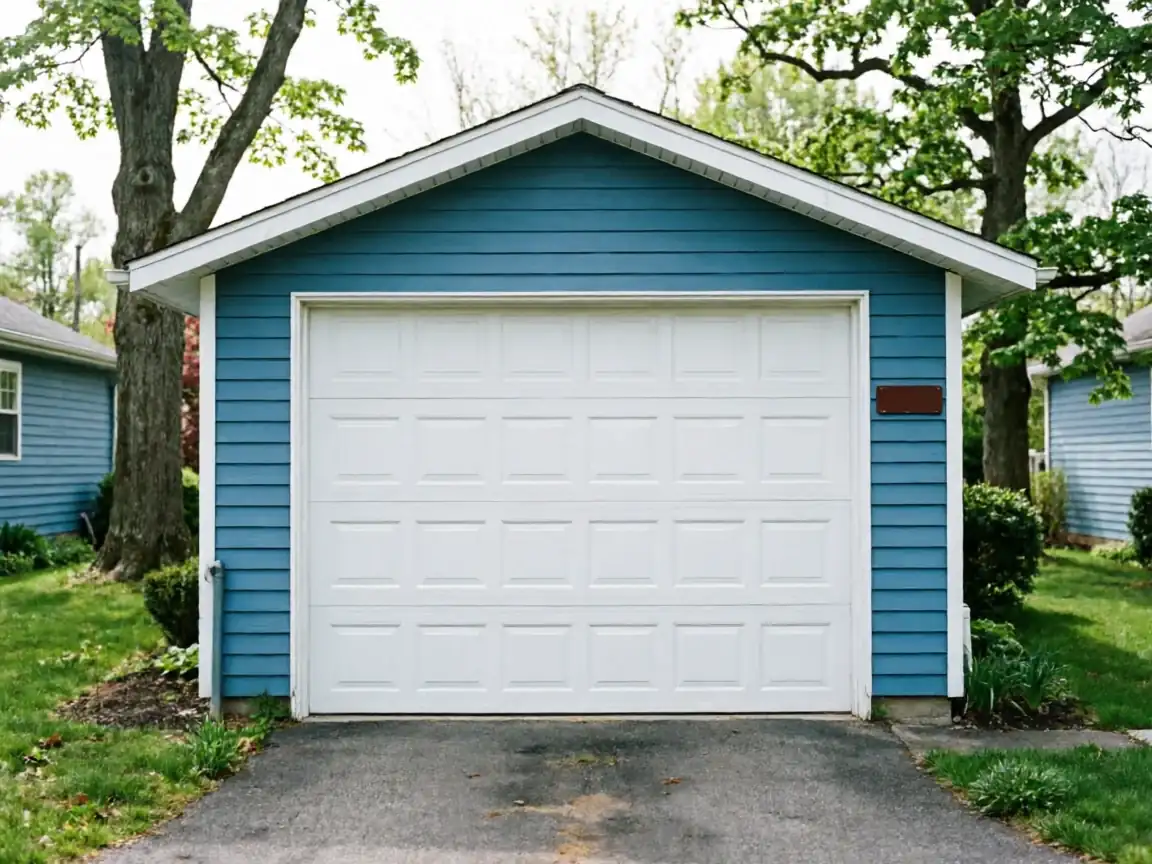
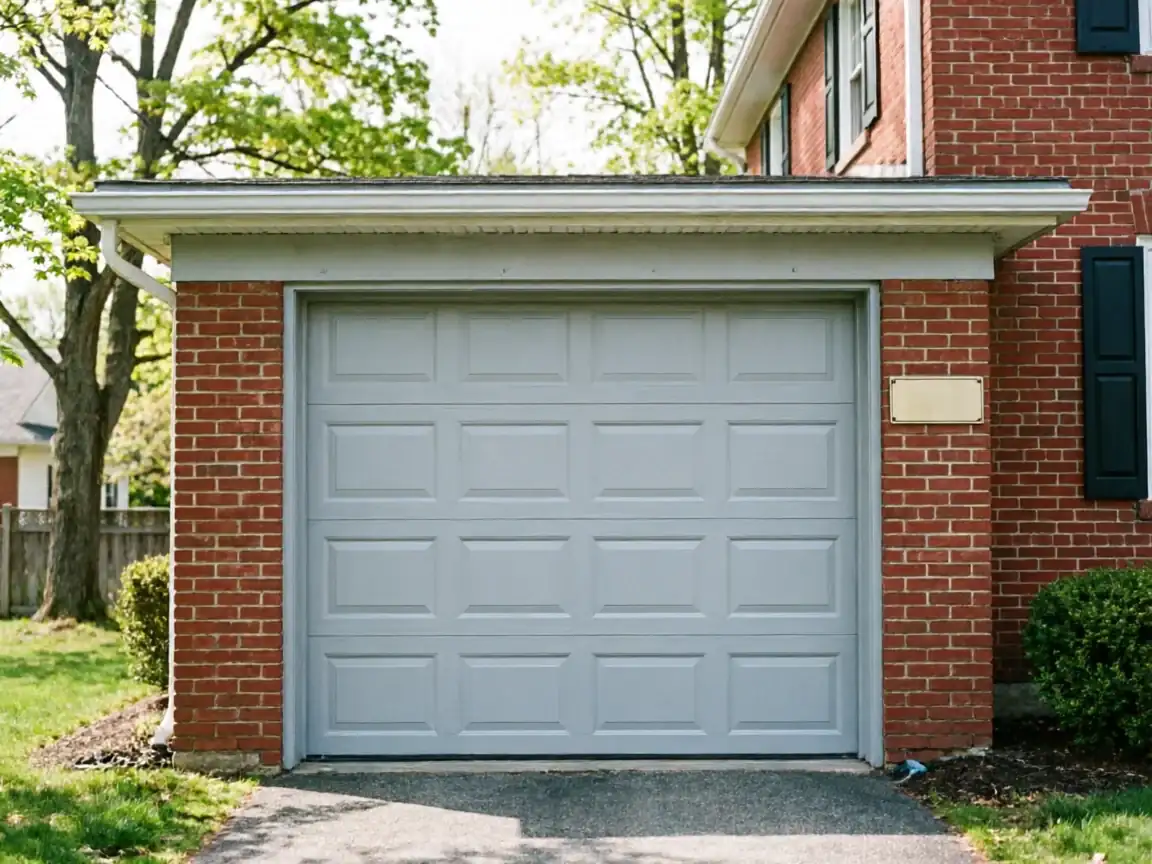
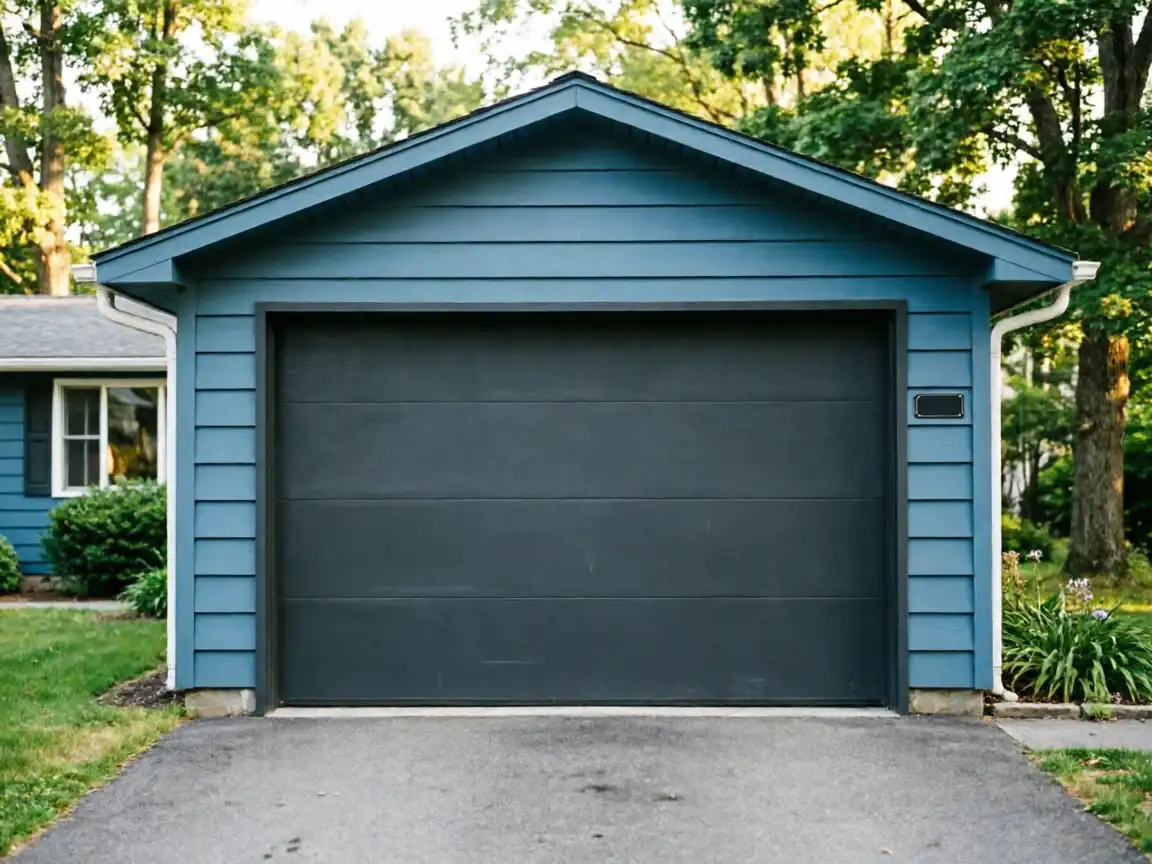
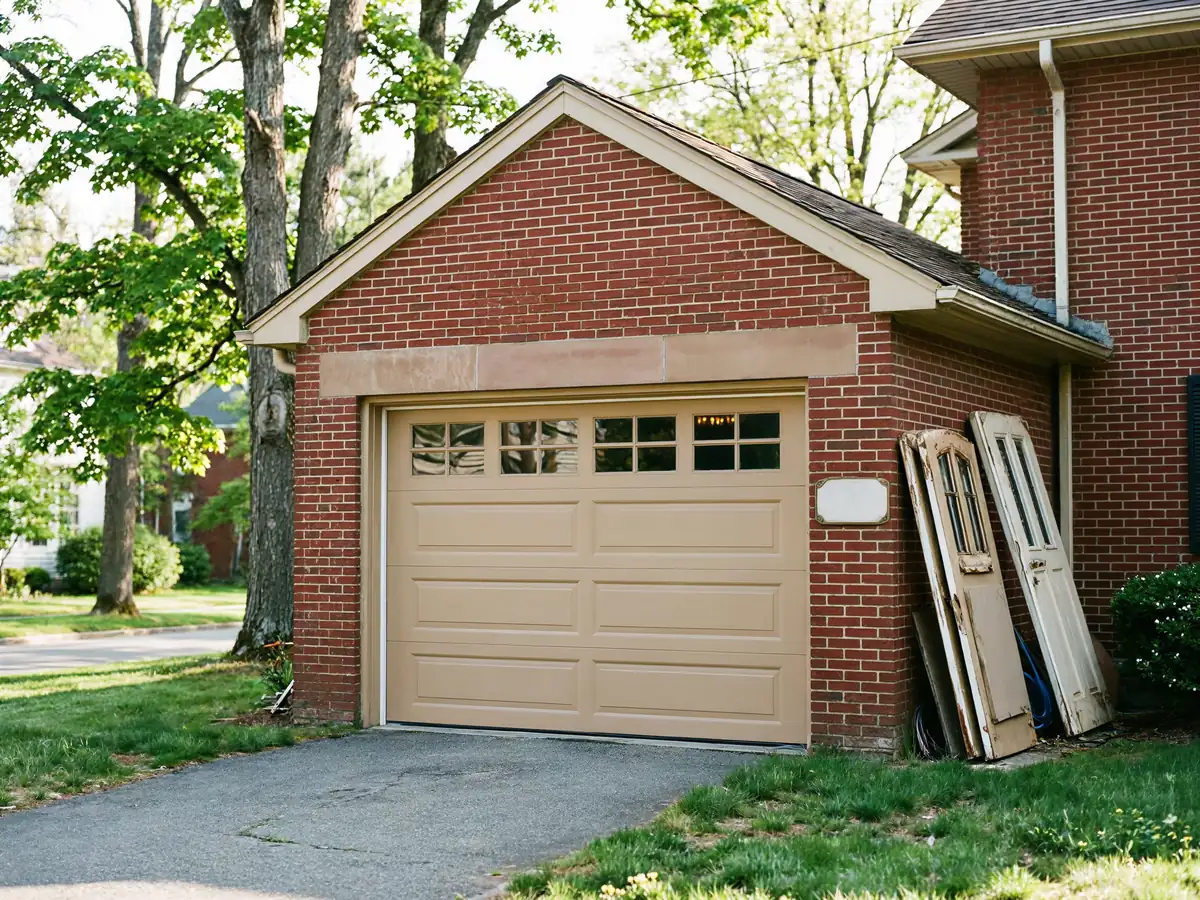
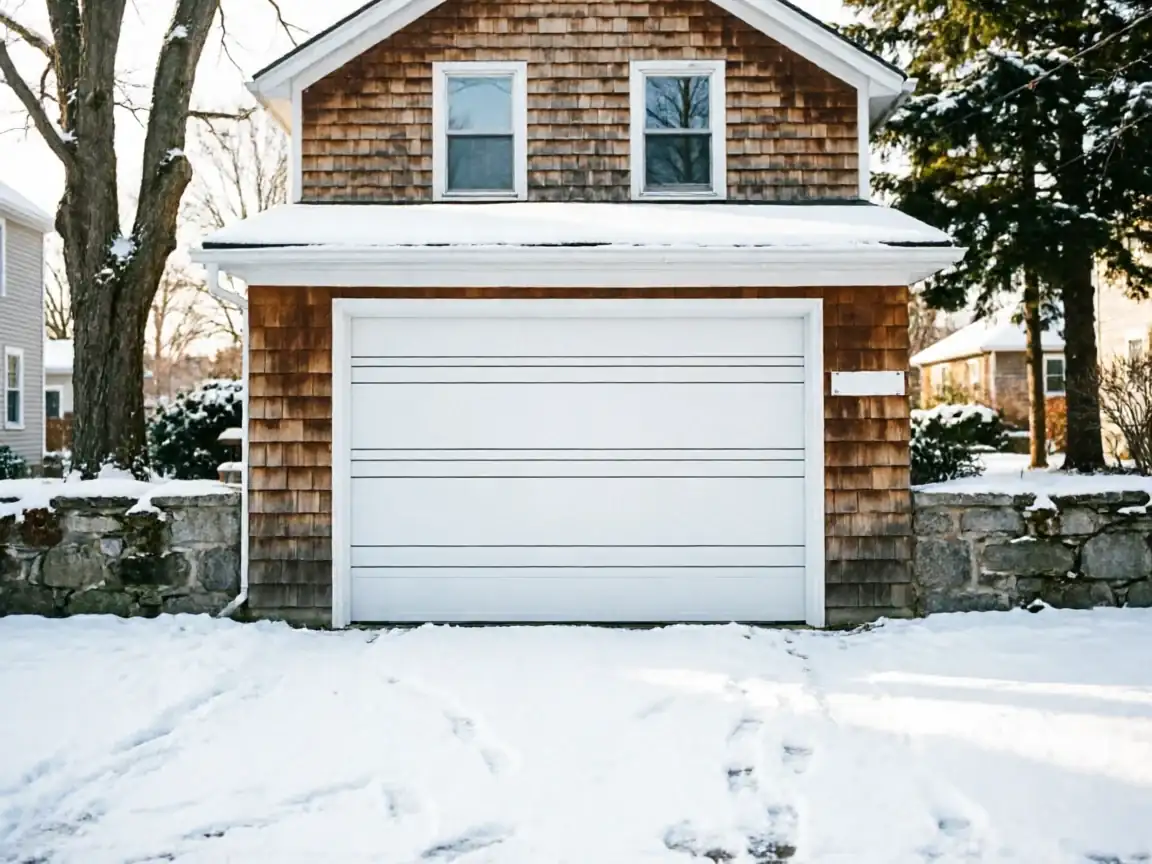
Most houses on this side of town went up around 1955, which puts them close to two decades ahead of the 1973 median build year across our wider service area. That gap matters on a repair call. A door and track sized for a narrower, lighter 1950s single-car bay doesn't behave the same as the wider double-door setups common in houses built in the '70s. When we show up to a West Hartford job, we're often dealing with a narrower opening, older jamb framing, and a drum-and-cable setup that was never meant to hold a modern door's weight. That's the call before we touch a tool.
Why This Fails Locally
Connecticut winters are hard on steel, and the cold here is the severe kind, not the mild kind - that matters for anything metal sitting outside for seven decades. On a house built in 1955, the track hardware has usually been repainted or replaced piecemeal over the years, which means the mounting bolts are often a mismatched set, some stripped, some rusted into the jamb. Freeze-thaw cycling works those bolts loose a little more every winter, and a door that's already fighting an undersized spring puts extra strain on brackets that were never rated for it.
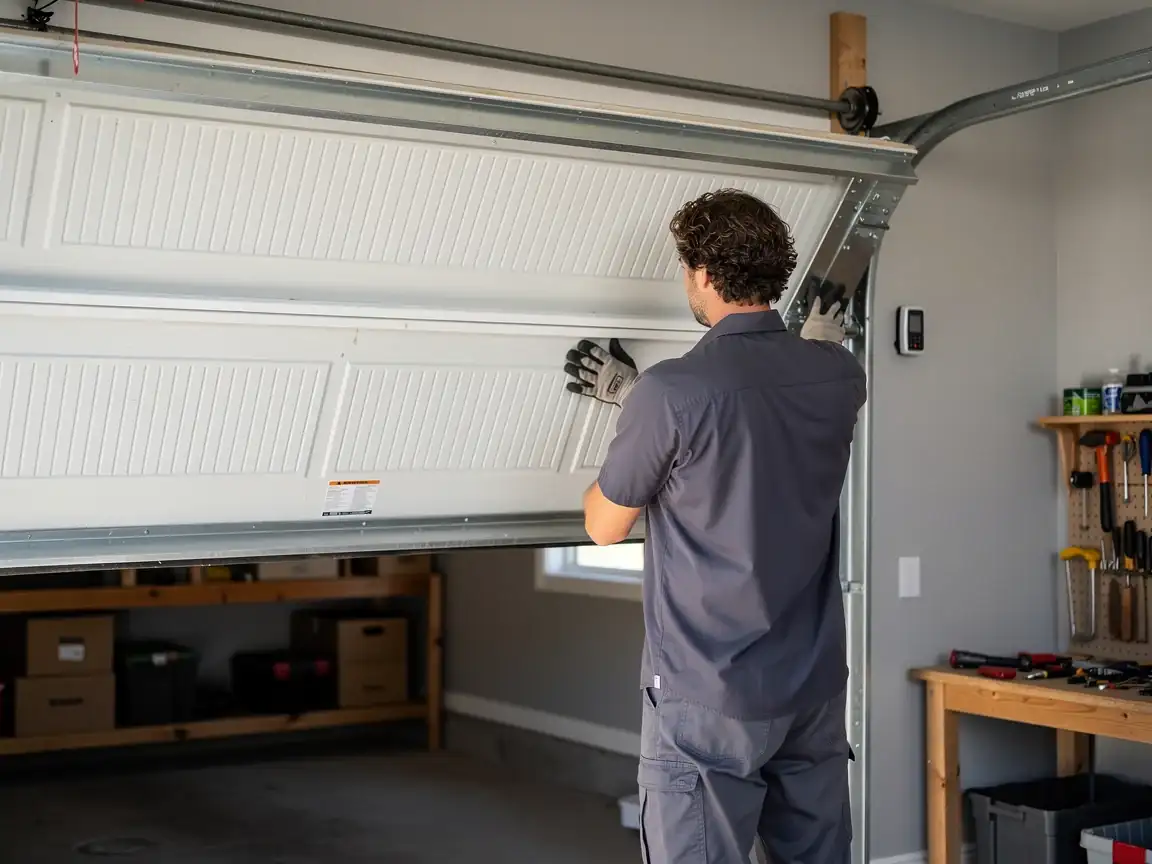
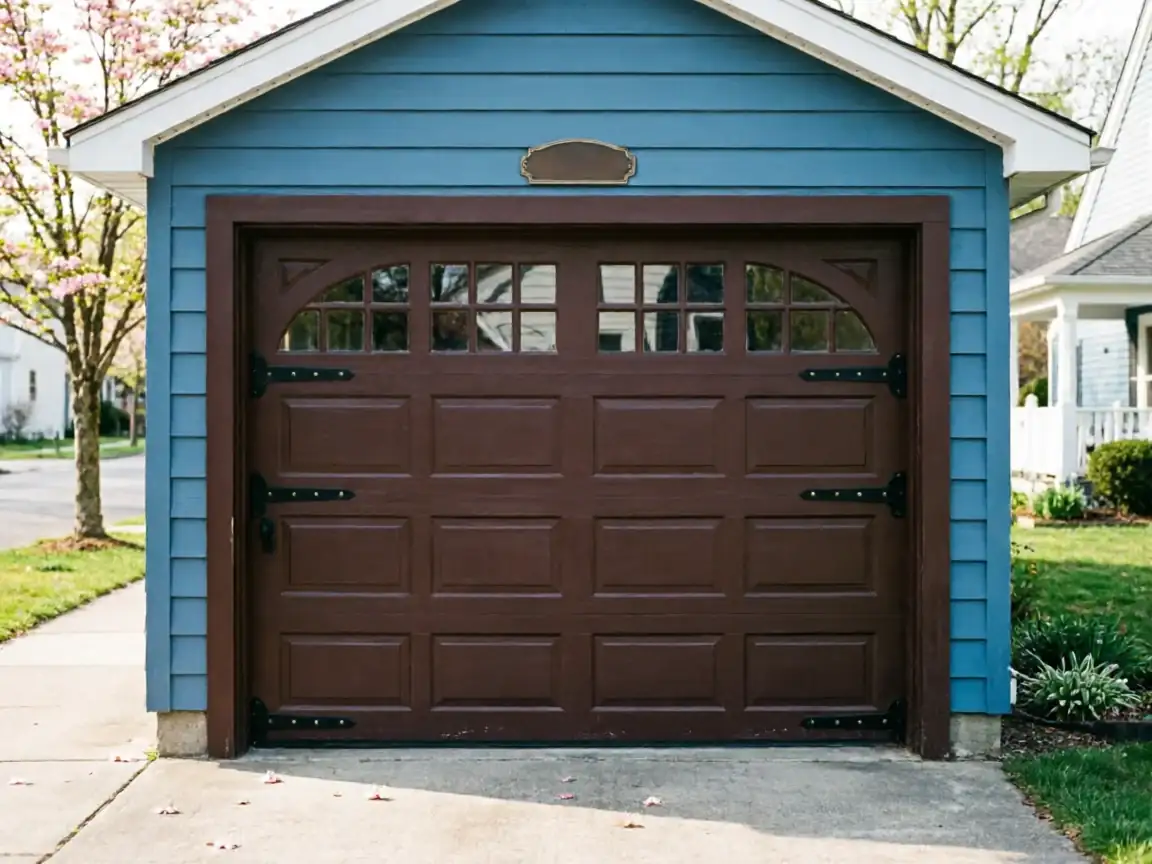
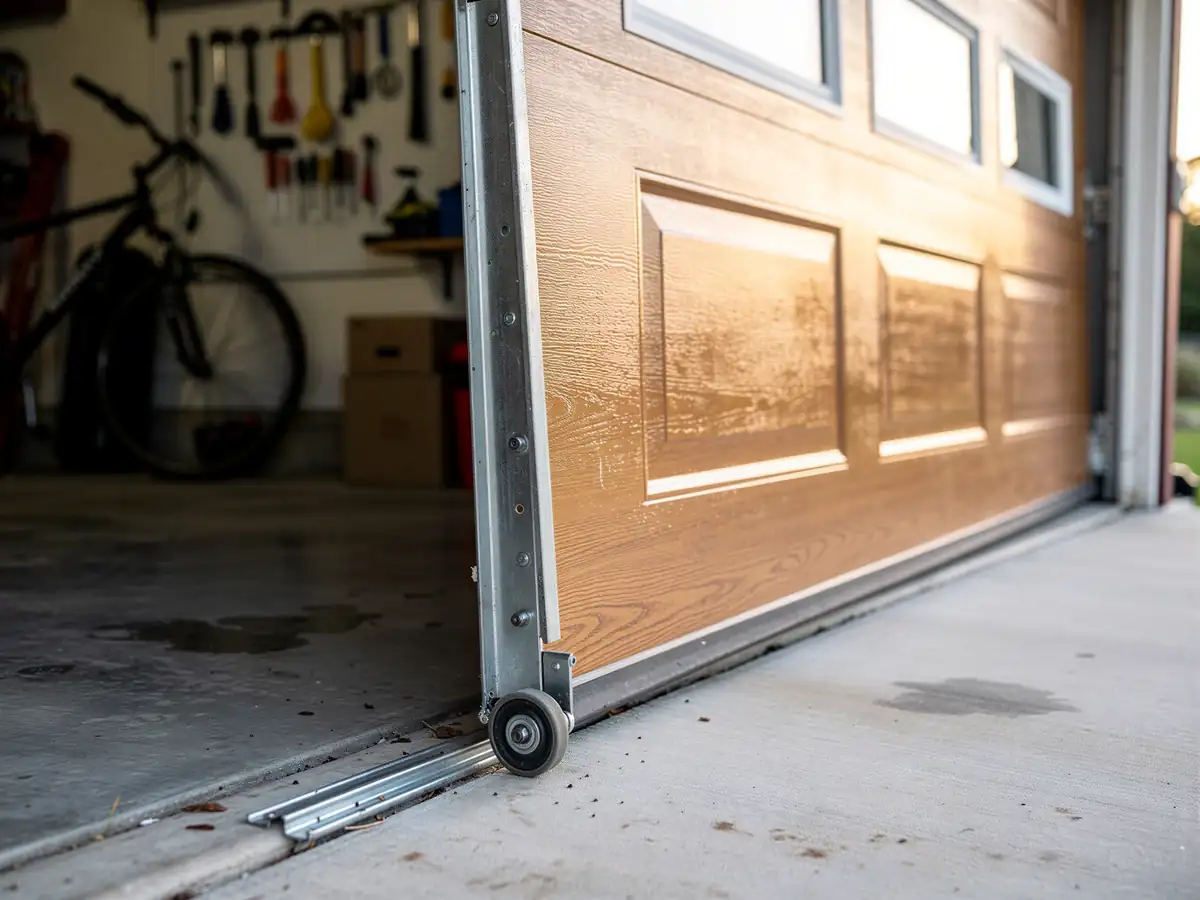
We also see rollers that were never upgraded past the original steel wheels these older single-bay doors shipped with. Steel rollers on a track that's seen sixty-plus winters of expansion and contraction wear unevenly, and that uneven wear is what throws a door off its track mid-cycle. It's not a defect in the door. It's seven decades of a cold climate working on hardware nobody's looked at since it went in.
The DIY Question
If a cable looks frayed or a spring is visibly stretched or kinked, that's not a job to take on yourself
A torsion or extension spring under load can do real damage to a hand or a face if it releases wrong, and on a door this old the spring is probably original. We won't sugarcoat that part.
What you can check yourself
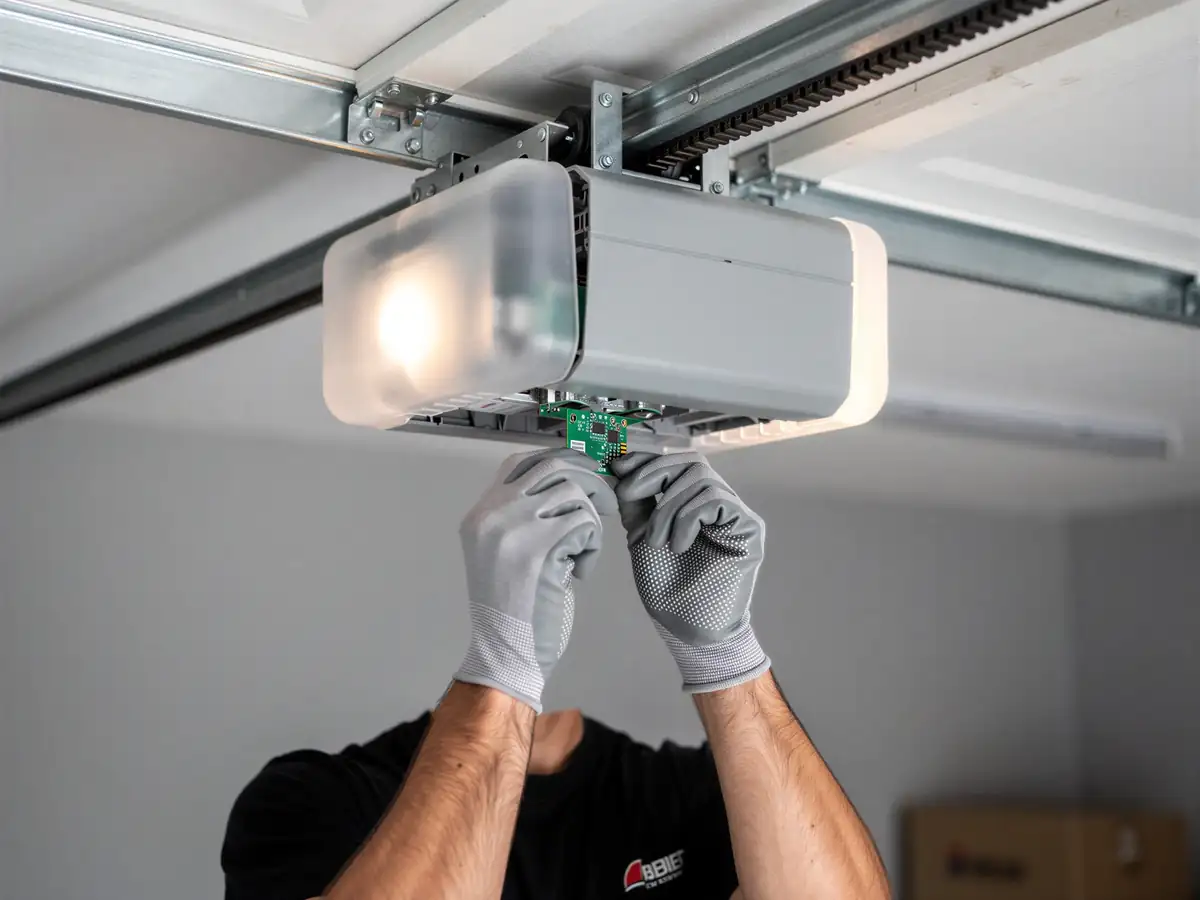
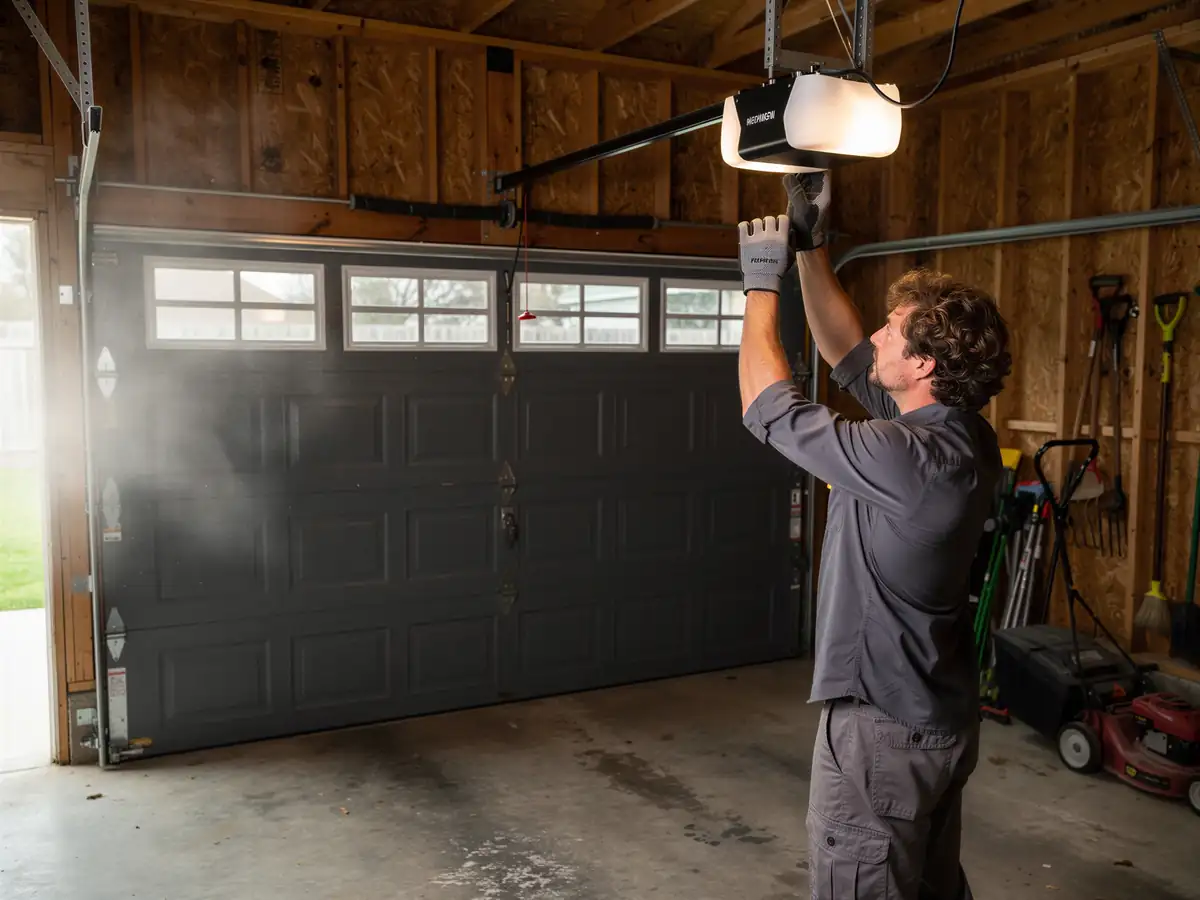
Whether the door is binding on one side of the track more than the other, which usually points to a bent track rather than a spring problem, and whether the opener's safety sensors are aligned - a door that reverses halfway down is often just a knocked-out sensor, not a hardware failure. On a house this age, though, we'd rather you call before you start taking panels or brackets apart. Original hardware from 1955 wasn't made to the same tolerances as what's sold today, and forcing a modern replacement part onto an old bracket often does more damage than the original fault did.
What the Repair Takes
West Hartford is about 8 miles from our shop in Glastonbury, so we plan the truck's stock before we leave, not after we see the door. On houses from this era, that usually means bringing both standard and oversized torsion springs, since we don't know until we're on site whether a previous owner swapped the door without resizing the spring.
With 26,276 households in a town built mostly before 1960, and a median household income of $125,616 - well above the $107,012 median across our broader service area - we see a fair number of these doors get upgraded insulated replacements rather than patched repairs, once the original hardware is 60-plus years old and the cost of sourcing obsolete parts starts to outweigh a new door. That's a call we make with you on site, not before. A straightforward spring or cable swap is usually worth doing. A full track and opener rebuild on original 1955 hardware is often the point where replacement makes more sense than another patch.