Why This Fails Locally
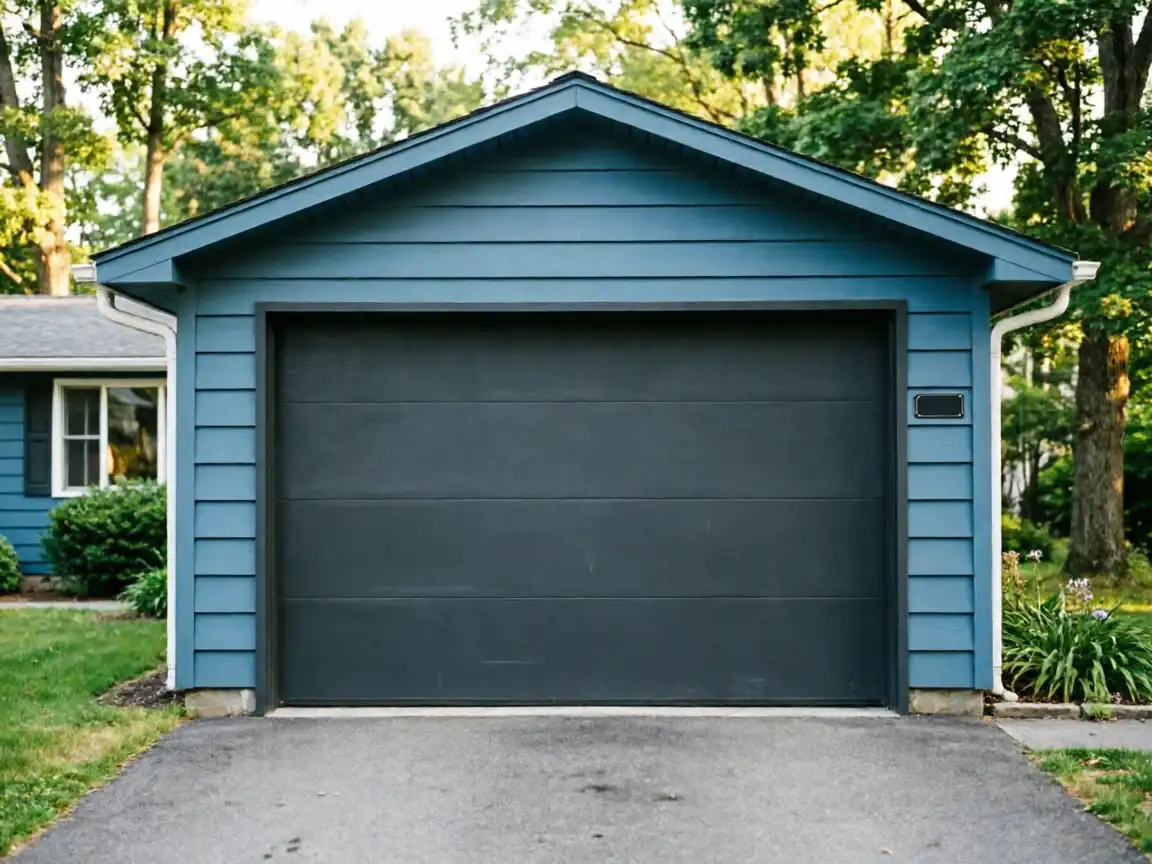
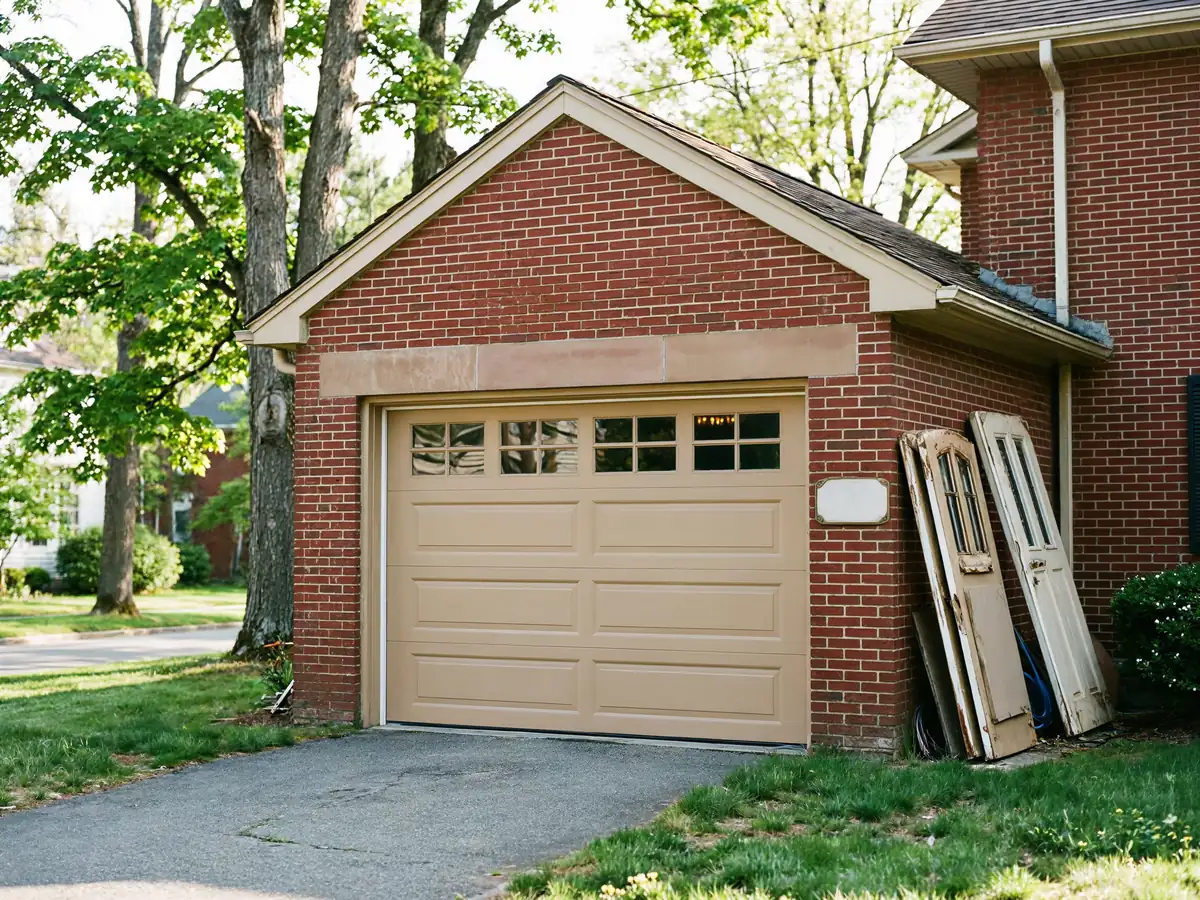
Wethersfield's median household income runs $118,523, which puts most homeowners here well past the point where a $200 off-track repair makes more sense than a $1,200 door replacement - but that math only works if the door is worth saving. The houses in this town cluster around a 1959 build date, which means a lot of garages still carry the original track gauge and roller spec from that era. When a door jumps the track here, it's rarely a dented panel from a backed-into car. More often it's a track bracket that's loosened over sixty-some years of seasonal expansion, or a roller that was never upgraded from the steel stock the builder installed. Glastonbury's broader service area spans houses built anywhere from 1938 to 1990, so the fix that worked three streets over in a 1975 split-level often doesn't apply to a 1959 ranch in Wethersfield. The bracket spacing, the track flare at the bottom, even the lag screw pattern can be different enough that a universal part doesn't seat right. That's the detail that gets missed when someone treats this as a generic off-track call instead of a job tied to the house's actual age.
The Symptom
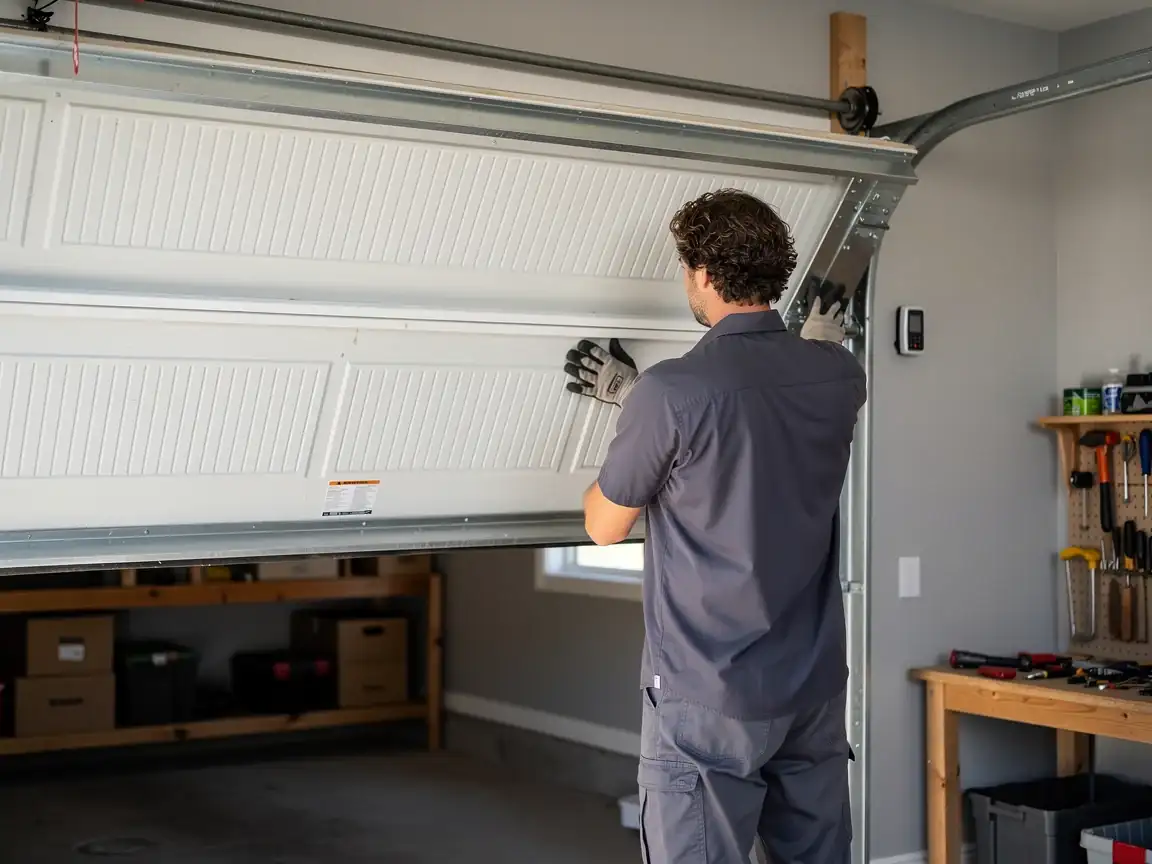
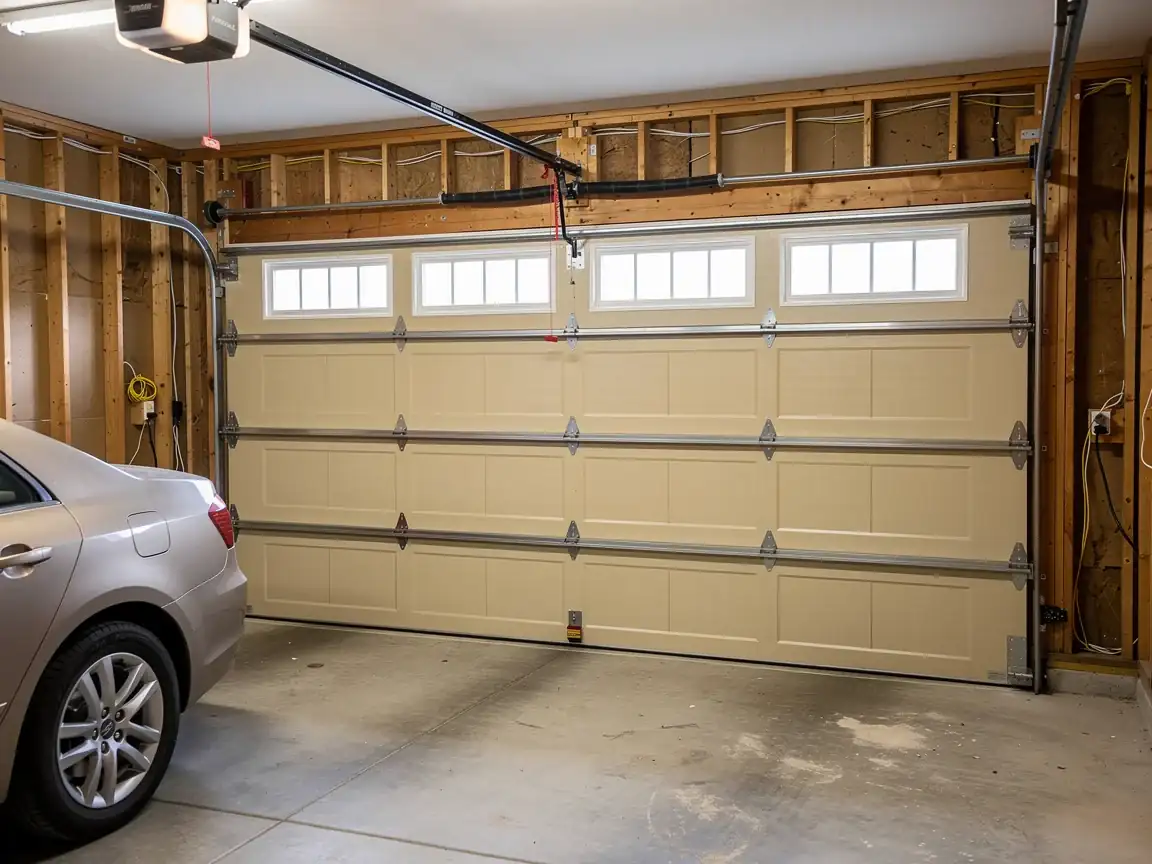
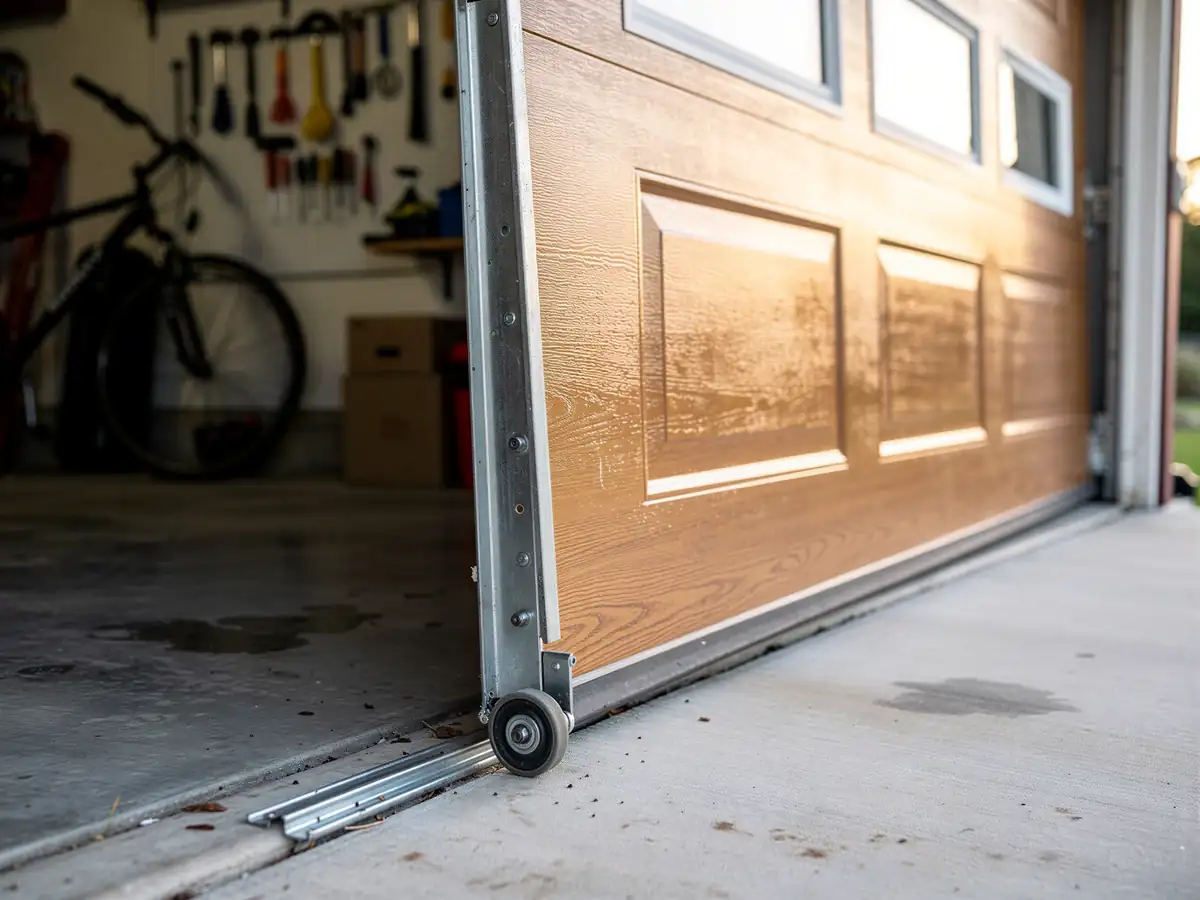
The door looks crooked in the opening, hangs at an angle, or stalls a few inches up with a grinding sound instead of a smooth roll. Sometimes one side pops clean off the track while the other side stays seated, which twists the whole section and can crack a panel seam if you keep running the opener. On older track systems like the ones common in this town's 1959-era housing, the first sign is often a roller that's started riding the outside edge of the track rather than the center groove - you'll hear a rhythmic clunk before the door fully derails. Connecticut's cold winters make this worse. Steel track contracts in sustained cold, and a bracket that was already a little loose will shift enough to let a roller walk off the rail. If the door's been sticking at the same spot every time before it jumps, that's the track telling you it's marginal, not a one-time fluke.
What You Pay
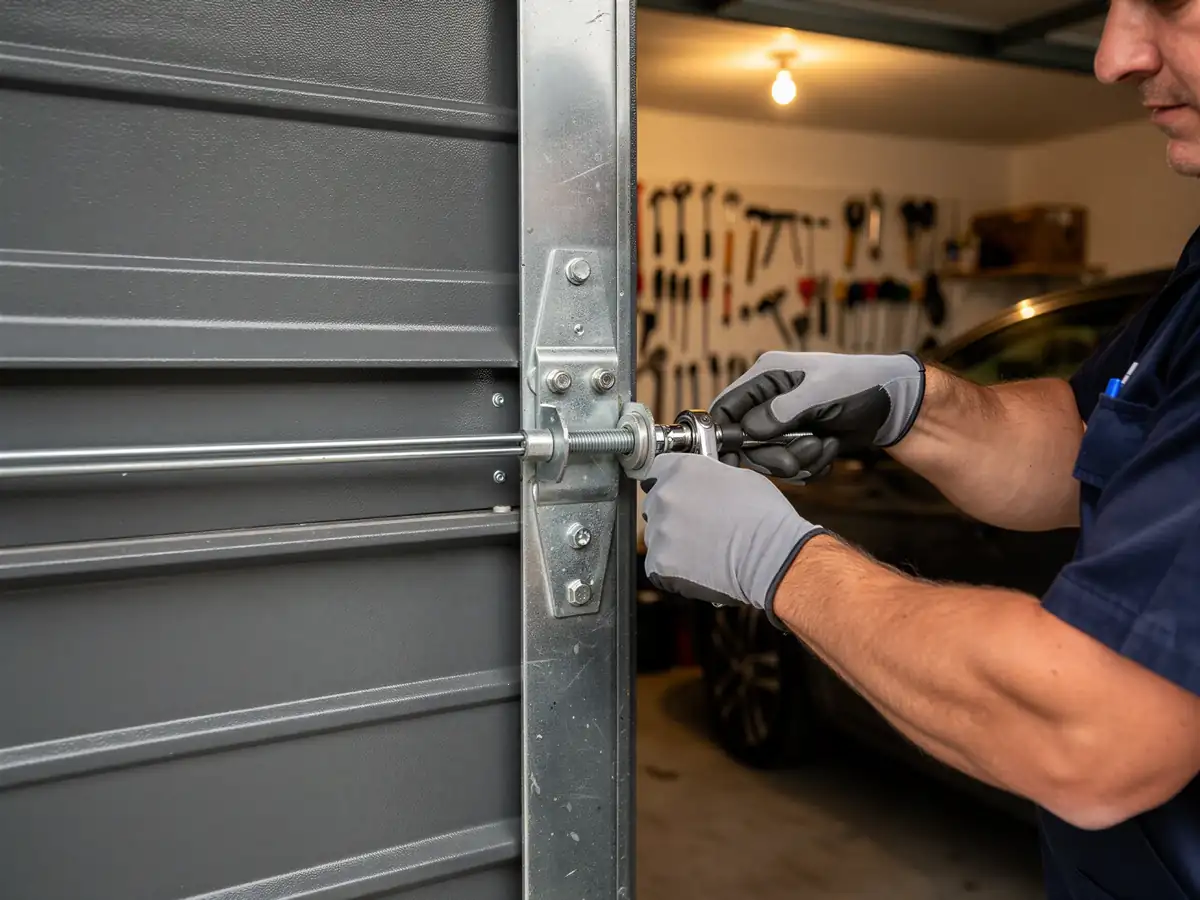
At Wethersfield's income level, replacing a full track assembly on an older door is rarely a financial stretch, but it's still worth knowing what you're paying for before the truck leaves the driveway. A clean off-track reset with no bent hardware is the cheapest outcome. Bent track, snapped rollers, or a bracket torn loose from the jamb framing pushes the job into parts-and-labor territory rather than a quick adjustment. We don't carry every roller gauge used across six decades of Connecticut housing stock, so a part match for a 1959-era track sometimes means a short wait rather than a same-visit fix - that's the honest limitation, not every bracket is on the truck. If the track has failed more than once in the same spot, that's usually a sign the door itself, not just the hardware, is near the end of its service life.
The DIY Question
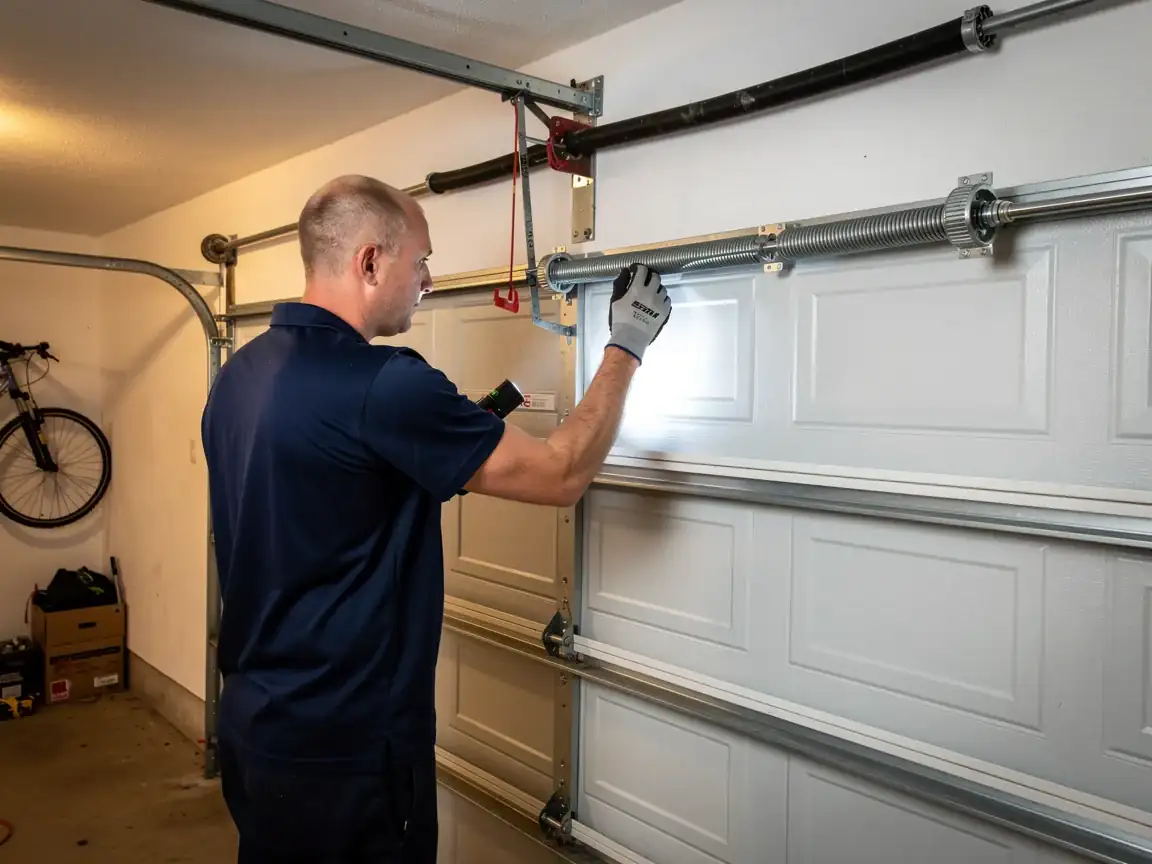
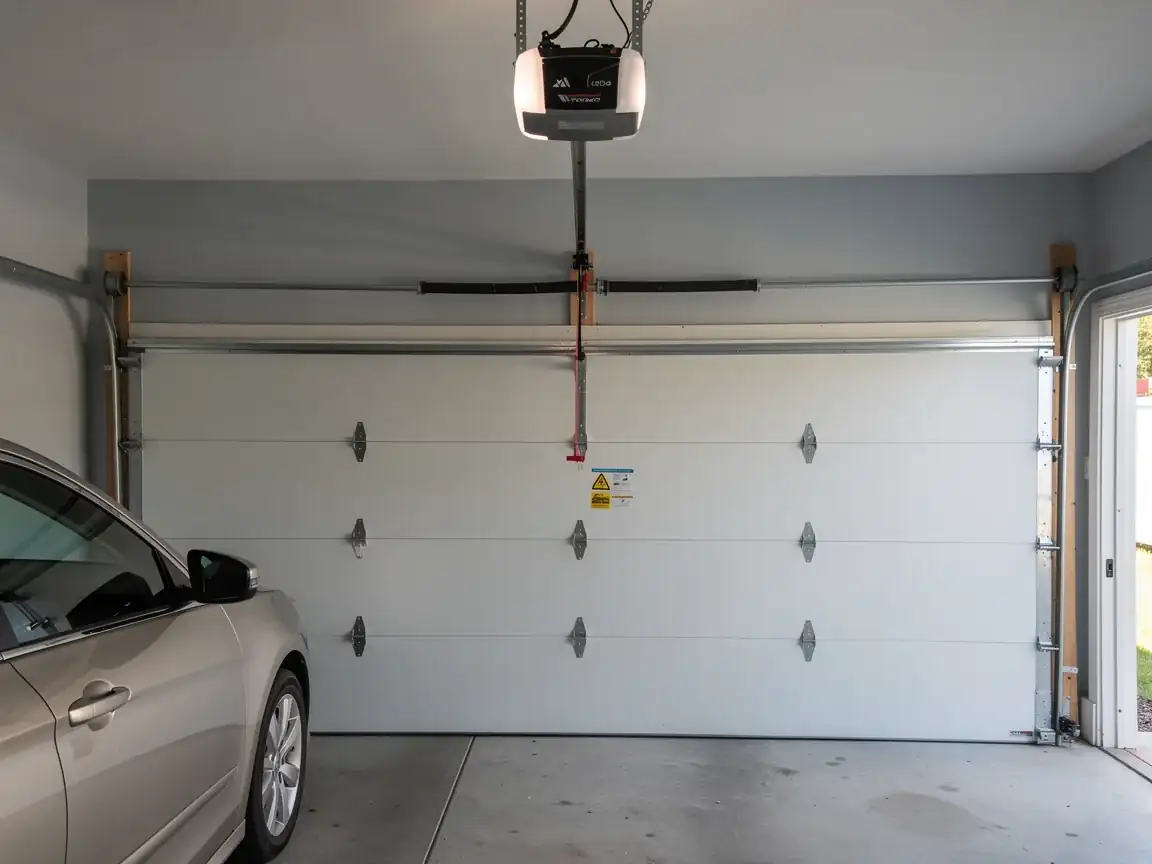
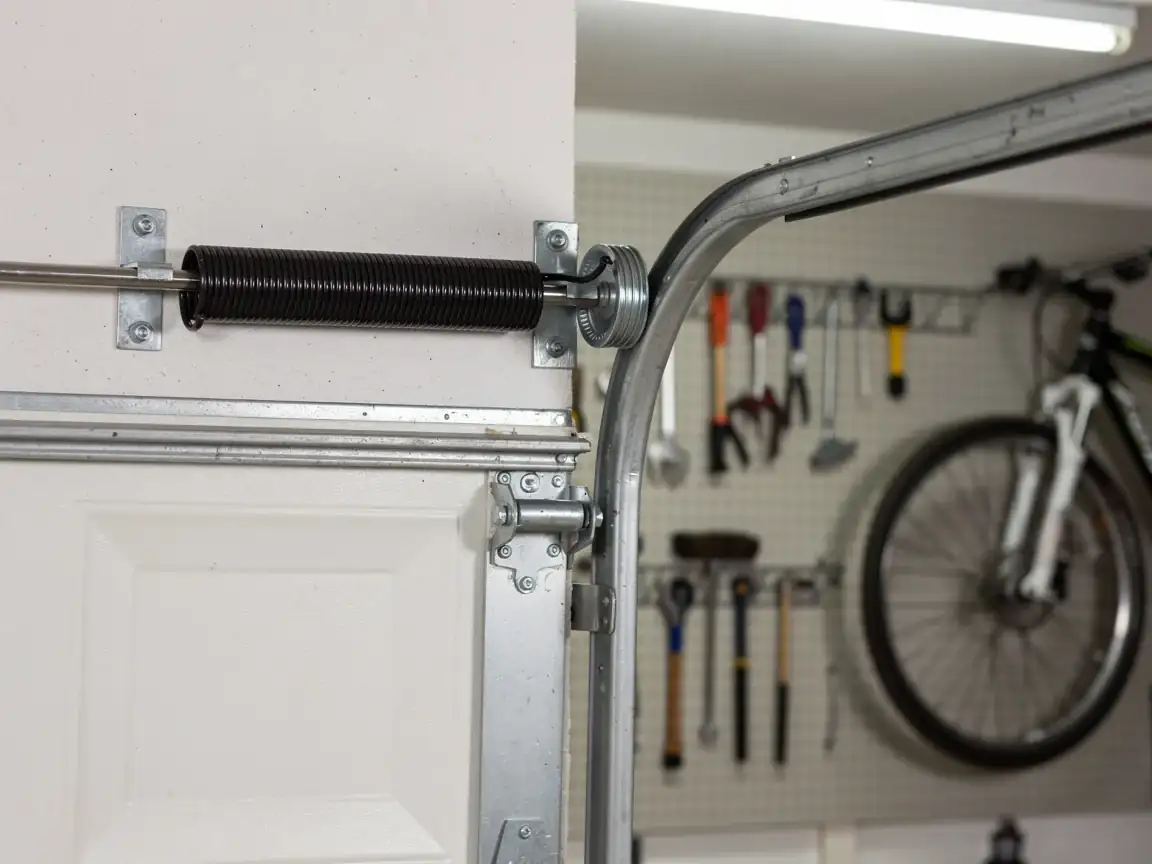
Don't try to force a door back onto its track yourself, even if it looks like a simple lift-and-slide. A door off-track is under spring tension whether it's open, closed, or stuck halfway, and that tension doesn't care how careful you are. The failure mode that sends people to the ER isn't the door itself - it's the torsion spring letting go while someone's hands are near the drum. If the door popped off evenly on both sides and nothing looks bent, you can sometimes close it manually by hand without the opener engaged, just to get the car out. Past that, leave the rollers and brackets alone. On the older track gauge common in this town's housing, a bent bracket that gets re-bent by hand usually fails again within weeks.